Showing posts with label University of Nebraska. Show all posts

December 22, 2015

Foster Farms Bowl - A Connection Beyond the Gridiron

Share:
 By Kelly Brunkhorst, Executive Director

When I heard that the Nebraska CORNhuskers would be facing off against the UCLA Bruins in the Foster Farms Bowl, I could not help but be struck by the partnership that already exists between the corn farmers in Nebraska and Foster Farms, a poultry company based in Livingston, California.  Foster Farms is an important customer for the corn grown right here in Nebraska. 

Annually, Nebraska exports 205 million bushels of corn to California for operations such as Foster Farms. Outside of Nebraska's in-state customers of livestock and ethanol, California has become a leading export destination, turning Nebraska corn into value-added poultry, meat and dairy products.

Nebraska corn farmers, through their checkoff, have come to appreciate the demand generated from California's dairy, beef, poultry, and ethanol operations by hosting customer meetings in California and in Nebraska. These meetings have established a better understanding of the demand potential for Nebraska corn along with the challenges of operating in California.   As a function of our checkoff activities, we have worked with contacts in California to help facilitate some of these meetings.    

So as we celebrate Christmas, with thoughts of the following day’s bowl game in our heads, let us not forget the importance beyond the field of play, in this case, the field of corn and increased markets for Nebraska’s number one agriculture commodity. 

Best of luck to the Nebraska CORNhuskers, GO BIG RED!

December 7, 2015

What's 'Appening?! Great Ag Apps for Kids

Share:
The holidays are coming, the cold may be blowing in soon and kids will be out of school - so now is the time to get some kid-friendly agricultural apps on your mobile devices for your kids (and yourself!). We've compiled a list of great, educational and fun apps that are geared towards kids, but help people of all ages understand agriculture. They promote ag literacy as well as coordination, small motor and other learning skills for young children. (If you don't have kids, look at the bottom of this post for a link to some other great ag apps!)

  • GrowIt-app from the University of Nebraska-Lincoln Do you know where hot dogs come from? Milk? Hamburgers? Eggs? Many will say the grocery store. This app gives students lessons on how agriculture produces the things they love to eat.
  • GrowItKnowIt A game about where our food comes from. 
  • Kernel Quest The National Corn Growers Association (NCGA) and AdFarm published the 2014 World of Corn Comic book Captain Cornelius: Corn Day Celebration, which celebrates corn and educates youngsters on corn’s important role in our everyday communities.
  • Fooducate With this app you can scan barcodes of food and then it tells you how healthy something is.
  • Agriculture Encyclopedia This app is full of “farm terms” and explains them to the viewer. It’s for all age groups to better understand modern farming practices.
  • Serious Quiz 1.0 This app asks trivia questions including agriculture questions!
  • iLiveMath Farm Fresh This app was awarded the best math education app of last year, this app teaches kids math while using farm references ex. 1 ear of corn + 3 ears of corn = 4 ears of corn, there are three different skill levels so it can be used at any age.
  • Old McDonald Had a Farm This app has a sing along to the “Old McDonald” song but it also has animal games probably would be geared toward younger students.
  • Bizzy Bear On the Farm Kids get to help Bizzy Bear pick apples, collect eggs, feed piglets and baby chicks, make the horse gallop, and navigate the tractor. It is designed for kindergarten and first graders.
  • Agriculture Glossary Agriculture is a science and are through supplying humans by raising the products of soil and the associated industries. The glossary is an easy to use application with comprehensive list of 1300+ terms related to agriculture.
  • FarmGenius Enter with FarmGenius into the world of agriculture precision by New Holland. Cultivate your fields, earn coins, and buy precision land management system that will increase speed and performance of your agriculture machinery. You can choose to farm Corn, wheat or grapes. 3 levels of difficulty. For upper elementary students.
  • Farmers Guardian Logo Quiz Combines everyday farming logos with some of the more challenging logos, How well do you know your farm logos?
  • Tractor Memo Enjoy the world’s first REAL tractor game for kids! Each hit is rewarded with a genuine tractor movie. Ages 2 to 12 years.
  • Farmorama Select your favorite tractor, based on true models and get ready for the big Farmorama tractor race. Easy to drive and challenging to win. As in the real world, correct speed is the key for success. Five different tracks will challenge you with steep hills, jumps, drive through barns, stones and mud holes. Pick fuel cans during your ride and get bonus points.
  • Preschool Games- Farm Animals by Photo Touch Photo Touch is an exciting educational game that helps your child rapidly learn words by sight, sound, and touch. The interface is so easy to use that even a 9 month old baby will delight in using this app.
  • Farm Up! HD The 1930s brought crisis to the agricultural state of Cloverfield. Beginning with a small enterprise, earn coins and keep developing your farm: grow various types of fruit and veggies, breed domestic animals, produce dairy and canned products, and even try extracting minerals, producing planks and supplying folks with all kinds of other materials. Do enough, and you will be able to help the neighboring cities too- numerous families are waiting for your help. Never mind how difficult things are now, times of abundance and good years lie ahead of you. 
  • Farm Animal Puzzles Farm animal puzzles is a great puzzle game for kids, aimed at ages 1-8. Has a total of 36 different farm puzzles.
  • Farming Simulator 2012 Discover a wide, agricultural scenery with fields, roads, your farm as well as a small village. Cultivate your fields with various three dimensional vehicles found in your generous fleet- modeled after original machines and vehicles by prestigious manufacturers. Take a seat at the wheel of authentic farm machines and start your own agricultural enterprise: plow and cultivate your fields, choose the seeds of your field crops out of three plants (corn, canola, and wheat) and fertilize them to accelerate their growth. Sell the harvest and invest it into new equipment.
Are you a farmer or rancher? Here is a great list of {10 pages!} of ag apps great for farmers and ranchers.

October 2, 2015

Growing Nebraska Through Trade

Share:
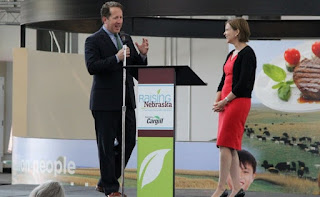
Nebraska and its role in the international market were on the forefront of discussions this week as Nebraska Congressman Adrian Smith hosted the “Growing Nebraska Through Trade” seminar on Tuesday at Raising Nebraska in Grand Island. Trade of agricultural products is an ever-important issue to Nebraska corn producers as markets for our products rely on international customers.

“With more than 96 percent of the world’s customers living outside our borders, trade provides tremendous opportunities to grow our rural economy,” Smith said. “As our work on trade negotiations moves forward, I am committed to helping expand access to thriving international markets for Nebraska producers, manufacturers, and consumers. I hope everyone who joined us today gained valuable knowledge and connections to help drive their businesses toward greater success in the global marketplace.”

The seminar featured Nebraska native and Chief Agricultural Negotiator in the Office of the U.S. Trade Representative, Ambassador Darci Vetter. AgView talked with her about a busy week ahead, progress on TPP and the continuing process of the Country of Origin Labeling dispute, watch here:

Topics at the seminar included state-level efforts to grow the agriculture economy, rural growth and value-added agriculture, and ongoing efforts to open markets to Nebraska and U.S. agriculture products. Other featured speakers included Vice-Chancellor of the University of Nebraska Institute of Agriculture and Natural Resources, Ronnie Green; and speakers from state and federal agencies as well as business and education leaders from the Third District.


Dr. Green emphasized that Nebraska plays a pivotal role in international trade, and the University of Nebraska also has many programs which helps develop ideas into goods and services for a growing world.

Learn more about how international trade is important to Nebraska corn farmers at our website, www.nebraskacorn.org.

*Pictures and video from AgView.net.

April 27, 2015

Study Reveals Positive Economic Impacts of Nebraska’s Ethanol Industry

Share:

A recent impact study by University of Nebraska-Lincoln economists reveals Nebraska’s ethanol production capacity growth between 1995 and 2014 is tenfold. The results of the “Economic Impacts of the Ethanol Industry in Nebraska” study were released in March 2015.

The authors ­– Dr. Kathleen Brooks, UNL agricultural economics professor; Dr. Dennis Conley, UNL agricultural economics professor; Dr. Eric Thompson, UNL economics professor and Bureau of Business Research director; and Dr. Cory Walters, UNL agricultural economics professor – examined the economic impact of Nebraska’s ethanol industry during the last five years.

As of June 2014, Nebraska’s production capacity was 2,077 million gallons per year with 1,301 full-time employees at 24 facilities. During the past five years, Nebraska’s value of production for ethanol and dried distillers grain with solubles (DDGS) ranged from slightly less than $4 billion to more than $6.6 billion.

image

“The quantifiable economic impact of ethanol production on the Nebraska economy is clear,” said Paul Kenney, chairman of the Nebraska Ethanol Board. “But we should also understand the enormous savings in health and environmental costs associated with displacing toxic petroleum products with cleaner burning biofuels like ethanol. Choosing ethanol fuels brings additional cost savings in terms of our health.”

Nebraska’s large ethanol production results in 96 percent (1.805 billion gallons) being shipped out of state and makes Nebraska one of the largest exporters of bioenergy. In addition, 58 percent of DDGS produced in 2014 were shipped out of state. These out-of-state shipments result in a net positive for the state and represent a direct economic impact by bringing new money into the state economy.

The study noted that Nebraska’s ethanol industry could be affected by emerging trends and at least four are worth watching – the recovery of carbon dioxide (CO2), the extraction of corn oil, and world export markets for both ethanol and DDGS. Many of these upcoming trends will be discussed later this week during the annual Ethanol 2015: Emerging Issues Forum in Omaha April 16-17.

“Canada imports 40 percent of the U.S. ethanol exports and China imports 39 percent of the U.S. distillers grains,” said Todd Sneller, Nebraska Ethanol Board administrator. “There is a strong demand throughout the world for ethanol and its co-products, so we continue to look for ways to expand the Nebraska market as well as international markets in an effort to bring more economic prosperity to Nebraska.”

The purpose of the “Economic Impacts of the Ethanol Industry in Nebraska” study was to estimate the value of production during five years and compare that value to major commodity production values in Nebraska. In addition, the study measured productive capacity, employment, net returns, in-state utilization and out-of-state shipments. To view the full study, click here.

December 31, 2014

Nebraska Corn Board’s Best of 2014

Share:

final 2014

After a few years of record corn prices, this year we saw the markets pull back to prices that are very close to the cost of production. It's times such as these that your corn checkoff matters most. When it gets cold outside, you don't turn down the furnace. You keep the heat on—and that's what your corn checkoff investment is doing. We're staying the course with research, market development, promotion and educational initiatives focused on building demand for the corn you grow.

With 2014 coming to an end and the new year upon us, there is no better time to reflect on a few highlights of Nebraska Corn Board activity over the last year… 

CaptureStanding up for the RFS: Part of our job is keeping you apprised of the opportunity and necessity to make your voice heard. At the beginning of 2014, some 6,000 Nebraska farmers and ethanol advocates submitted comment on the EPA's proposed changes in the Renewable Fuel Standard—and, while the EPA has currently decided to not decide on the 2014 Renewable Fuel Standard (RFS) Renewable Volume Obligation (RVO) until 2015, it's pretty clear that they are reconsidering their position. Similar comment has been solicited for EPA's proposed Waters of the U.S rule (WOTUS).

Education and Outreach: The Nebraska Corn Board was the first group to step up with funding for the Raising Nebraska experience at the Nebraska State Fair. Raising Nebraska is an interactive experience like no other. From science and innovation, to community and RRN_RaisingNebraskaculture, and even the global economy, Nebraska’s agricultural experience touches everyone. Through this incredible 25,000-foot interactive exhibit, you actually become part of it – in ways you never imagined and that you’ll never forget. Recently, this outstanding consumer education exhibit took top honors in two categories at the International Association of Fairs & Exhibits awards competition. We've also funded ethanol pump promotions, published our consumer-focused Cornstalk insert in Nebraska newspapers, and helped Nebraskans understand the value of flex fuel vehicles.

ianr_4cCorn Research at the University of Nebraska-Lincoln: The Nebraska Corn Board has made a $2.0 million commitment to the University of Nebraska Foundation to establish the permanently endowed Nebraska Corn Checkoff Presidential Chair faculty position. The endowment will provide annual support to the Institute of Agriculture and Natural Resources (IANR) for research and development related to enhancing the value of Nebraska corn. This is a significant investment focused on the long-term future for Nebraska corn farmers.

Nebraska Corn: We have done a lot of work this last year to strengthen and better align the two organizations that represent Nebraska Corn Farmers. Leaders from the Nebraska Corn Growers Association (NeCGA) and the Nebraska Corn Board (NCB ) have been working together to bring even greater strength, efficiency and effectiveness to benefit Nebraska's leading grain commodity and the farmers who grow it. Improved imagecommunication, collaboration and joint coordination are expected outcomes as we work to bring the two corn organizations even closer together. It's important to note, however, that each organization has a distinct mission and purpose and those will remain intact. We expect that this collaboration will make both organizations stronger and increase their positive impact on behalf of Nebraska’s 23,000 corn farmers. Looking forward, NeCGA and NCB leadership will continue to explore new opportunities to join forces for the betterment of Nebraska’s corn industry.

Joint Collaboration: The Nebraska Corn Board collaborated with a number of state and national organizations to amplify the impact of its efforts. In Nebraska, we work closely with the Nebraska Soybean Board, A-FAN, and other livestock and commodity groups to create consumer education programs and improve the position of agriculture in our state.  Outside the state, your corn checkoff dollars are supporting the American Ethanol initiative with NASCAR, CommonGround, the U.S. Farmers & Ranchers Alliance, the Corn Farmers Coalition and other consumer outreach efforts. You're also helping fund the international market development activities of the U.S. Grains Council and U.S. Meat Export Federation to promote Nebraska corn, ethanol, distillers grains, beef and pork around the world.

happy-new-year-confetti

Thank you again to all the Nebraska Corn Kernel Readers for your continued support of the Nebraska corn industry. We hope you will join us in 2015 as we continue in our efforts to educate and inform everyone about important agriculture-related news, events and issues taking place in our state, nation and world.

Have a very Happy and Prosperous New Year!

See you in 2015!

September 17, 2014

Nebraska Corn Board partners with UNL for distinctive Presidential Chair

Share:

ncb_logoThe Nebraska Corn Board has made a $2.0 million commitment to the University of Nebraska Foundation to establish the permanently endowed Nebraska Corn Checkoff Presidential Chair. The endowment will provide annual support to the Institute of Agriculture and Natural Resources (IANR) for research and development related to corn demand.

For nearly 30 years, the Nebraska Corn Board and the Institute of Agriculture and Natural Resources (IANR) at the University of Nebraska–Lincoln have collaborated on education and research on behalf of 23,000 Nebraska corn farmers and their investment in their corn checkoff. Now, they are partnering to establish the Nebraska Corn Checkoff Presidential Chair.

“This gift from the Nebraska Corn Board is exceptionally exciting, as it will create opportunities to advance corn-based product development at the University of Nebraska,” said Ronnie Green, NU Vice President and IANR Harlan Vice Chancellor. “I can assure you that the future holder of this presidential chair will develop major advancements from this support that will be beneficial for producers and industry leaders in Nebraska and beyond.”

This presidential chair is only the third of its kind, following suit of the Nebraska Wheat Growers Presidential Chair and Nebraska Soybean Board Presidential Chair. It will enable the university to award faculty members with an annual stipend for salary, research and program support.  Recipients of the award will be selected based on teaching and research ability, academic promise and accomplishments and will receive an annual stipend for research and program support.

From the Nebraska Corn Board’s investments in students through the Corn Development Utilization & Marketing Board Scholarship and Fellowship Fund, educational projects like the UNL Agricultural Economics Trading Room and the Raising Nebraska exhibit at the State Fair; and numerous corn-related research projects, the partnership with IANR has helped the board address its mission of increasing the demand for Nebraska corn and enhancing the profitability of Nebraska’s corn growers.

“But now, the corn industry is at a crux, where corn production is outpacing demand and developing new markets are needed more than ever,” said Tim Scheer, farmer from St. Paul, Nebraska and chairman of the Nebraska Corn Board.

“Corn prices are at or below the cost of production following a record crop last year and yet another estimated for this year,” said Scheer. “The timing of the opportunity for the Nebraska Corn Board to partner with the University to support such a distinctive chair is advantageous to develop new uses and create more demand for corn.”

This endowed Presidential Chair will ensure that IANR’s research in this important area of Nebraska’s corn industry exists in perpetuity.

The gift of the endowed chair also supports the University of Nebraska’s current Campaign for Nebraska fundraising initiative, which ends on December 31, 2014, and one of its priorities to increase support for faculty members in an effort to both retain and recruit top faculty.

July 14, 2014

‘Now is the time to act’ for Nebraska’s livestock industry

Share:

Nebraska Aims to Expand Livestock Industry after “Golden Triangle” Study

golden triangle report coverA recent study conducted by the University of Nebraska-Lincoln showcases that Nebraska farmers and ranchers may not be operating to their full potential. Although agriculture is still the primary driver of the state’s economy, the study shows that there is room for growth.

The study, which was headed by Bruce Johnson, professor emeritus in UNL's Department of Agricultural Economics, and Eric Thompson, UNL economics professor, aimed to get a current baseline for the state’s agriculture economy as well as provide several scenarios for expansion. The study, titled “Nebraska Animal Agriculture: Economic Impacts of Cattle, Hog, Dairy, and Poultry Industry Changes,” was jointly funded by the Nebraska corn and soybean checkoffs.

Kelly Brunkhorst, transitioning executive director for the Nebraska Corn Board said the idea for this project stemmed from concerns about Nebraska’s livestock industry. “As we spoke with our counterparts in surrounding states, we realized that outside of our beef industry, we were not witnessing the expansion of livestock they were developing. We felt we need to detail the advantages that Nebraskans could be enjoying if they understood the economics.”

The study, nicknamed the “Golden Triangle Study,” highlights the fact that Nebraska is well positioned for growth due to the strong interactive nature of its crop, livestock and biofuels industries, which each make up points of the Golden Triangle.

Now is the time to act

The results of the report were highlighted with pungent potential, but clearly presented the reality that now is the time for Nebraska to act. However, expansion doesn’t rest solely on the shoulders of those in the agriculture industry. Livestock expansion in the state will depend heavily on community stakeholders at the local levels. The scenarios depicted in the report have the potential to affect jobs, earnings, communities and households, as well as an enhanced quality of life for all Nebraskans with the value-added economic activity.

The authors of the study note that this report analyzes livestock expansion scenarios, providing a set of economic performance measures to sub-state regions and county-level economies. These measures will allow economic considerations to be incorporated into stakeholders' decision-making processes. 

cows eating cornA need to capture more added-value in state

While nearby states have seen significant growth in livestock production in the last 10 years, Nebraska has not kept pace, particularly in the cases of hog and dairy production. One of the key insights of the study lies in the fact that Nebraska still exports a high percentage of its crops – more than one-third of its corn crop, more than 80 percent of its soybean crop, and more than one-half its distiller’s grains production. More value for these products would be captured if they flowed into in-state, value-added processing.

In light of these trends, Johnson's team analyzed several livestock-expansion scenarios that industry leaders consider quite possible, taking into account the economic multiplier effects that ripple through the state's economy from agriculture, especially in rural areas.

Expansion scenarios

The report envisions the following expansion scenarios and estimates both direct and indirect economic impacts.

  • A 25 percent expansion of hog finishing volume in Nebraska; scattered across three regions of the state and 15 counties. About 270 on-farm units, each with a 2,400-head capacity and a twice-per-year turnover rate added.
    • Total economic impact: 2,676 new jobs; $6.1 million in local tax revenue.
  • More than a doubling of the state's current dairy herd numbers of 60,000, divided across three regions of the state and 18 counties. A total of 24 new dairy operations, each with a 2,500-head capacity and two new milk processing plants added.
    • Total economic impact: 3,128 new jobs; nearly $6.2 million in local tax revenue.
  • A 10 percent increase in fed cattle production in the state, with expansion distributed geographically in similar proportion to current patterns of production.
    • Economic impact: 11,661 new jobs; $16 million in local tax revenue
  • A tripling of poultry (egg-laying) production in the state.
    • Economic impact: 1,640 new jobs; $9.8 million in local tax revenue.

The authors summarized the report by saying, "In closing, the economic challenges posed, as well as the associated economic opportunities afforded, are simply too weighty in Nebraska's economic future to ignore. It is time to act."

The full report can be found at here.

April 3, 2014

Corn farmers: please complete Corn Root Worm Survey

Share:
:::Calling all Nebraska corn farmers:::

The University of Nebraska-Lincoln Department of Entomology is conducting a brief survey on Nebraska corn producers’ use of management strategies to control western corn rootworm. This survey is important, because the information collected will be used to inform University of Nebraska Extension Faculty of current resistance management strategies used with corn rootworm and to improve educational programming on this topic.

This web-based survey is accessible through this website http://go.unl.edu/xvmf and will take approximately 10 minutes to complete.

The information collected in this survey is proprietary to UNL and will not be shared outside of UNL – Department of Entomology.

Upon completion, you may choose to enter in to a drawing for a pair of Nebraska Cornhusker football tickets offered by Nebraska Corn Growers Association. Please consider completing this survey to provide valuable information regarding corn rootworm strategies to the UNL Entomology team.

July 22, 2013

Agribusiness Virtual Roundtable–Dr. Ronnie Green

Share:

*The Business Leaders "Virtual Roundtable" discussion was gathered for the Spring 2013 CornsTalk publication. The responses of these business associates were consolidated for the publication, but you can find the full responses through this blog series.

RonnieGreenDr. Ronnie Green, Vice President, Agriculture and Natural Resources, University of Nebraska

Harlan Vice Chancellor, Institute of Agriculture and Natural Resources, University of Nebraska-Lincoln

How does Nebraska’s strength in agriculture – and corn, livestock and ethanol specifically – influence your business/organization? How does the fact that you are located in Nebraska provide a competitive advantage or growth opportunities for you?

Few other states ‘have it all’ when it comes to agriculture. The eastern part of our state at an elevation of 1,000 feet is great for growing corn, soybeans, sorghum, and alfalfa. The Great Plains provide ideal growing conditions for wheat and Western Nebraska’s elevation of 5,000 feet is perfect for dry edible beans, potatoes, and sugar beets. Nebraska is truly a natural living laboratory with more than 45 million acres of farmland, the world’s largest aquifer, and over six million cattle.

In the University of Nebraska’s Institute of Agriculture and Natural Resources we are all about people, and the food, water and natural resources, and renewable energy that sustain them. Being located in Nebraska, the global epicenter of food production, allows us the unique opportunity to play a leading role in feeding the world’s people sustainably.

What should Nebraska do to leverage its strength in agriculture to enhance economic vitality across the state – and position the state for long-term success in meeting global demand for food, feed and fuel?

Providing enough food to feed 9+ billion people in 2050 is a daunting task. One of the key elements in serving a growing population is combining the momentum of all individuals who are passionate about seeing our agriculture industry and natural resource areas innovate and improve daily. We need to be aggressive in our development of new and improved technologies and management practices to continue to increase in our efficiency, sustainability, and profitability of agricultural production and combine those efforts with enhancements in the food supply chain to improve human health and quality of life. Lastly, we need to be innovative in how our balance of conversion of natural resources into food and fuel can be complementary to long-term environmental stewardship – with soil and water quantity and quality at the head of that list.

What do you think Nebraska consumers – especially those in urban areas – need to better understand about Nebraska agriculture and your organization’s relationship to agriculture?

There has never been a greater need for what we do to better feed, clothe, and sustain a healthy and growing world of people and our land and natural resource systems.  The technologies we have available today, and the enhanced management and conservation practices commonly employed, make a significant difference. We must continue to elevate our investments in agricultural research, education, and extension to continue to make these innovations come to life.

There is no place at the moment where it is more exciting to be a part of the Land Grant university mission than Nebraska.  Our research expenditures are up over 20%, private giving is at an all-time high, our 4-H program continues to lead the nation with one in three youth participating in 4-H, Nebraska FFA is thriving and currently boasts a national officer, and the College of Agricultural Sciences and Natural Resources reached an all-time high in enrollment with over 3,000 students, the 8th consecutive year of growth. Plus, we recently announced 36 new faculty positions within IANR. We are truly on our way to being the top agricultural and natural resources program in the world.

How important is it that Nebraska corn farmers continue to invest in the future of their industry through their check-off?

Check-off dollars are vitally important for the continued investment in research and development of grain production and utilization. Improvements in research benefit both the producer and the consumer of grain products. Increased funding for research will always be a good return on investment. This is such a wise investment for corn growers, that it would be great to see continued growth in the check-off program funding levels to address the needs ahead.

What concerns you most about the future of agriculture in Nebraska? And what will it take to address those concerns?

Attracting and retaining the best and brightest individuals in agriculture is of greatest concern. The competition for talent is fierce and we must find ways to make it possible, and attractive, for future generations to be involved in all aspects of agriculture.

Water use efficiency is another area where we must continue to advance. The University of Nebraska, through the Robert B. Daugherty Water for Food Institute, is bringing focus and momentum to leading global efforts in learning how to maximize the use of every drop of water in growing more food for an increasing world population with less available water.

Securing a healthy policy environment for profitable and sustainable animal agriculture is also of utmost importance. Today’s livestock farms and ranches in Nebraska possess the capacity to convert a wide range of grasslands and feed sources in the delivery of nutrient-rich food for human consumption. We must find new ways to increase the effectiveness of that delivery. Never before has the importance of animal agriculture been greater, or the challenge been greater in need to innovate the industry under a very different economic scenario.

Any other comments or perspectives regarding Nebraska agriculture that you wish to share?

In a nutshell – “ag is the new sexy and the University of Nebraska knows it”.

April 10, 2013

Connecting college students to their food

Share:

The Alliance for the Future of Agriculture in Nebraska (A-FAN) is dedicated to bridging the gap between the farm and dinner tables everywhere. A-FAN collaborated with agriculture-related student organizations at the University of Nebraska-Lincoln to host the second annual Husker Food Connection event yesterday. 

Husker Food Connection helps urban students better understand where their food comes from. The theme of the Husker Food Connection was, "Know what we grow: Discovering Nebraska Agriculture."

Participants learned about where their food comes from and the importance of agriculture in Nebraska while engaging in several activities. Students received a free lunch featuring beef, pork and turkey sandwiches along with ice cream -- all products raised and made right here in Nebraska. During the event, approximately 2,000 lunches were served. The first 1,000 students to attend the event also received free t-shirts.

Numerous students were eager to take a closer look at the piglets, chicks and Holstein calf. For many of them, this was their first experience with livestock. Other attractions included milking a mechanical cow, touring the mobile beef lab, climbing up on a tractor, learning to rope, and competing in a hay bale stacking contest.

IMG_1047

"This event was so interesting to me! I got to see the chicks, pigs, calf and fistulated steer. I learned the significance of what a cow does -- it eats plants that humans can't so it can produce food for us," said Nellie Logue, freshman in accounting & finance at UNL. 

Over 80 students volunteered at Tuesday’s event promoting agriculture on UNL's City Campus.

"Husker Food Connection is all about showing people that their food comes from the farm, not the grocery store," said Alissa Doerr, event coordinator and senior at UNL. "These agricultural student groups came together for the second year to promote agriculture on city campus. They saw the need to help tell our urban friends about where food comes from, and it has turned into a huge success." 

The success of the event would not have been possible without the support of the Nebraska's agriculture industry. Including the Nebraska Corn Board, 42 agriculture organizations, groups and businesses contributed to support the event. Find a full list of sponsors and contributors at becomeafan.org.

December 13, 2012

Awards handed out for Innovative Corn Youth Challenge; challenge open for 2013

Share:
Ten teams across Nebraska signed up for the inaugural Innovative Corn Youth Challenge in 2012, with six completing the project proposal and five completing the program.

The challenge was implemented by the University of Nebraska–Lincoln Extension with financial support from the Nebraska Corn Board. It is designed to encourage young people to pursue an agricultural career and return to rural Nebraska. (For more on the challenge, click here.)

Each team received $50 for their efforts and a copy of the Hybrid Maize CD, a computer program that simulates the growth of a corn crop under non-limiting or water-limited (rainfed or irrigated) conditions based on daily weather data.

The five teams completing the challenge and awards presented to them earlier this month include:
  • Elizabeth Blaser and Reid Fullner, members from the Wranglers 4-H Club in Platte County, with sponsor Alex Labenz, received first place and $1,000 in the Corn Production Challenge.
  • Kaylyn Kucera, Sidney Kucera, and Andy Zessin, members of the Pioneers 4-H Club from Madison, with their sponsor Regan Kucera, received second place and $500 in the Corn Production Challenge.
  • Spencer Beller and Lynn Slama, members from the Humphrey FFA, and adviser Robyn Graham, received third place and a $250 award in the Corn Production Challenge.
  • Rob Buhl and Bennett Nelson of Osceola, members from the Super Strong 4-H Club of Polk County, and adviser Tim Pallas, received the Innovation Award.
  • Austin Tatro and Trevor BirkyMembers from the Strang 4-Bar-H Club from Fillmore County, with Brandy VanDeWalle as sponsor, received the Data Completion Award and $200 for excellent record-keeping.

(Scroll down for details on teach team’s project.)

A second Innovative Youth Corn Challenge is planned for 2013 with the addition of another award. The limited resources award will be given to the team that achieved the highest yield per inch of water.

Entry forms to participate in this program are available at cropwatch.unl.edu/youth and are due March 1, 2013. For more information, contact Brandy VanDeWalle at brandy.vandewalle@unl.edu or (402)759-3712.
Those attending the Innovative Youth Corn Challenge Banquet held Dec. 5 at
UNL’s East Campus were: Dennis Gengenbach, Nebraska Corn Board,
Austin Tatro, Sidney Kucera, Elizabeth Blaser, Reid Fullner, Rob Buhl
and Alan Tiemann, Nebraska Corn Board Past Chair.


Participants and their sponsors:
Super Strong H’s from Osceola consisted of Rob Buhl and Bennett Nelson with Tim Pallas as their supervisor. This team focused on planting populations in dryland conditions with populations at 26K and 30K. Yields of 49.05 bushels/acre with 30K and 52.65 bushels with the 26K respectively. This team did well on explaining the importance of increased yield to feed our growing population and also explained the important role of drought tolerant hybrid technology.

Humphrey FFA members Spencer Beller and Lynn Slama tested strip till with a starter and nitrogen in the furrow vs. a perplant application of starter and nitrogen 15” from the row. They exceled with crop scouting records and their rainfall report. Their challenge plot yield was 217.5 bushels. Their project sponsor was Robyn Graham, FFA advisor.

The Wranglers 4-H Club from Platte County tested the use of a foliar fungicide to early-stage corn (V5) to help corn reach its yield potential by protecting the corn plant from early-season diseases. Their challenge plot using Headline was 250 bushels and without was 254.8 bushels. Detailed crop scouting reports were completed with production information and a very complete budget. Their sponsor was Alex Labenz.

Strang 4-Bar-H Club in Fillmore County members Austin Tatro and Trevor Birky tested planting populations. On irrigated ground they tested 34K and 30K per acre compared to a check plot of 32K seeds per acre. Their economic analysis was complete and showed the difference in costs between treatments. Planting population at 30K yielded 223 bushels, while 34K yielded 216 bushels and their check was 226 bushels/acre. Project sponsor was Brandy VanDeWalle.

The Pioneers 4-H Club from Madison County consisted of Kaylyn Kucera, Sidney Kucera, and Andy Zessin. They tested a higher population (30 vs. 38K), increased nitrogen rate (200 vs. 250# N) and a biological growth enhancer. Their challenge plot yielded 249.1 bushels while their check yielded 237.5 bushels. In addition to great production records, they documented visual differences in their report. Regan Kucera was their sponsor.

October 15, 2012

Nebraska Food, Fuel, Water Contest

Share:


We all know that when talking about food, fuel, and water that Nebraska is a state that should be mentioned. The Nebraska Corn Board has recently partnered with the Nebraska Soybean Board and the Nebraska Wheat Board to sponsor a photo contest.

To enter the contest all you have to do is enter a photo of food, fuel, or water from Nebraska that has been taken within the last three years. The deadline is November 1, 2012 with the best picture in each category winning an Ipad. For more information about the contest visit the website: http://innovate.unl.edu/photocontest


October 4, 2012

Corn crop quality during drought

Share:
Mycotoxin, aflatoxin, ear and stalk rots, Goss's Wilt and drought were the main discussion points given by Dr. Tamra Jackson-Ziems at the October Nebraska Agribusiness Club meeting on Monday.  Dr. Jackson-Ziems is the corn and sorghum specialist with the Extension Plant Pathology Team and the Department of Plant Pathology at the University of Nebraska-Lincoln.

This discussion was especially timely as the heat and drought of the growing season this year, that spurred the growth of many mycotoxins which affect corn in Nebraska. However, Dr. Jackson-Ziems assured the club that we have mycotoxins every year, but the talk of aflatoxin has gotten many people worried.

The concentration of mycotoxin in grain is influenced by fungal infection, growing conditions and plant stress. Mycotoxins can still survive in distillers grains after corn has gone through the distillation process as they are heat stable - however their concentration increases 3 times by volume in the distillers grains.

One major point to remember when talking about aflatoxin and that is the FDA Action Levels for corn intended for livestock or human use. The following picture shows the parts per billion (ppb).


Dr. Jackson-Ziems worked with a colleague who collected samples of corn in a 100 mile radius of Lincoln and found that 42% of those samples had no detectable aflatoxin at all. In 80% of the samples, the corn showed less than 20 ppb of aflatoxin - which according to the chart above, is completely safe levels.

In 99% of the samples, aflatoxin was less than 100 ppb which is perfectly safe for livestock feeding. So even though there are rumors and concerns about aflatoxin in this drought year, this study has confirmed the safety of the Nebraska corn crop.

You can catch Dr. Jackson-Ziems' presentation on YouTube.

July 23, 2012

H2 Oh?

Share:
Evapotranspiration (ET) gauges, like the one shown 
here, let farmers know how much water corn plants 
have taken up from the soil and evaporated
into the air. Watermark sensors keep track of how
much water is available in the soil. Combined, these 
two technologies give an accurate picture of water
 use and reduces irrigation amounts, saving both water 
and the energy dollars to pump it.
A network of sensors lets farmer Mark Jagels of Davenport know when he should water his corn crop and when it makes sense to wait a few days.

This is key information because Jagels wants to use the least amount of water possible but still produce a good crop. When needed, supplemental water in most cases is delivered through a pivot – a large sprinkler. It’s pretty common in Nebraska to see pivots providing water to corn during the summer. Nationally, though, only 11 percent of the corn crop receives supplemental water from irrigation. The rest relies only on rain - which is a much needed commodity right now during this widespread drought.

Because Nebraska is unique in terms of irrigating corn, researchers have done a lot of work to help farmers best manage this natural resource. That includes the network of sensors managed by the University of Nebraska that Jagels and other farmers follow online.

Some farmers, including Jagels, also install their own sensors so they can manage water use more specifically for their location. “The investment is worth it,” he said, “because the cost of buying sensors is easily offset by leaving pivots shut down for longer periods of time.”

The sensors used by Jagels and in the university network are watermark sensors and evapotranspiration, or ET, gauges. The university has some great websites and information that assist in this easy to use technology. Look here, here or here for various articles on ET gauges and crop water use.

Watermark sensors are buried in the soil at different depths and tell farmers how much moisture is available to their crop. ET gauges tell farmers how much water their corn crop is transpiring. Combined, these tools tell farmers how much water the plants are using and when they may need to irrigate.

Research using these tools has shown farmers how to reduce their water use up to 25 percent while still achieving good yields. “When it’s hot and sunny you want to believe it is drier than it is, that the crop is using more water,” Jagels said. “We’ve learned that isn’t always the case. The technology available today lets us know it’s okay to wait a few more days before irrigating, and that saves money, energy and water.

June 26, 2012

'Innovation' gets a campus

Share:

Since 93 percent of Nebraska’s land is in production agriculture and more than 30 percent of the state’s jobs are related to agriculture, it makes sense that the focus of Innovation Campus will often tie back to Nebraska’s rural roots.

Groundbreaking for phase one of the University of Nebraska’s Innovation Campus is set for August in Lincoln, at the former state fairgrounds. The key focus areas of this multi-faceted campus are food, fuel and water – areas that are in many ways of significant interest to Nebraska’s rural communities and farmers.

“Every farmer is involved in food production, and a large number of Nebraska farmers utilize water for irrigation, which is unique in the Midwest,” said Alan Tiemann, a farmer from Seward who is chairman of the Nebraska Corn Board. “Add in biofuels like corn- based ethanol and the potential for new biofuels and biochemicals from ag products and it becomes clear Innovation Campus has tremendous potential for farmers and rural communities.”

Dan Duncan, executive director of Innovation Campus, said the food, fuel and water areas of focus are broad enough to include many areas within the university’s expertise and fit perfectly with the state as a whole.

“Innovation Campus was planned to capitalize on Nebraska’s strengths and uniquely position the university and Nebraska as a whole when it comes to research and technology,” Duncan said. “Yet Innovation Campus is not just a place; it’s a state of mind. It’s an interface between the university and private business no matter where that business is located.”

Once a new technology or innovation is created in Nebraska, it gives the state an advantage of being the first to deploy and to market. Duncan explained the development of a pilot project or proof of concept may happen on Innovation Campus, but deployment could be anywhere and “we’re hoping that would be here in Nebraska.”

Tiemann said some of the projects coming from Innovation Campus could make a difference in how farmers grow crops and what those crops are used for. “The potential is wide open,” he said, “all it takes is an idea and we could see new fiber and biofuel projects being built in rural Nebraska or food production facilities, ideas that are created and driven by small businesses throughout the state.”

Phase one of the 232-acre Innovation Campus includes four buildings, including the former 4-H building and Industrial Arts building on the former state fairgrounds. In total, this phase includes around 300,000 sq. ft. plus infrastructure and pad ready sites. Facilities in phase one will begin to be occupied in late 2013.

Innovation Campus phase one, to be built on the former state fairgrounds,
includes (from left to right) the Industrial Arts building with rooftop greenhouses,
a new life science building that includes wet labs and the former 4-H building, which is
connected to a new companion building.

Note: This article originally appeared in the Spring/Summer 2012 CornsTALK (.pdf).

May 24, 2012

Take a look at the corn nook

Share:
The University of Nebraska–Nebraska College of Technical Agriculture (NCTA) campus in Curtis, Neb., saw four new facilities open in the last year – an education center, an addition to the veterinary hospital, a residence hall and a biomass project.

These new facilities will benefit all NCTA students and Nebraska agriculture as a whole, just as NCTA has benefited the state (and world) since it founding in 1968.

The Nebraska Corn Board played a role in the
transformation of the NCTA campus by being the first major agriculture organization donor. In response, the Corn Board was allowed to leave its mark on a small area – nook – in the education center. The area will include tables and seating for students and visitors.

Highlighted by "theCORNer," the nook includes images of Nebraska farm families sharing some of the Nebraska Corn Board's Sustaining Innovation messages. The families represented and messages are designed to be changed out every few years to keep the area up-to-date.

On the additional wall are two hands (see below), with one handing a kernel of corn to the other. The line of text is "Raising The Bar For The Next Generation Of Nebraska Agriculture."

Click on any image to enlarge.

December 26, 2011

Nebraska enters second winter with La Nina conditions

Share:

Flooded corn field west of Ashland, Nebraska.  Photo by Craig Chandler / University CommunicationsDrovers CattleNetwork reported last week that Nebraska is entering its second straight winter with La Nina conditions in the Equatorial Pacific, but the Nebraska state climatologist said that won't necessarily mean the same kind of winter in 2012.

With the redevelopment of La Nina conditions this fall, there was considerable discussion among climatologists as to whether 2011 winter trends would return in force during this upcoming winter, said Al Dutcher, Nebraska state climatologist.

So far the answer is no, he said.

"In layman terms, the current La Nina is rated as a weak to moderate event, compared to last year's rating of exceptionally strong," he said.

Essentially, the upper air lows moving across Texas are robbing the northward transport of moisture into the northern Plains, he said. As a result, the upper Plains trough moisture patterns are dependent on Pacific Ocean moisture instead of the Gulf of Mexico.

"Unfortunately, this Pacific moisture is intercepted by the northern Rockies and Cascades before it reaches the northern plains," Dutcher said. "During the past 30 to 45 days, more moisture has fallen across portions of south central Kansas, eastern Oklahoma, and north central through northeast than fell in the previous 12 month period.

"Nebraska has been caught dead center between these two pieces of energy," Dutcher said.

If the southern plains low begins to lift northeastward before the northern plains trough arrives, enough moisture moves northward to produce rain and/or snow. If the northern Plains trough wins out, then a dry and cold pattern materializes and the southern plains moisture gets shunted east of Nebraska, he said.

What does this mean for corn farmers?

The two competing forces of energy eventually merge east into a strong upper air trough east of Nebraska, which results in heavy moisture events for the eastern Corn Belt.

"As long as this pattern continues, areas of southwest through east central Nebraska will likely have the best opportunity to receive normal to above normal moisture," Dutcher said.

Read more about the La Nina conditions, here.

October 19, 2011

UNL Extension, Nebraska Corn Board team up to offer Youth Corn Challenge

Share:
Today’s agricultural world faces several challenges, one of them being the decline of our most valuable resource, the future workforce.

While Nebraska’s population under 18 years of age grew between 2000 and 2009, this increase was seen in only ten of the 93 counties. One strategy to keep youth in rural communities and involved in production agriculture is to involve them in projects that encourage active participation and demonstrate the wide array of careers related to production agriculture.

The University of Nebraska-Lincoln Extension and the Nebraska Corn Board have teamed up to offer the first Innovative Youth Corn Challenge contest.

The contest, open to 4-H members (age 10 and older as of Jan. 1) or FFA members (in-school members), will guide youth through all aspects of corn production, as well as the agricultural careers related to corn production. Youth will be challenged to implement a production practice different than normal to determine if they increased their yield. Economics and sustainability of the practice will also be considered. Yields, cropping history and production information will be collected in the Corn Yield Challenge management summary.

Goals of the contest are to achieve new, innovative and economically feasible crop production methods to improve yields; provide research data for producers to implement in their operations; distribute data to corn producers, researchers and agri-businesses for decision making purposes, and introduce youth to a variety of agronomic professionals, including corn producers.

Youth will work with an adult mentor throughout the process. Mentors can be extension faculty, ag teachers or other qualified agronomy professionals.

There's cash prizes!

Cash prizes and plaques will be given to the first, second and third place teams. First place will receive $1,000, second place will receive $500 and third place will receive $250. A data completion and innovation award will also be given.

To participate, youth must complete and return an entry form by March 1, 2012.

For details on how to participate and to access the form, go to cropwatch.unl.edu/web/cropwatch-youth/activities.

For more information, contact Brandy VanDeWalle at bvandewalle2@unl.edu or 402.759.3712.

August 9, 2011

Growing more with less, someone else sharing your story

Share:
It’s always great when we see others out there sharing the importance of agriculture, and in this instance – helping to tell our Sustaining Innovation message that Nebraska farmers are growing more corn using less resources!

Recently the United States Department of Agriculture (USDA) released a report on fertilizer use and prices for corn across the US. This report is the result of the Agricultural Resource Management Survey (ARMS) jointly conducted in 2010 by the USDA Economic Research Service (ERS) and USDA National Agricultural Statistics Service (NASS). ARMS data used to be collected annually for corn, but has been collected less frequently since 2001.The last ARMS data for corn prior to 2010 was in 2005. This information, coupled with data on crop production in Nebraska from the Nebraska State Agricultural Statistic Service, provides an opportunity to explore how efficiently Nebraska farmers are using nitrogen (N) fertilizer for corn production.
fig1
Figure 1 illustrates the average N rate for corn in Nebraska as reported in ARMS data. This illustrates that the average rate of N fertilizer has remained basically unchanged for the past 40 years – around 140 lb N/acre. At the same time, corn production has seen a steady, linear increase in Nebraska over the same period (Figure 2).

fig2

When these two datasets are combined, the resulting trend in nitrogen use efficiency, expressed as pounds of N fertilizer applied to produce a bushel of corn, is illustrated in Figure 3.

fig3
In 2010, this value was 0.84 lb fertilizer N per bushel of corn. This compares to an average value of 1.5 to 1.6 lb fertilizer N per bushel of corn in the 1970s – about twice the N fertilizer currently used per bushel. This data does not indicate that a bushel of corn requires only 0.84 lb N. There are other sources of N besides fertilizer available to the crop – mineralized soil organic matter, residual nitrate from previous fertilization, legume and manure credits, for example – which contribute to the total N need for a corn crop of 1.1 – 1.2 lb N/bu. This data does indicate that Nebraska farmers are using nitrogen fertilizer much more efficiently now than they were 30-40 years ago.
 
They accomplish this using a wide range of practices – accounting for all sources of N available to the crop besides N fertilizer, as indicated above, as well as efficiency-boosting practices such as sidedressing, fertigation, use of nitrification and urease inhibitors, use of slow release formulations, setting realistic yield goals, and efficient irrigation management.

University of Nebraska-Lincoln (UNL) guidelines on fertilizer use are available in the publication Fertilizer Suggestions for Corn (EC 117). Specific recommendations for fields using soil test information and cropping history can be calculated using the web resource SoilTest Nebraska (soiltest.unl.edu). Since 2005, UNL has provided economic adjustments to N fertilizer recommendations based on the relationship of crop and fertilizer N prices.

fig4
Figure 4 illustrates trends in the ratio of corn to N price over the past 50 years. The peak in this relationship occurred in the 1970’s, when fertilizer was quite inexpensive compared to the price of corn. In 2010, even though fertilizer prices seemed high, the value of the crop – on average – was even higher, resulting in a price ratio of 17:1. To avoid either deficient or excessive rates of N application, the price ratio range in UNL N recommendations for corn is confined between 4:1 and 10:1. To optimize profit, producers will want to use economic factors specific to their own situation; in general 2011 N rates should have been slightly higher than in recent years.

References: Richard B. Ferguson, UNL Extension Soils Specialist and UNL CropWatch

June 16, 2011

Corn, water and the Nebraska Agricultural Water Management Network

Share:
By Kelly Brunkhorst, Director of Research for the Nebraska Corn Board

Approximately 70 percent of the corn
produced in Nebraska receives some water
from irrigation (this figure is less than 14 percent
nationally). Water is only applied when
needed, depending on rainfall.
With Nebraska's corn crop quickly advancing and soon surpassing the “knee high by the Fourth of July” mark (well ahead of the Fourth!), farmers are beginning to look at the next stage of crop growth and irrigation of this year’s corn acres.

As farmers who have access to supplemental water begin to wrestle with when to begin irrigating, the University of Nebraska Extension has some great information and helpful tools to consider.

With today’s technology, corn farmers from across the state have the opportunity to continue efficient use of water through the use of evapotranspiration (ET) gauges, water mark sensors and being part of the Nebraska Agricultural Water Management Network (NAWMN) – just to mention a few.

Not utilizing these great technologies but want to find out more information?

The University of Nebraska has some great websites and information that assist in this easy to use technology. Look here, here or here for various articles on ET gauges and crop water use.

Farmers have become significantly more
efficient with water use – and are using less water
while producing more corn. Technology like watermark
sensors and ET gauges, along with new research,
make a significant impact.
In addition, the Nebraska Corn Board’s CornsTalk newsletter (.pdf) dedicated an issue last July to various research conducted across the state to highlight the savings farmers can see with the adoption of different irrigation strategies. (For a blog post on the newsletter, click here.)

As with any job, being part of a larger network provides the opportunity to continue to learn and gain valuable information.

Started in 2005, NAWMN enables the transfer of quality research information to farmers through demonstration projects and implementation of newer technologies to enhance water efficiency. Currently, NAWMN consists of more than 500 farmers across the state who, working alongside UNL Extension Education, have adopted various technologies as described above, along with assisting other farmers with valuable crop water use.

New this year, Gary Zoubek, UNL Extension Educator in York County, will be providing weekly podcasts that highlight crop water use. Consider taking advantage of these and other opportunities to become more efficient with every drop.