Showing posts with label Nebraska Corn Growers. Show all posts

September 27, 2016

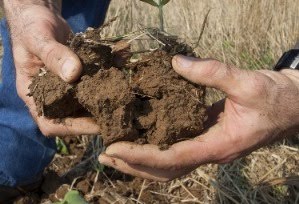
Shelby Field Day Features Soil Health

Share:
On September 7, the National Corn Growers Association (NCGA), in conjunction with the Nebraska Corn Board (NCB) and the Nebraska Corn Growers Association (NeCGA), hosted a field day in Shelby, Nebraska, highlighting the Soil Health Partnership. Farmers, land owners and community members had an opportunity to engage in hands-on learning and group discussions around the topic of soil health.

The field day took place at two locations. During the morning, attendees gathered at Central Valley Ag in Shelby for group discussions. Here, staff with the Soil Health Partnership showcased how changing nutrient management and tillage strategies, along with cover crop adoption, can create lasting environmental and economic benefits. The afternoon was spent on Greg Whitmore’s farm where attendees had the opportunity to take part in hands-on field demonstrations, including a soil pit for participants to observe cover crop root growth and soil properties. Whitmore, a farmer from Shelby Nebraska and vice chair of Nebraska Corn’s research and stewardship committee, has been involved in the partnership for three years.

“The Soil Health Partnership has been a great program to help bring awareness to the importance and benefits of soil health,” said Whitmore. “As a farmer, I have a strong interest in not only achieving good yields, but also in sustaining the productivity of my land for future generations. This program has taught me that improving the health of my soil can help with both of these objectives.”

The soil health field day covered a variety of topics, including a discussion on practical methods to improving soil health and what a soil health test really tells you. Cover crops were also discussed—digging into why they are important, the variety of cover crops that can be used and how cover crops improve the health of the soil. As more farmers seek innovative practices to change the way they care for their land, the Soil Health Partnership aims to bring farmers and experts together to share information and resources on these topics on a local level.

 “Implementing practices to improve soil health can have numerous benefits including preventing nutrient loss and erosion, and improving soil structure,” said Boone McAfee, director of research at NCB. “Farmers are our best ambassadors for sharing these soil health practices and encouraging adoption among their peers.”

Nebraska Corn is encouraging farmers to consider becoming involved in the Soil Health Partnership. If you are interested in learning how to use innovative soil management strategies and would like to become one of the Soil Health Partnership’s demonstration farms, contact the Nebraska Corn Board office.

About the Soil Health Partnership 
The Soil Health Partnership brings together diverse partner organizations including commodity groups, federal agencies, universities and environmental groups to work toward the common goal of improving soil health. Over a period of at least 10 years, the SHP will identify, test and measure farm management practices that improve soil health and benefit farmers. We believe the results of this farmer-led project will provide a platform for sharing peer-to-peer information, and lend resources to benefit agricultural sustainability and profitability. An initiative of the National Corn Growers Association, we provide the spark for greater understanding and implementation of agricultural best practices to protect resources for future generations. For more, visit soilhealthpartnership.org.

September 16, 2016

Support For Atrazine Crops Up At Husker Harvest Days

Share:
Husker Harvest Days goers and elected officials alike showed their support for atrazine during the 2016 Husker Harvest Days show. Visitors to Nebraska Corn's booth in the agriculture commodities building were invited to fight back against the Environmental Protection Agency's recent proposal to drastically limit the amount of atrazine farmers can apply to their fields. Nearly 1,000 signatures were collected on Fight EPA petitions, showing support for Nebraska farmers.

Fight EPA postcards also hit farm mailboxes across the state earlier this month. Please join the fight. Make your voice heard by returning one of these cards to Nebraska Corn, or sign the online petition at www.fightepa.com.


Photo Caption: Nebraska Governor Pete Ricketts signed a Fight EPA petition while visiting the Nebraska Corn booth on September 14th at Husker Harvest Days.

August 26, 2016

Journal of Kernels

Share:

By Laura Lundeen, NeCGA intern.

June and July have come and gone and it is hard to believe it is already August! This summer has flown by, and I feel like the quote “time flies when you are having fun” is very fitting to describe the summer portion of my internship. Working is essential, but it is not always described as “fun”, making me even more thankful to be provided with an enjoyable learning experience by being the intern for the Nebraska Corn Growers Association.

The end of June and July means a lot for a NeCGA intern; it means Kum & Go promotions, ethanol races, and the moment that we have working exceptionally hard towards- the Corn Grower Open golf tournament.

Kum & Go promotions wrapped up nicely. The more promotions I did, the more I learned. Being around knowledgeable people working for the Nebraska Ethanol Board, the Nebraska Corn Board, and also the Nebraska Corn Growers Association makes it impossible NOT to learn something new! Listening to their responses to difficult questions regarding ethanol was a lesson by example for me, as well as motivated me to promote ethanol at the Kum & Go promotions or by myself. I feel confident in sharing the goodness of ethanol use to my friends, family, and anyone else passing by. Thank you farmers for growing our fuel, cleaning our air, and helping out our state! It is great to be a part of an organization that cares strongly about greater living.

July promised another American Ethanol Night at the Races. This event was hosted at the I-80 Speedway in Greenwood. This night was unique not only because of the ethanol races, but also because we were able to see Austin Dillon’s American ethanol racecar. This event brought in a great crowd where we were able to enjoy time meeting with the local members, promoting ethanol through intermission questions and giveaways, and watch the races while taking in some clean air.

The biggest job that I have had this summer is to help prepare for the Corn Grower Open golf tournament. Finding sponsors, speaking with golfers and businesses, promotion of the event, setting up, and tearing down have made for a busy summer! I am thankful that the event ran smoothly, the weather cooperated, and it was an enjoyable time for the people who came out for the tournament! Even though it was hard work to prepare for the tournament, the credit needs to go especially to our sponsors. Without their help, the tournament truly could not go on. Thanks to them, we can continue to have an annual golf tournament for members to enjoy as well as connect with other businesses. Now that the golf tournament has come and gone, it is time to look forward to all of the excitement August will bring; I am excited to experience it and share it with you all as well!

August 23, 2016

Nebraska Corn and Sorghum Urge Farmers to Tell EPA That They Need Atrazine

Share:
EPA’s proposed Atrazine decision will impact farmers’ bottom line

The Nebraska Corn Growers Association and Nebraska Grain Sorghum Producers Association are urging farmers to submit comments to the U.S. Environmental Protection Agency (EPA), on their proposed reduction of acceptable application levels for atrazine, a herbicide used for weed control in growing corn, sorghum and other crops.

For more than 50 years, Atrazine has been a mainstay of corn and sorghum farmers for its proven control of a broad range of weeds. That is why the Nebraska’s Corn and Sorghum Associations are strongly encouraging Nebraska farmers to contact the EPA and express their disapproval of their ecological risk assessment for atrazine. If the recommendations included within the assessment stand, it would effectively render this important tool useless on farms and significantly increase farmers input costs. EPA is accepting public comments on the assessment through October 4, 2016.

"Atrazine is a safe and effective crop management tool that farmers cannot lose access to," said Larry Mussack, farmer from Decatur, Nebraska and president of the Nebraska Corn Growers Association. "Farming without atrazine could cost farmers up to $59 additional dollars per acre. In a time when net farm incomes are already at a sharp decline, this is a staggering cost most Nebraska farmers cannot afford.”

In a joint statement, Nebraska Corn and Sorghum leaders expressed great disappointment and concern regarding the EPA’s recently released ecological risk assessment on the herbicide. “In spite of more than 7,000 scientific studies proving atrazine’s safety, the EPA chose to ignore sound science and is proposing to drastically reduce the use of one of the most reliable herbicides available,” added Mussack.

The EPA based their ecological risk assessment for atrazine on studies their own Science Advisory Panel deemed ‘flawed’ just 4 years ago. Through the use of these highly questionable studies, the EPA arrived at an aquatic level of concern for Atrazine of 3.4 parts per billion, a two-thirds reduction from the current level of 10. Scientific evidence points to a safe aquatic life level of concern at 25 parts per billion or greater. If the proposed level of concern becomes the standard, effective use of the herbicide would be unachievable and would ultimately represent a de facto ban on the use of atrazine.

"The facts are simple—we need Atrazine,” added Lynn Belitz, farmer from Fullerton, Nebraska and president of the Nebraska Grain Sorghum Producers Association. “Taking away atrazine will drastically set back our conservation and no-till practices as well as eliminate safe, long lasting weed control. That is why it is absolutely imperative that farmers get engaged during this comment period.”

Farmers can take action on this issue and submit a comment to the EPA by visiting the website: FightEPA.org. The website will directly link you to a comment submission form with suggested verbiage. Additionally, farmers will be able to directly submit comments to the EPA and learn more about this issue from Nebraska Corn and Sorghum Associations leaders in the commodities building during Husker Harvest Days.

July 29, 2016

The Life of a NeCGA Intern

Share:

By Laura Lundeen, NeCGA intern, Lincoln.

I started out as a member of the growers, and now I am lucky enough to be an intern. When I started my internship, I had a basic idea of what the Nebraska Corn Growers did, what the ag industry was based on, and also what my passions were in regards to agriculture. I have to say that in the last month, that little, basic idea I had has now been opened up to so much more than what it was before! 

I have been able to make connections, promote agriculture in and out of the office, and stay in tune with the ag industry and all that is happening across the state and country.
One way that I have been able to promote agriculture is through helping out at the Kum & Go Promotions. At these events, E-85 is sold for 85 cents a gallon! Nebraska Corn and the Nebraska Ethanol Board work to fill up citizens flex fuel vehicles with E-85, while also telling them about why ethanol is important. Although flex fuel vehicles have become more common, many people do not now if they drive one, and many people do not realize that we can grow/make ethanol here in our own state! Ethanol is important to our farmers, but also our state, our environment, and our economy. It has been really fun to learn more and tell the story of ethanol to people that may not realize that yet.

Ethanol has also been a focus at the dirt track races. These nights promise a fun event fueled by ethanol. Nebraska Corn has been there to promote the use of ethanol, answer any questions regarding the industry if possible, and also give back to our members by supporting them at their race if competing, hand out prizes and giveaways, and enjoy being with them. I have enjoyed meeting some of the great people that help make up NeCGA as well as learning more about ethanol.Some people say that internships are about filling coffee, taking out the trash, and cleaning out the microwave, but even though I would be happy to do those things, I am even more proud to say that NeCGA has provided me an internship where I get to be a part of telling the story of agriculture. Through making connections, promoting agriculture in and out of the office, and staying in tune with the ag industry and all that is happening across the state and country, I am happy to say that the life of a passionate NeCGA intern is the best place to be. Come to the races or fill up with 85 cent gas, and you will see me there.

In the office, promotion is just as great and valuable. Instead of being out and speaking with people about the industry, I have been given the opportunity to be a part of advocating for the industry, organization, and connecting with members through our social media outreach. Social media has become one of the most widely used form of networking, and I am happy to see that NeCGA takes advantage of that to tell the story of agriculture.


June 24, 2016

Joining the Nebraska Corn Growers Team

Share:

By Laura Lundeen, NeCGA office intern, Lincoln, Nebraska.


I'm feeling ready to be the new Nebraska Corn Growers Association Intern! I am excited to gain a better understanding of agriculture through numerous perspectives, make new connections, and advocate for Nebraska Corn and the industry itself. 
Growing up on a farm of corn and soybeans in Axtell, NE, I was able to gain a passion and foundation of the agricultural industry. Working alongside my parents, Brad and Deb, and my two brothers, Mark and Nate, has played a huge factor in my pursuit of a degree in agriculture. They have encouraged me and taught me so many things about the industry as a whole, as they share the same passion and love for farming. Studying Agricultural Education with minors in Animal Science and Agronomy at the University of Nebraska-Lincoln has been one of the greatest experiences of my life. I love learning more and more about the industry, and it is becoming harder to accept that I will be graduating in December of 2017. My mom has always said though that learning does not stop when you end taking classes, and that excites me. I am excited to learn more between now and May of 2017 through the Nebraska Corn Growers Association by watching, following, and sharing a passion with wonderful agriculturalists. 

June 7, 2016

Farm Women Ascend to Leadership Positions in Corn Organizations

Share:
Farm women are taking their place with their male counterparts to lead the corn industry in times of challenge and opportunity. A few examples include:

Debbie Borg, an Allen, Nebraska farmer, was appointed as District 4 director on the Nebraska Corn Board in 2013. She serves as chair of the Nebraska Corn Board's research committee and is a member of the Grower Services Action Team of the National Corn Growers Association. She also served as a director on the Nebraska Soybean Association for 9 years. "Farmers--both men and women--need to use their skill set to show the nation and the world how we care about our land, our livestock and our crops, and the people we are producing food, fiber, and fuel for," Debbie said. "According to credible statistics, women account for almost 85 percent of consumer spending in our country. Just by virtue of our gender, that means women in agriculture have a natural connection to the consumer, which gives us an urgent mission to share the positive story of agriculture in the consumer marketplace."

Deb Gangwish, a Shelton, Nebraska farmer, is the first woman in the Nebraska Corn Growers Association to be appointed to the board of directors since the organization was formed in 1972. Deb is a member of the current LEAD class and has recently challenged herself to becoming an even more active and involved advocate for agriculture in Nebraska. "I'm very excited to be engaged in agriculture at this level and I look forward to working with my fellow board members and other ag advocates to create opportunities for Nebraska's corn farmers," she said.

Pam Johnson, a Floyd, Iowa farmer, served as the first female president of the National Corn Growers Association during 2012-13. In that capacity she became the chief national spokesperson for America's corn farmers, testifying at Congressional hearings and representing the corn industry on national councils, organizations and initiatives. Prior to becoming NCGA president, Pam held a number of leadership and committee positions at the state and national levels.

August 26, 2015

From Working on the Farm to Working for Farmers

Share:
By Samantha Schneider, Nebraska Corn Growers Association Intern.

Hey everyone! I’m Samantha Schneider, and I’ll be a senior this fall at the University of Nebraska-Lincoln majoring in Agricultural Communications.  I grew up south of Cozad, Nebraska on the family farm where we raise corn, soybeans, popcorn and cattle.  This summer I decided to branch out, and I have an amazing internship with the Nebraska Corn Growers Association (NeCGA) where I am the communications intern.

My first day as an intern, was the day Morgan and I started planning our big summer event, the 5th Annual Corn Grower Open.  Corn Grower Open was held at Meadowlark Hills Golf Course in Kearney, Nebraska on July 29th.  I enjoyed getting hands on experience planning an event that reached out to our local corn grower members and members of the agricultural industry as well.  During the Corn Grower Open, we held a silent auction. The proceeds went to support the Food Banks of Lincoln and Kearney. With the help from our sponsors and corn grower members, we were able to raise over $1,000 to donate. I enjoy working with an organization that likes to help people in need.
It was a beautiful day at Meadowlark Hills Golf Course for the 5th Annual Corn Grower Open.

Growing up on a farm you get used to working outside, luckily I got to spend plenty of hours outside promoting the use of American Ethanol.  The NeCGA has a summer tradition of traveling across Nebraska to promote Ethanol Night at the Races.  The first race was held on May 30th at Junction Motor Speedway in McCool Junction. This was a great start to the summer! Morgan and I got to ride in the pace car and hold the American Ethanol flag to wave out the window.  The next race was on June 28th at I-80 Speedway near Greenwood.  Our next stop was at the Dawson County Raceway in Lexington on July 19th.  At both these races, the Biofuels Mobile Education Trailer and American Ethanol Show Car were in attendance.  It was fun to see people taking pictures with the show car and learning more about ethanol.  The last race was held at Beatrice Speedway on August 7th, it was kid’s night so we handed out corn and ethanol coloring books.  At each race we passed out promotional items and during intermission we asked trivia questions about ethanol to educate the crowd.
 Morgan and I getting a ride around the dirt track at Junction Motor Speedway in a Mustang!

I also had the opportunity to help with American Ethanol promotions at Kum and Go gas stations.  Every Thursday throughout the summer, customers could get E85 for 85 cents from 10:00 am – 2:00 pm at the different stations in the Omaha metro area. This was a great opportunity to educate people about ethanol and about the current issues the industry is facing. We would encourage people to leave a comment to protect the Renewable Fuel Standard (RFS). The Environmental Protection Agency (EPA) has lowered the amount of corn based biofuel used to supply our nation’s renewable fuel, this could have a severe impact on our corn production next year. I was proud to promote ethanol this summer and encourage people to protect this industry. 
Austin Dillon's American Ethanol Show Car
I have had endless opportunities this summer to work with people in the industry I am passionate about.  Through this internship I have made connections and learned new skills that I wouldn’t have known or had otherwise.  I love being a part of an industry that is always changing allowing me to never stop learning. I look forward to continuing my internship with NeCGA through my senior year at the University. 

August 24, 2015

Upcoming Nebraska Corn Grower Events

Share:
While summer is slowly winding down, Nebraska Corn Grower events are just getting started! Below is a full list of upcoming events. If there is an event in your area, we encourage you to attend. Don’t miss out on the working the Beef Pit at the Nebraska State Fair - or attending and volunteering at Husker Harvest Days!

Schedule of Events:

Colfax Dodge Summer Meeting
The Colfax Dodge Growers are having their summer meeting on August 25th from 6:00 pm-9:00 pm.

Saunders County Plot Tours
The Saunders County Plot Tours will be on August 26th.

Nebraska State Fair
The Nebraska State Fair is on August 28th - September 7th. The Nebraska Corn Growers will be working in the Beef Pit on September 2nd from 8:45 am-3:15 pm. 

Hamilton County Field Day
The Hamilton County Field Day is on September 9th from 11:00 am-1:00 pm.


Dawson County Field Day
The Dawson County Field Day is on September 9th from 2:00 pm-6:00 pm.

Husker Harvest Days
Join us at Husker Harvest Days September 15th-17th. 

Saunders County Bus Tour
The Saunders County Plot Tours will be on December 2nd.

Please visit the Nebraska Corn Growers' website to keep up to date on upcoming events. 

July 23, 2015

Nebraska Corn Urges Farmers to Submit Comments on EPA Ethanol-Reduction Proposal

Share:
The Nebraska Corn Board and Nebraska Corn Growers Association are issuing an urgent call to action to Nebraska farmers to once again get vocal about recent action by the Environmental Protection Agency (EPA) that would reduce the nation's commitment to renewable fuels.

Nebraska Corn strongly encourages Nebraska farmers to submit comments to the EPA expressing their displeasure with the proposed renewable fuels reduction. 

A portal has been established on the Nebraska Corn Board website and the Nebraska CornGrowers Association website, under the icon “Don’t Mess with the RFS.”  This icon links directly to a comment submission form and suggested verbiage on the National Corn Growers Association’s website.

The comment period will close on Monday, July 27, 2015.   

In a statement, Nebraska Corn leaders expressed great disappointment and concern regarding the recent proposal from the EPA to slash the required amount of conventional biofuels in the nation's fuel supply for 2015 and 2016. EPA proposes to adjust the conventional biofuel requirement that is mandated in the Renewable Fuel Standard (RFS) passed by Congress, downward by nearly 2.6 billion gallons.

"Agriculture was once again placed in an unstable position by EPA when they released their long overdue RFS proposal," said Tim Scheer, farmer from St. Paul, Nebraska and Chairman of the Nebraska Corn Board. "It is absolutely imperative that farmers get engaged in the comment period if we have any prayer of getting EPA to increase the proposed figures to the original congressional statue of 15 billion gallons for 2015 and 2016. All the work and investment that Nebraska corn farmers have put into building the ethanol industry is at risk. We've already seen corn prices drift downward to the cost of production."


Nebraska Corn Growers Association President, Larry Mussack of Decatur, Nebraska added, "This proposal plays right into the hands of the oil industry, which has been pulling out all the stops to prevent loss of market share to renewable fuels such as ethanol. American farmers and consumers were promised the opportunity to utilize an American-made, cleaner, renewable alternative to oil. This proposal not only ignores that agreement, but diminishes the cost-saving options that American Ethanol provides in the marketplace for consumers.” 

July 15, 2015

Continuing the Conversations of Nebraska Corn

Share:
For the past few weeks, I have kept very busy in and out of the Nebraska Corn Board Office. I am really enjoying the projects I have been working on, and the events I have been able to attend. On a weekly basis, I have been posting crop progress updates Tuesday's, and on Friday's I post a #FunFactFriday info-graphic that I have designed for the week. I have found that the info-graphics are a great hit and they are a wonderful way to share the message of the Nebraska Corn Board through social media.

As my internship continues to fly by, I am constantly learning more about the corn industry and becoming a better communicator through the process. Not only have I been busy in the office, but I have been out of the office on many occasions as well. Below are some photos of events I have attended along with projects I have been working on...

On June 28, I was able to attend the I-80 Ethanol Night at the Races in Ashland, NE with Sam, the Corn Growers Intern and Victoria, a Corn and Soy Mentor. This was such a great experience being able to promote ethanol at this fun event.
On July 8, I traveled to Omaha, NE for a Storm Chasers baseball game, and the theme for the night was "Ag Night." I met up with Morgan, from the Corn Growers Association and Emily, a Corn and Soy Mentor. I had many great conversations with consumers about the corn industry, and received many great questions regarding ethanol and the Renewable Fuel Standard. It was rewarding being able to share my knowledge of the corn industry with those who aren't around agriculture on a day-to-day basis.
On July 9, I attended the Nebraska Agricultural Youth Institute Career Fair on UNL's East Campus. I spoke with high school students from all over the state about opportunities with the Nebraska Corn Board such as internships and scholarships. Since I was in these student's shoes just one year ago, I was able to have such great conversations with them.

June 8, 2015

Nebraska Corn Farmers’ Frustration with EPA Continues Following Biofuels Requirement Release

Share:
After a very lengthy deferment, Nebraska corn farmers are frustrated with the U.S. Environmental Protection Agency’s (EPA) recent release of the proposed 2015 and 2016 Renewable Volume Obligation (RVO) figures. Once again the EPA reveals their flawed tactics in implementing the federal Renewable Fuel Standard (RFS) by proposing to cut the corn ethanol obligation. EPA proposes to adjust the conventional biofuel requirements in the RFS passed by Congress downward by more than 1.5 billion gallons.

“It is disappointing to see the methodology behind this long overdue proposal. EPA is continuing to play into the hands of the oil industry,” said Tim Scheer, farmer from St. Paul, Nebraska and Chairman of the Nebraska Corn Board. "Family farmers have responded to ethanol demand by using technology to produce larger crops and grow more with less. Yet, the EPA still chose to side with the oil industry and decrease the RFS levels, ignoring the fact that American farmers can easily supply enough corn to meet the RFS requirements previously set forth.”

The long-awaited 2015 and 2016 RFS proposals increase the overall use of biofuels over the two-year period; however, the levels are below what Congress had mandated in the original legislation. The proposed RVO level for conventional ethanol in 2015 is 13.4 billion gallons and 14.0 billion gallons for 2016.  Nevertheless, congressional statue dictates that RVO levels for both 2015 and 2016 should be at 15 billion gallons. 
These proposed figures represent nearly 1 billion bushels in lost corn demand and 8.5 million tons of distillers grains (DG) that the livestock industry will not have access to.

“All the work and investment that Nebraska corn and livestock farmers have put into building the ethanol industry is at risk. We've already seen corn prices drift at or below the cost of production and cutting the use of corn for ethanol could drive prices even lower. This decision could also idle capacity and restrict access to the distillers grain market for the livestock sector,” Scheer added.

The RFS is one of our nation’s most successful energy programs and is working exactly as designed. It has reduced greenhouse gas emissions, decreased our reliance on foreign oil, lowered gasoline prices for consumers, increased economic stability in rural American and spurred innovation in advanced and cellulosic biofuels.

"It might be expected that farmers would be frustrated about this, but every American should be upset as well," said Larry Mussack, farmer from Decatur, Nebraska and President of the Nebraska Corn Growers Association. "The RFS is federal policy that has been very beneficial to our country, and there is no reason we should not stay on course to increase the diversity of our nation's transportation fuel supply and help keep down costs at the pump.”

Mussack also added, “American farmers and consumers were promised the opportunity to utilize an American-made, cleaner, renewable alternative to oil. This proposal not only ignores that agreement, but diminishes the cost-saving options that ethanol provides in the marketplace for consumers.”


Once the proposal has been posted to the Federal Register, comments will be accepted with the EPA planning to issue the final volume requirements in November, 2015.

May 28, 2015

2015 Nebraska Corn Interns Announced

Share:
Seven Nebraska Students Selected to Represent Nebraska Corn in Internships

(Left-Right): Amanda Clymer, Emily Scholting, Greg Sullivan, Megan Hamling
and Kaydee Caldwell.  Not pictured: Samantha Schneider and Glen Ready.

The Nebraska Corn Board (NCB) and Nebraska Corn Growers Association (NeCGA) are proud to support seven college students as interns starting this summer, including an international internship.

NCB will once again partner with the U.S. Grains Council to host an international student intern in their regional office of Panama City, Panama. Four of the other six internships will be hosted by national cooperators of Nebraska Corn: National Corn Growers Association in St. Louis, Missouri and Washington, D.C., the U.S. Grains Council in Washington, D.C. and the U.S. Meat Export Federation in Denver, Colorado. The last two internships will be held in the Nebraska Corn offices in Lincoln and will be year-long internships.

“Nebraska Corn’s internship program has been engaging students for over 20 years, and year after year, we continue to hit homeruns, finding excellent students to fill the various internship opportunities,” said Kelly Brunkhorst, Executive Director for the Nebraska Corn Board. “We are thrilled to be able to offer our future agricultural leaders these great internship opportunities.”

“We have very high expectations for these interns. Nebraskans should be very proud of our collegiate candidates who apply for these internships and go on to excel in agricultural focused careers," added Brunkhorst.

Below is a listing of students who were selected for this year's internships and a short description of what they'll be experiencing. You can keep up with many of these students and their experiences throughout the summer on our blog under the tag: Interns 2015.

The NCB office in Lincoln is excited to welcome Megan Hamling of Garland, Nebraska, for a year-long internship. Megan will be a sophomore in agriculture business with a minor in communications and leadership at the University of Nebraska – Lincoln. As part of her internship, she will oversee crop progress report placement, contribute to communication and outreach programs and help with education and promotion activities.
The NeCGA office in Lincoln is happy to welcome Samantha Schneider of Cozad, Nebraska, for a year-long internship, supported by DuPont-Pioneer. Samantha will be a senior in agricultural journalism with an emphasis in strategic communication at the University of Nebraska-Lincoln. She will oversee NeCGA’s online communications as well as contribute to a variety of communication and outreach projects.
The National Corn Growers Association (NCGA) office in Washington, D.C. will host Glen Ready of Scribner, Nebraska, as their summer intern supported by a partnership between NCB and NCGA. Glen will be a senior in agricultural economics with an emphasis in public policy at the University of Nebraska-Lincoln. He will be involved with a variety of agricultural issues related to environmental regulations, transportation, free trade agreements, biotechnology, ethanol, and energy.
The National Corn Growers Association headquarters office in St. Louis, Missouri, will host Emily Scholting of Springfield, Nebraska, as their summer intern supported by a partnership between NCB and NCGA. Emily will be a senior in political science with an emphasis in pre-law at Nebraska Wesleyan University. She will be assisting with production and stewardship projects, as well as participating in committee meetings and policy issues.
The U.S. Grains Council (USGC) will host Amanda Clymer of David City, Nebraska, as their summer intern supported by a partnership between NCB and USGC. Amanda is a junior in agricultural economics with a minor in entrepreneurship and leadership at the University of Nebraska – Lincoln. She will be working with the global programs team and assisting with preparation for international trade teams and other market development programs that help to develop demand for U.S. coarse grains and co-products. 
The U.S. Grains Council will host their second international intern, Greg Sullivan from Omaha, Nebraska, in Panama City, Panama, in cooperation with NCB. Greg earned bachelors in psychology from St. John’s University (Minnesota) and is currently working on his masters in agricultural business at the University of Nebraska-Lincoln. He will be working on issues related to global trade in food and agricultural products, assisting with communication to importers and working on the upcoming USGC Regional Buyers Conference in Medellin, Colombia, July 7-8, 2015.
The U.S. Meat Export Federation (USMEF) will host Kaydee Caldwell of Edgar, Nebraska, as their summer intern supported by a partnership between NCB and USMEF. Kaydee is a junior in animal science with a management and reproduction option from the University of Nebraska-Lincoln. She will be assisting with beef, pork and lamb specific projects, as well as promotions and international relationship opportunities.

May 14, 2015

Nebraska Corn Applauds Nebraska Congressional Leaders for Support of E15 Legislation

Share:
The Nebraska Corn Growers Association and Nebraska Corn Board would like to thank Senator Deb Fischer for co-sponsoring and Representative Adrian Smith for introducing a bill to expand the volatility waiver for blends of American Ethanol up to 15 percent (E15), ultimately increasing consumers' access to higher blends of American Ethanol year-round.

"We appreciate Senator Fischer and Representative Smith for their continued efforts to support America’s ethanol industry,” said Larry Mussack, farmer from Decatur, Nebraska and president of the Nebraska Corn Growers Association. “Their joint effort on the E15 bill not only supports the market for ethanol producers but also expands consumer choice at the pump.”

“From reducing our dependence on foreign oil, to expanding our use of renewable fuels, to improving the air we breathe, there are many benefits to expanding the volatility waiver for E15,” said Tim Scheer, farmer from St. Paul, Nebraska and chairman of the Nebraska Corn Board. “Passing this legislation will ensure that consumers have access to energy that is clean, renewable, and American-grown.”

Reid Vapor Pressure measures the evaporation rate of gasoline. Under current regulations, summertime volatility restrictions are in place from June 1 through September 15, but E10 receives a volatility waiver. This legislation would extend the same waiver to E15 blends. Similar legislation was introduced in the House of Representatives in April.

April 20, 2015

Nebraska corn farmers to invest more than $2.6 billion to plant 9.3 million acres

Share:

According to the U.S. Department of Agriculture (USDA), Nebraska corn farmers will plant 9.3 million acres of corn, equal to last year’s total acres planted. Corn field and center pivot irrigation in south central Nebraska. July, 2010. Photo by Craig Chandler / University CommunicationsWith Nebraska corn farmers’ intentions of planting 9.3 million acres of corn this year, farmers will spend about $280 per acre to get the crop in the ground and off to a good start. This figure, multiplied by the estimated 9.3 million corn acres to be planted in Nebraska, grows to more than a $2.6 billion investment by the state’s corn farmers over a two-month period. That amount does not include land costs, labor or equipment – it’s purely inputs like seed, fuel, and fertilizer. Looking beyond these initial inputs, however, the full economic impact corn has in Nebraska will more than double in a year.

“The full economic impact of the corn industry in Nebraska over the year is greater than $6 billion and reaches far beyond the initial $2.6 billion farmers invest to get their crop in the ground,” said Boone McAfee, director of market development and research at the Nebraska Corn Board. “When the corn crop is harvested, its economic impact grows significantly as it is converted into meat, milk, eggs, ethanol, distiller’s grains, bioplastics and more. That is why it is critical to get the corn planted and off to a good start in the spring.”

Historically in Nebraska, farmers begin planting in mid-April and wrap up as quickly as possible in May. However, weather is a key element for planting. And this year’s moderately dry winter brings a concern of soil moisture that will be available come planting time. According to the April 13 USDA Nebraska Crop Progress and Condition report, topsoil moisture supplies in Nebraska rated 15 percent very short, 32 short, 50 adequate, and 3 surplus. Subsoil moisture supplies rated 13 percent very short, 29 short, 57 adequate and 1 surplus.

Young corn plants are highlighted by the early morning sun in Sarpy County. Photo by Craig Chandler / University Communications

“As farmers strive to improve every year, they make this multi-billion dollar investment each spring with the hope of producing more corn per acre,” said Tim Scheer, farmer from St. Paul, Nebraska and chairman of the Nebraska Corn Board. “Nebraska is the third largest corn producing state in the US, and the corn industry continues to be an economic booster for Nebraska. The investment farmers make this spring will not only reverberate through the rural economy, but will multiply to support the rest of Nebraska.”

Another challenge with planting investments this year is the low commodity prices compared to the continued rise of input costs. This makes the margin for the cost of production very slim for Nebraska farmers.

“Similar to last year, we will see another year of tight margins and farmers will again be producing closer to the cost of production,” said McAfee. “Yet, as we continue to see volatile market activity, there will hopefully be opportunities for farmers to manage their risk.”

Nationally, farmers intend to plant 89.2 million acres this year, which is 2.5 million fewer acres than the previous year. If realized, this will be the third consecutive year of an acreage decline and would be the lowest planted acreage in the United States since 2010. Notably, however, it would still be the sixth-largest U.S. corn acreage planted since 1944 according to the USDA.

December 24, 2014

October 2, 2014

“Take a second for safety!” during harvest

Share:

Corn harvest between Dorchester and York. October, 11, 2010.  Photo by Craig Chandler / University CommunicationsTake a second for safety. As farmers are entering the fields to harvest and traveling roads, the Nebraska Corn Board (NCB) and Nebraska Corn Growers Association (NeCGA) is asking farmers and those driving near harvest equipment to take precaution during this busy harvest season.

Agriculture remains one of the more dangerous occupations in North America, but exercising caution, getting rest and being safety-minded can go a long way toward making it safer for everyone involved.

“With an expected large crop and a later harvest this year, farmers will be working hard to get the crops out of the fields,” said Tim Scheer, chairman of the Nebraska Corn Board and farmer from St. Paul, Nebraska. “Working hard and fast in the field or on the farm could cause a chance for error where an injury or fatality could be prevented by taking appropriate precautions or simply taking time.”

This caution for safety isn’t for farmers alone, said Scheer. Motorists driving on rural roads during harvest should watch out for slower moving farm equipment. Rural intersections will have heavier-than-normal travel and dusty conditions that could limit visibility, as can sun glare in the morning and evening. Standing crops in the field may also block a clear view of oncoming traffic.

The “Take a Second for Safety” tagline echoes the efforts of the NCB and NeCGA at events this year. At Husker Harvest Days, Nebraska Corn hosted a giveaway of two grain engulfment rescue tubes to be given to local fire departments. Cedar Rapids, Nebraska and Newcastle, Nebraska volunteer fire departments were the fortunate recipients of these tubes.

“We hope to never have to use a grain rescue tube in the event of a grain engulfment,” said Emily Thornburg, NeCGA’s program director. “But in the case that one does happen, our goal is to have emergency personnel armored with the tools they need to save a life.”

The goal of Nebraska Corn’s efforts is to help fire departments across the state receive rescue tubes, as well as helping them obtain training in the event that someone working in or around grain becomes engulfed. The chances of survival for that person are greatly increased if there is a grain rescue tube available to fire departments nearby.

On the trainings, Nebraska Corn has worked with the Safety & Technical Rescue Association (SATRA). SATRA encourages seven grain entrapment prevention principles to keep in mind when working around grain.

  1. Prevent entrapments by developing a zero-entry mentality.
    1. Stay out of the bin, if at all possible.
  2. NEVER enter a bin with grain in it by yourself.
    1. The entry supervisor, entrant and attendant must work together and be able to communicate effectively with each other.
  3. NEVER enter a bin with grain in it without training.
    1. The employer should provide annual hands-on training.
  4. Complete the permit properly and identify all hazards.
    1. Have all potential hazards been identified and addresses?
  5. Shut down and lockout equipment.
    1. All equipment involved in the storage, drying, and material handling systems should be locked out and tagged during entry, service, and maintenance operations.
  6. Maintain control of the lifeline.
    1. Your lifeline is useless, unless it is secured properly.
  7. Identify and contact the emergency response group.
    1. Check of make sure emergency response group is properly trained and check with your local fire department for expected response time to your location for this type of incident.

“While we all recognize the excitement and enjoyment of harvest,” Scheer said. “Staying focused and resting regularly are two proactive steps in keeping things safe around the farm for everyone, including family members and employees helping to harvest the crop.”

June 30, 2014

“Take a Second for Safety”

Share:

National statistics show that farming is one of the most dangerous occupations in America. The Nebraska Corn Board and Nebraska Corn Growers Association are asking all farmers to slow down — and take a second for safety.

Over the past 50 years, more than 900 cases of grain engulfment have been reported—and the fatality rate is 62 percent. With a 10-inch auger, it takes just 25 seconds for a 6-foot person to be completely buried in grain.

Nebraska farmer, Ron Woollen has a mission to educate farmers and those working with grain stored in bins after losing his son in a grain bin accident.

“Grain bin safety is so important because we are always going to store grain,” said Woolen. “Equipment has improved dramatically. More options are available to monitor grain condition which is the biggest factor in grain bin accidents. However, there will always be times when it is necessary to enter a bin.”

Woollen said that when farmers have to enter a bin, they need to know the proper procedure and follow it.
Rescue tube training

When working around grain bins, here are safety tips to keep in mind when you are taking a second for safety.

  • Use inspection holes or grain level markers to understand what's happening inside the bin. Use a pole from outside the bin to break up grain bridges.
  • You should enter a grain bin only if absolutely necessary. If you must get into the bin, use a body harness secured to the outside of the bin. Have at least two people watching over you as you enter and work inside the bin.
  • Use hand signals to communicate—and make sure everyone you're working with knows what those signals are.

These safety strategies and more will be emphasized at two free Grain Engulfment Rescue Training workshops this July sponsored in part by GSI, Inc. The first will be July 7th at the Dawson County Fairgrounds in Lexington hosted by the Dawson County Corn Growers. The following day, July 8th, the Saunders County Soybean Growers and Saunders County Corn Growers will host a grain safety seminar at the American Legion in Ceresco. Both free seminars begin at 5:30 p.m.

The grain engulfment rescue training is intended for industry personnel that actively work in the grain and commodities industry as well as fire fighter emergency rescue personnel who might be called to an engulfment rescue.

“Last year, I attended a training seminar in Kearney for first responders and EMT’s,” said Woollen. “I was very pleased with the quality of the training and the equipment now being made available for grain extraction.”

June 13, 2014

Nebraska Ag Groups Say No to EPA's Water Rule

Share:


Nebraska Cattlemen, Nebraska Corn Growers, Nebraska Farm Bureau, Nebraska Pork Producers, Nebraska State Dairy Association and Nebraska Soybean Association submitted comments calling for the immediate withdrawal of the "Waters of the U.S." Interpretive Rule (WOTUS).  This Interpretive Rule is the first part of a "Waters of the U.S." rulemaking proposal by U.S. Environmental Protection Agency (EPA). 

The U.S. Environmental Protection Agency has extended the comment period on its controversial "Waters of the U.S." rule to October 20th.  The comment period was scheduled to end July 21st.

The rule would expand the number of waterways subject to pollution controls under the federal Clean Water Act.

The Interpretive Rule has been touted as beneficial to agriculture; however, these claims by EPA are misleading.  In reality, the Interpretive Rule significantly increases liability for farmers and ranchers in Nebraska, deceives the public and will hurt conservation efforts and water quality.

EPA claims the Interpretive Rule "exempts" certain Natural Resources Conservation Service (NRCS) conservation practices from Clean Water Act permitting requirements.  However, these practices were already exempt and the creation of a list actually narrows this existing exemption from Clean Water Act permitting.

The agency also claims this rule provide "assurances" to the agricultural community.  The truth is it adds complexity and can be modified or retracted at any time without public notice or comment.

Finally, EPA asserts the Interpretive Rule will "benefit" conservation efforts.  But, the rule discourages engaging in conservation practices because of unknown parameters and new risk of Clean Water Act penalties.   It also turns NRCS, an agency with a long standing relationship of partnering with landowners in voluntary conservation, in to a regulatory enforcement agency.

It is clear the Interpretive Rule is just another ploy by EPA to push its burdensome regulatory agenda and any claim by EPA otherwise is false.

"Farmers should be worried about WOTUS and the far reaching implications it could have on their operations," NeCGA President, Joel Grams.

For more information visit http://ditchtherule.fb.org/

July 30, 2013

Leadership trip to D.C. first for Nebraska Corn delegation

Share:

leadership tour corn congress 2013Each summer, corn grower leaders and staff from state and national corn associations gather in Washington D.C. for a series of action team and committee meetings, visits with their respective state’s Congressional delegation and the semi-annual National Corn Growers Association’s Corn Congress.

The Nebraska Corn Board sponsored eight individuals that have been involved in the Nebraska FFA, 4-H or LEAD program to join these corn grower leaders to attend Corn Congress. This opportunity was invaluable to introduce the leadership group to policy development through the National Corn Growers Association, understand current issues (Farm Bill, immigration, RFS, etc), hear from leaders within various Federal Agencies, engage with policy leaders through Hill visits, and network with industry leaders to allow for growth in leadership development and agricultural policy knowledge.

Don Hutchens, executive director of the Nebraska Corn Board who accompanied the leadership group said it was encouraging to witness their enthusiasm and participation.

“They were not shy in asking our Nebraska delegation questions on the Farm Bill, Renewable Fuels Standard, Immigration and Trade,” said Hutchens. “They were also joined by three of the national interns sponsored by the Corn Board.  The Corn Board is sponsoring internships with the D.C. office of NCGA, and the St. Louis office.  Also an intern at the USGC office. They had the opportunity to hear Sec. Vilsack of USDA, briefed on trade issues by Darci Vetter the Acting Under Sec. of Farm and Foreign Ag Service (a native Nebraskan), and Jim Bair of the North American Millers Association.”leadership tour corn congress 2013 (2)

Natasha Hongsermeier, a delegate on the leadership tour described the trip as a wonderful experience. “I am truly a more knowledgeable and a more informed ag youth because of all of the experiences offer by our trip to Washington, D.C.”

Another delegate on the tour, Morgan Zumpfe, said, “This experience was awesome for me because it combined three of my favorite things: meeting new people, trying new things, and promoting agriculture. You can research the Farm Bill and polity as much as you want, but it isn’t quite real until you get to see it happen in real life.”