Showing posts with label family farmers. Show all posts

April 5, 2016

Harvard Family Welcomes Fifth-Generation Daughter Back to the Farm

Share:
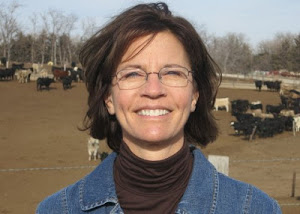
As a young girl growing up on a farm near Harvard, Nebraska, Jessie Portenier Ruppert didn't get to enjoy extended family vacations with her parents and three sisters. A camping trip meant sleeping out under the stars in the pasture and fishing in the farm pond. Attending a high school basketball game was only possible if the cattle were fed first. So after what some would view as a "deprived" childhood, why would this young woman decide to return to the family farm after graduating from college--to manage her own herd of cattle? Because she loves it. "You could just see her passion as a young girl. Whether it was running the tractor or working calves, she was just a natural," said Jessie's mother, Sharon. "It's just been kind of a given that Jessie was going to be our farmer." Jessie is the fifth generation in their family to become a farmer. She began her college career as a criminal justice major, but soon realized that her heart was in agriculture while working part-time at a feedlot during college. "I love being outdoors and just couldn't see myself being in an office with a lot of people," Jessie said. "Just being around cattle comforts me."

After enrolling in the Nebraska College of Technical Agriculture (NCTA) in Curtis, Jessie's dad, Kif, presented her with the opportunity to buy a small herd of cows following graduation. Because of her hands-on experience of working with cattle, many of Jessie's college classes at NCTA were a review of what she already knew. "But I was especially grateful for the business classes that taught me how to create spreadsheets to manage cash flow and set up record keeping for my cows," she said.

In addition to the farm near Harvard, the Portenier family has a ranch near Elwood, Nebraska. Jessie's cattle, as well as those owned by her father, are located there from early spring until after corn harvest. "During the summer, I spend most of my time at the ranch caring for the cows and calves--checking their health, getting them mineral to supplement the nutrition in their forage nutrition, and so forth." While Jessie is focused primarily on the beef side of the family operation, she's also always ready to step up when her parents need help with the crops--taking seed to the field during planting, putting out irrigation pipe, and hauling grain. The corn crop is a critical component in the family's beef business. Having both crops and cattle helps diversify the family operation. During the winter months, the cattle are transported from the Elwood ranch to the farm near Harvard to graze on cornstalks. This is also where calving takes place in February.

Jessie has a special place in her heart for cattle, but she points out that they are not companion animals like the cats and dogs on the farm. "We care for and love the cattle we raise, but it's important to understand that we are in this to raise beef. That's the way we've chosen to generate the income we need to provide for ourselves," Jessie said. Jessie has learned that the business aspects of beef production are critical to success. "Marketing is perhaps the most important thing a corn producer or cattle producer needs to understand," Jessie said. "I sold cattle for the first time last year when the market was at an all-time high, so that was exciting. But I also know that won't be the case every year."


So what's it like being a young woman in what is typically thought of as a "man's world"? 


"We have definitely always been a family farm and we never really had any hired help." Jessie said. "It was just dad, mom and us four girls. Everyone in the area talked about 'Kif and his girl crew' because that's just what it was. So I've never struggled with people saying that farming is a man's job." Jessie was married this past November to a young farmer and rancher from the McCook area, and the couple is working out the details of helping both of their families with their operations that are 150 miles apart. "If you want to be able to see your husband, you need to go out and spend time with him doing what he's doing," she said. "My mom has been dad's right-hand since they've been married. That's what I watched growing up and that's what I have always wanted."

February 22, 2016

It takes soil, moisture and sunlight...

Share:
"What does it take for a corn plant to grow?"

We ask this many times to student groups who are on "ag day" field trips or school farm tours. 

Often, their responses are: sunlight, dirt (we politely correct them to soil), water, fertilizer..and yes, I've even gotten the response: God. 

Simply, the corn plant just needs sunlight - or solar radiation and the temperature of the environment the plant is in, soil and moisture. Especially important are temperature and moisture. More technically, there could be many answers from farmers on what all they do to make their corn grow. 

Soil


Healthy soil is the basis for a healthy corn crop. Through research and technology, researchers have found out how to use fertilizers to create the perfect soil composition for growing crops to raise healthy food. Corn must have adequate amounts of nitrogen (N) and phosphorus (P) for profitable production.

Profitable and environmentally sensitive corn production requires that N and P be managed in an efficient manner. (That's why farmers never just "dump" fertilizer on their crops). Also, farmers use farming production methods like "no-till", which keeps more nutrients in the soil and decreases erosion, and crop rotation which allows for legumes, like soybeans, to return N back into the soil naturally.

Moisture


In Nebraska, we are blessed with irrigation and usually consistent rainfall, which helps us cover the moisture part. Even then, new technologies with irrigation are making it even more efficient to keep the corn plant hydrated. Even then, we must rely on Mother Nature - or what the student said, God - to water our crops. 
The current weather situation is looking rather unique with how current El Nino weather factors could turn into a La Nina weather event, which could dry up the Midwest, according to the U.S. Grains Council's recent Global Update. This would not affect the planting season, but could affect the growing season into the next year with soil moisture levels lower going into the 2017 crop planting. 

Sunlight


Along with water and nutrients, solar radiation (sunlight) is an essential input for plant growth. Plant leaves absorb sunlight and use it as an energy source in the process of photosynthesis. A crop's ability to collect sunlight is proportional to its leaf surface area per unit of land area occupied, or its "leaf area index (LAI)." At "full canopy" development, a crop's LAI and ability to collect available sunlight are maximized.

From full canopy through the reproductive period, any shortage of sunlight is potentially limiting to corn yield. When stresses such as low light limit photosynthesis during ear fill, corn plants remobilize stalk carbohydrates to the ear. This may result in stalk quality issues and lodging at harvest. The most sensitive periods of crop growth (e.g., flowering and early grain fill) are often the most susceptible to stresses such as insufficient light, water or nutrients.

If you're a farmer, we'd love feedback from your farm on:
"What does it take for a corn plant to grow?"


January 27, 2016

Family Farms Do Exist, Lots of Them

Share:
Ask most people across the United States what is happening to family farms, and they're likely to say that few of them exist anymore. Nothing could be farther from the truth. The 2012 Census of Agriculture shows that 96 percent of corn farms in the United States are family-owned operations. What is a family farm? According to the United States Department of Agriculture (USDA), a family farm is any farm where the majority of the business is owned by the operator and individuals related to the operator--including through blood, marriage or adoption.

Hubert Harner, director of the National Agricultural Statistics Service (NASS)--a division of USDA--said, "What we found is that family-owned businesses, while very diverse, are at the core of the United States agriculture industry." They are at the core of Nebraska's economy--and have been for generations. Many multi-generational family farms in Nebraska are using innovation, technology, research and talent to grow more with less--and ensure that their family farms stay productive and sustainable for future generations. One major crop that is grown here in Nebraska is corn. The eight types of corn grown in the state are: yellow dent corn, white corn, popcorn, blue corn, sweet corn, high-amylose corn, red corn, and ornamental corn. Yellow dent corn (field corn), the leading type of corn grown in Nebraska, is grown on a total of 8,936,885 acres and is primarily used for ethanol production and livestock feed. The "dent" appears in the corn kernels as the ear dries down for harvest. Overall, a total of 9,216,657 corn acres are planted in Nebraska each year.


January 13, 2016

Cumming Family Farm Spans 122 Years in St. Edward

Share:
Brian Cumming is a fourth-generation farmer near St. Edward, Nebraska. The farm has been in the family for 122 years. After getting a degree in Ag Business from a community college, he returned to the farm. "It's in my blood," he said. "It's the only way I know how to live and work." Cumming's 79-year-old father still comes to the farm every day to help when he can and to offer advice and insight. "Dad has been mentoring me from early on," Brian said. "I began attending agronomy meetings when I was 10 years old and he let me start running the planter at a very early age. He told me I needed my own crop to have something for my cows to graze on in the winter." In the 1950's, the Cummings operated one of the largest feedlots in Nebraska. "My grandfather loved feeding cattle and was still buying cattle two days before he passed away," Brian said. Today, they still manage a cow-calf herd comprised of some 200 head, which provides diversity for the entire operation to help mitigate risk.

He tells the story of his aunt Janet who returned to the farm to live with her father--Brian's grandfather--to help him as he aged. While raised on a farm, his aunt had spent most of her life in Omaha. When Aunt Janet saw the cattle being loaded in the truck and headed to market, she turned to Brian and said, "You must be sad about this. These animals are like your pets." "I told her that actually I had worked two years with those cattle to get them to this point--and now I was finally going to get paid for that work," Brian said. "That helped her understand that we're raising and caring for these animals as a business and to provide a healthy, nutritious protein supply." While raising cattle comes with its share of challenges, Brian says it has significant rewards. "Watching a little calf get up on its feet for the first time and take off across the pasture is a great feeling," he said. Brian and his wife Vanessa have six children and one grandchild. His hope is that the farm stays in the family for future generations--and he's doing his part to ensure the sustainability of his operation. "We're using more no-till practices to maintain and build organic matter in the soil and preserve moisture," he said. "We're also using cover crops, which are grazed by our livestock while improving soil health."

December 14, 2015

Do you want to build a snowman? Game Day Chili recipe.

Share:
By Joan Ruskamp, CommonGround volunteer 

We recently got hit by the fourth snow event in two weeks and I just had to take advantage of the wet snow by building a snowman.    I don’t remember the last time I made a snowman because when it snows here my time is spent moving the snow out of the way.    My husband is especially sensitive to songs like “I’m Dreaming of a White Christmas”  and “Let it snow” because snow means more work. 

When we get a snow event there are several jobs that have to be done.  First the roads must be cleared so that the feedtruck and vehicles can get around.   The next job is getting the bunks clean.  We have a very nice piece of equipment that makes this job much easier than when we had to scoop them all with a shovel.  The bunk blower works well unless you get really wet snow.  Really wet snow usually melts or it has to be scooped.

After the cattle are fed and cared for we get to work removing the snow or piling the snow that is in their pens.   The snow eventually gets hauled out so that the pens can stay dry.  When we get wet snow we keep the cement areas cleaned off and put some type of bedding material down so they have a dry place to lie down.

I have always been amazed at how quickly cattle adjust to weather changes.  They seem to adjust the quickest to cold weather.  Cattle are often seen running around in the snow, kicking up their heels and playing like children.   My favorite sight to see is when they are laying down soaking up the warm sun on a cold day.

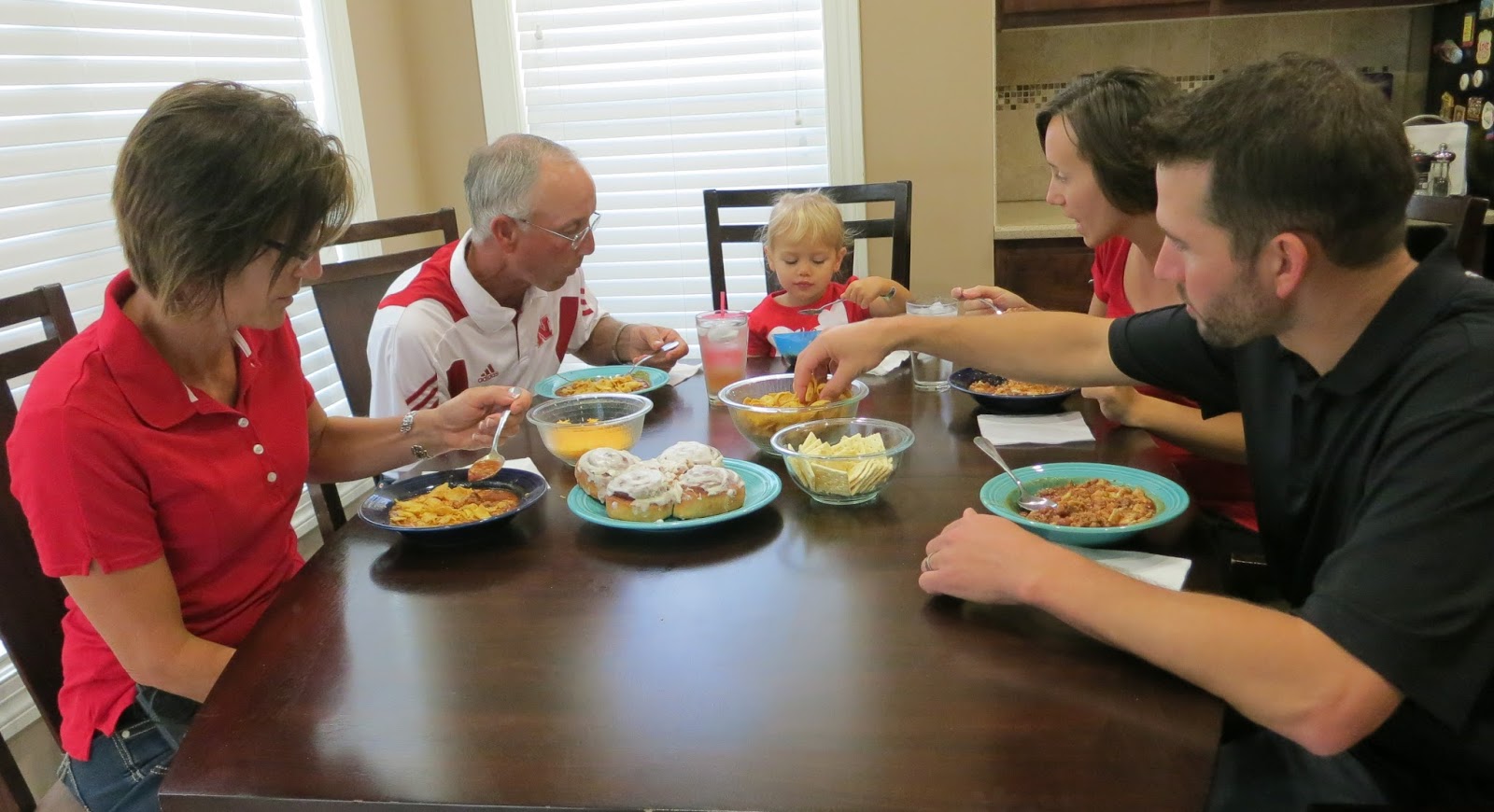
One of our favorite meals to enjoy on a cold day is chili soup.  I have a recipe that has gone over very well with our family and when used at large gatherings.  Here is my recipe: 

chili supper pic

Game Day Chili 

2-pounds ground beef
1-46 ounce can tomato juice
1-27 ounce can Bush’s Chili Beans
1-tablespoon chili powder
1-tablespoon onion flakes

Brown the ground beef with onion flakes. Turn crock pot on high and pour in tomato juice and beans.  Drain hamburger and add to crock pot. Sprinkle chili powder on top and stir mixture.  Leave on high for 1 hour or low for several hours. Toppings that go well are shredded cheddar cheese with crackers or corn chips.  It is a tradition in our community to serve cinnamon rolls with chili soup.

December 2, 2015

Farm Sector Profitability Expected To Weaken In 2015

Share:
The UDSA Economic Research Service recently published the 2015 Farm Sector Income Forecast report highlighting that both net cash and net farm income are forecast to decline for the second consecutive year after reaching recent highs in 2013. Net cash income is expected to fall by 27.7 percent in 2015, while the forecast 38.2-percent drop in net farm income would be the largest single-year decline since 1983 (in both nominal and inflation-adjusted terms).

Crop receipts are expected to decrease by 8.7 percent ($18.2 billion) in 2015, led by a forecast $8.6-billion decline in corn receipts, a $5.7-billion drop in soybean receipts, and a $2.7-billion drop in wheat receipts.

Livestock receipts could fall by 12.0 percent ($25.4 billion) in 2015, a reversal from the 43.8-percent increase in receipts over 2005-14 period.

The reduction in crop and livestock receipts is largely driven by changes in price rather than changes in output.

Government payments are projected to rise 10.4 percent ($1.0 billion) to $10.8 billion in 2015.

Total production expenses are forecast to fall 2.3 percent, the first time since 2009 that they have fallen year over year. Energy inputs and feed are expected to have the largest declines. Expenses are forecast to increase for labor, interest, and property taxes.

After several years of steady improvement, farm financial risk indicators such as the debt-to-asset ratio are expected to rise in 2015, indicating increasing financial pressure on the sector. However, debt-to-asset and debt-to-equity ratios remain low relative to historical levels.

Declining farm sector assets resulting from a modest decline the in value of farmland, investments, and other financial assetsas well as higher debtare forecast to erode equity by 4.8 percent, the first drop since 2009.

After several years of steady improvement, farm financial risk indicators such as the debt-to-asset ratio are expected to rise in 2015, indicating greater financial pressure on the sector. However, the sector appears to have remained well insulated from solvency risk.

AgView.net printed U.S. Secretary of Agriculture Tom Vilsack's response following the report.

November 2, 2015

5 Year-End Tax Planning Tips for Farmers

Share:
It’s already November? Yes, we’re all thinking it. Soon it will be December, Christmas and New Year’s Day.

In thinking about the year’s end, it’s important (and time to start!) planning for taxes. Farmers have several weeks remaining where you they still take action that will impact their 2015 tax returns. Although some producers may find their incomes lower in 2015 than in recent years, they may still seek ways to reduce income for the year or to defer it to future, potentially lower-income years. Several possible strategies are worth reviewing.

Set Date to Determine Income & Expenses


The most important step in year-end tax planning is to establish a date to determine income and expenses for the year. Larry Gearhardt, OSU Extension Asst. Professor, Taxation, suggests that around December 1 of this year, the farmer should determine, as close as possible, what his/her income and expenses are for the year. This leaves ample time for the farmer to take action to reduce income taxes, if possible. As soon as the ball drops on New Years Eve, the farmer has lost his opportunity to take action to reduce his taxes in 2015.

Timing


The most basic year-end tax planning is timing income and expenses, if possible, so that the income and expenses occur in the year that is most beneficial to the farmer. If 2015 is a high income year, the farmer should delay the receipt of revenue until 2016 and pay for 2016 expenses this year. This becomes especially important under the current circumstances where it appears as if 2016 income will be lower than previous years.

Charitable Gifts


A win-win strategy for reducing tax liability is to increase charitable giving.

Grain Gifts. Because of potentially significant tax savings, cash-basis farmers should consider gifting grain directly rather than selling the grain and then gifting the proceeds to charity. To qualify for the savings, certain technical steps must be followed. Otherwise, the IRS will deem the transfer to be a sale by the farmer, with a subsequent gift to the charity. Make sure that the commodity remains unsold inventory in the hands of the farmer. Title to the commodity must be transferred to the charity before the grain is sold. For example, the corn would be delivered to the elevator with a storage receipt made out to the charity. The charity receives a letter from the farmer stating the corn belongs to the charity and that the charity may sell the corn as it sees fit. The grain elevator should only issue a check to the charity once the charity has given a specific instruction to sell.

Other Charitable Gifts. For those taxpayers who itemize, charitable deductions can result in great tax savings. Donors should ensure, however, that they receive a “contemporaneous written acknowledgement” from the charity before claiming the deduction for any single contribution of $250 or more. The acknowledgement must state that no goods or services were provided by the organization in exchange for the contribution. Without such an acknowledgement, the IRS will disallow the deduction if the taxpayer is audited. It is a taxpayer’s responsibility to obtain the acknowledgment before the tax return is filed. A cancelled check or other evidence of payment is not sufficient.

Prepaying Expenses


Farmers might also consider prepaying 2016 expenses (in an amount up to 50% of all deductible farm expenses) in 2014, thereby making the expenses deductible against 2014 income. To qualify for the prepayment deduction—which applies to inputs such as feed, seed, fertilizer, and similar farm supplies—the farmer must make an actual purchase rather than just a deposit. The product purchased must be used or consumed in the next 12 months. The farmer must also have a business purpose (such as fixing a maximum price or ensuring supply) for the prepayment other than merely tax avoidance. Finally, deducting the prepayment must not result in a material distortion of the farmer’s income.

Section 179 Deduction and Bonus Depreciation


An important tax provision that has not been enhanced (per Congress’s discussions) for 2015 is the Section 179 limit remains at $25,000, where it was previously $500,000 in 2013 (before decreasing in ’14). This provision allows farmers to deduct $25,000 of the tax basis of certain business property or equipment during the year in which was property was placed into service. This information is particularly important if a large purchase has been made or is on the horizon.

With all of your tax decision, please consult with your tax professional to review any potential savings and to ensure that the proper steps are followed.

Information from here and here.  

October 12, 2015

Cheeseburger Quesadillas - Harvest Meal On-The-Go

Share:
air
Harvest has started for many farm families in Nebraska. Most farm wives have many jobs on the farm and especially many jobs during harvest. Sometimes that is driving the combine or the grain cart, taking the semi full of grain to the co-op or bringing a meal out to the hard-working harvesters. 

A simply, yet hearty meal that works on-the-go is great to take to the crew. Sandwiches will do, but its fun to get creative and make the guys happy to take a break from bringing in the harvest. And sometimes something warm seems to keep them fuller for longer.  

Enjoy this Cheeseburger Quesadilla recipe - fast to make and easy to put in foil to take out to the crew in the field. Or just for a great family meal at home - kids love it!

**Featured on Her View From Home thanks to CommonGround Nebraska.**

Cheeseburger Quesadillas

A hearty meal that is a family (and kid!) favorite!

Ingredients

2 Tablespoons Olive Oil
1 whole Medium Onion, Chopped
1 pound Ground Beef
2 Tablespoons Worcestershire Sauce
¼ cups Ketchup
¼ cups Real Bacon Bits
Salt And Pepper, to taste
2 teaspoons Garlic Powder
2 teaspoons Onion Powder
4 whole Large Flour Tortillas
2 cups Grated Sharp Cheddar Cheese
1 tomato, chopped
1 bell pepper, chopped
Vegetable Oil For Brushing
Red Crushed Pepper Flakes For Sprinkling

Directions

In a large skillet on medium high heat, heat the olive oil. Add the onions and allow them to cook for about 5-7 minutes until they become translucent. Add the beef and break it up with a wooden spoon or chopper. Cook the beef and onions together for about 10 minutes or until the beef is thoroughly cooked.

Preheat your oven to 350 F.

Once the beef is cooked add the Worcestershire sauce, ketchup, bacon bits, salt and pepper, garlic powder and onion powder and stir until all is incorporated. Allow the mixture to simmer on low heat for 5-7 minutes.

On a large baking sheet, lay out 2 tortillas. Take half of the burger mixture and spread it evenly on each tortilla. Top it with as much cheese as you like and add the chopped tomatoes and peppers. Put the other half on top of the burger mixture. Brush the top with oil and sprinkle with crushed red pepper flakes.

Bake for 10-15 minutes until the tortilla shell becomes nice and crisp and the cheese is bubbly. Remove it from the oven and place pan on a rack. Let quesadillas sit for about 5 minutes to cool down then use a really sharp knife or pizza cutter and cut into triangles. You should get 4 large pieces out of both of them.

September 18, 2015

Social Soil: Instagram

Share:
*Welcome to Social Soil - a series of social media posts for farmers. Whether you're a seasoned social media veteran or just trying to start, we want to help farmers with their "ag+advocacy" skills ("AGvocacy") so together we can promote Nebraska corn and agriculture.*


Instagram is one of the newer social media platforms that allows people to share their lives, businesses and causes through a series of pictures. And pictures where you can add filters to improve their visual aid. It’s a fun a quirky way to share your life using your mobile phone.

When Instagram came out, it was more of an app to simply edit your photos with filters that made your images look even better. But it has become a competing social media venue that allows people to communicate and share simply through this one site – and they encourage you to post as life happens. The pictures are featured on a chronological newsfeed so you can scroll through to view those you are following and what they are doing.

What is great about Instagram is that the uploading is fast and efficient and you can share your photos on multiple platforms instantly.

Getting Started

To get started is simple. You just need to download the app, create an account and start taking pictures/sharing pictures (and video!) you’ve already taken. To link your Instagram to other platforms (like Facebook and Twitter) you’ll have to give Instagram approval, but it’s pretty fast and easy.

Why share with Instagram?

Why should I share my pictures on Instagram when I can just post them on facebook or Twitter? Well, for one, Instagram makes your photos look really, really cool! Like going from this to this:


But, as someone in agriculture, if you’re going to share your pictures on Facebook or Twitter anyways, why not Instagram? It reaches more (and maybe even different) people than just FB or Twitter, and it gives you a new way to express yourself in agriculture and show what you do and why you do it. (Isn’t that our goal of why ag peeps want to share pictures of life on the farm?)

Who to Follow

Here are a few good aggie-Instagram accounts to follow:

hilljay45
Jay Hill New Mexico farmer. Proudly representing American agriculture with U.S Farmers and Ranchers Alliance. #hillfarmsnm


jplovescotton
Janice Person city girl, loves #cotton, biotech & pics, outreach for @MonsantoCo, loves #Memphis Tigers & #travel, #BlogChat fan, #FarmersROCK, views are mine

zjhunn
Zach Hunnicutt Farmer in south-central Nebraska, which means that you're going to mostly see pictures of the farm and the Huskers.

Of course….. necornfarmers.


And just for fun….. uglyfruitandveg.

Read other Social Soil posts here!

September 12, 2015

The Farm Whisperer

Share:
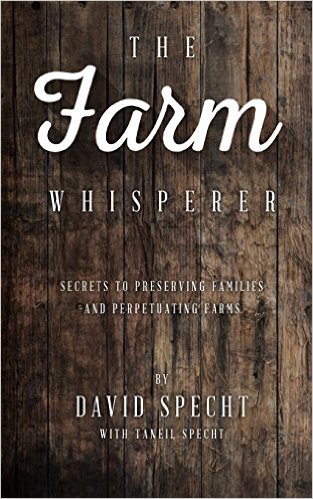
A local Nebraska businessman, speaker and University of Nebraska Coordinator of Family Business Programs and lecturer has recently published a book on family farm succession planning.

Dave Specht is an internationally recognized expert in family business management and his new book, The Farm Whisperer, encourages the reader to discover the key pitfalls that families face with generational farm transitions and offers strategies to help you in your own succession process. The Farm Whisperer is an actionable guide to help begin discussions and get your family started on this important journey. While The Farm Whisperer offers no silver bullet guarantees, it does provide questions, processes and a framework to get started on being intentional about, "Preserving Your Family and Perpetuating Your Farm.".

Spect is the founder of Advising Generations LLC, a strategy consulting firm for family-owned businesses. His work was recently featured in The New York Times, Successful Farming Magazine, Drovers Cattle Network and Family Business Magazine. He has gained international attention for his creation of the GenerationalBusiness360© process and a new mobile app called Inspired Questions-For Farmers.

He also offers five reasons farm transition planning in “optional”.

5 Reasons Farm Transition Planning Is Optional


  1. If you don't mind the default plan that the government has already created for you, don't bother with the planning process.
  2. You have confidence that your children will work it out and their relationships won't suffer because of your lack of guidance.
  3. You don't really care if the farm stays in the family or if it gets sold to your neighbor.
  4. If your relationship with your lender is so good that you are 100% confident they will continue lending to the next generation.
  5. If you are willing to have your kids sell the farm should you or your spouse need medical or long-term care.

If any of these five reasons make you uncomfortable, you should take an intentional approach to the planning process. The Farm Whisperer may be just the start that you need to get your family on the road to generational continuity.

Don't leave your farm and family legacy to chance. Thanks to Dave for offering a great resource to farmers about issues that are becoming ever more important.

June 4, 2015

Large farms are good for the environment. True or False?

Share:
We often hear about the restructuring/purchasing of smaller farms to make larger ones in agriculture today. This could be with livestock or crop farms. How does the size of the farm affect our environment? Is bigger better or worse? As tomorrow is World Environment Day, and while this can be viewed as an event that discourages modern agriculture, we want to embrace our efforts to conserve our environment. Let’s look into it…

Production agriculture operations or farms have an impact on the environment by using the nation’s soil, water, or air. Larry Jacobson, professor in bioproducts & biosystems engineering department at the University of Minnesota and a BestFoodFacts.org expert looks at each of these factors separately.


SOIL 

Production agriculture uses soil as one of its main resources to produce food (plants directly and animals indirectly). Crops remove nutrients and they must be replaced to maintain a sustainable soil system. Also, some cropping practices (and maybe some animal grazing practices) may promote soil erosion through water or wind forces. So soil can be degraded by excessive nutrient removal (mining) and/or soil erosion.

Almost every farm, large or small, will maintain the soils nutrients by the addition of natural (cover crops), organic (animal manure), or chemical fertilizers otherwise it will not produce the crops planted. Similarly, soil conservation practices such as contour farming, wind breaks, and vegetative buffer strips are practiced or built on both large and smaller farms. Therefore, Jacobson believes the statement that large farms are bad for the environment as pertaining to impact on the nation’s soil is misguided.


WATER

Obviously, farms need lots of water, either if they raise crops or produce animal products. Larger farms may need to draw from either surface or ground water sources to irrigate crops or water livestock or poultry so they may locally impact the quantity of water more than smaller farms, but when expressed on a per unit of production (bushel of crop or lb of milk or meat) this would not be different than for small farms. So barring some very local situations, the perception that large farms are bad for water quantity is also misguided.

The situation for water quality is more complicated. Larger farm certainly have greater potential to negatively impact water quality no matter if they produce only crops. However, on the positive side, large farm often participate in more conservation programs that reduce erosion (runoff to surface waters). Large farms often have more modern and high-tech machinery that practice so-called precision farming (apply only the fertilizer and herbicide/pesticide needed by the crop / land). Small farms, because of smaller equipment and fields may leave existing vegetative buffers along fence rows and windbreaks that would restrict field runoff.

For animal operations, large farms (> 1000 animal units(AU)) are required by EPA regulations to have nutrient management plans (NMP) which forces them to apply their animal manure produced on these operations at agronomic rates based on nitrogen (N) or in some cases phosphorous (P) levels in the manure onto cropland. Depending on the state, some smaller livestock farms under 1000 AU are also required to develop and use NMP but most states these are not required for small farms (< 100 or 50 AU). Thus, although they again have potential to impact water quality, because of regulations and the large financial incentive to use this resource (animal manure) wisely, the perception that large farms (crop or animals) have a greater negative impact on water quality is again misguided.

AIR


Finally the issue of air quality. Because large CAFO’s concentrate animals in a single location they often produce large single source emissions of gases, odors, and particulates from the animal buildings and any associated manure storage / treatments systems. These can have local (odor), regional (acidification of vegetation and surface waters), and global (climate change) impacts. Most damaging of these are the local and regional impacts since the global (greenhouse gases – GHG) effects would be cumulative even for small farms.

Small livestock and poultry operation will also produce emissions but typically are sufficiently low that their impact is considerably less on the environment. Also, crop farms can impact air quality by the emissions of particulates or dust from fossil fuel sources such as tractors, irrigation engines, or through tillage practices. Mitigation technologies are being developed to reduce air emissions from animal operations and even crop farms, but these are expensive and typically need more developmental work before they become commonly used on farms. So when it comes to air quality issues, Jacobson believe the statement that large farms are bad for the environment is plausible.

So tomorrow, please share this post to show that agriculture is making on our environment. Farmers are the original environmentalists and want the best for our environment and our future!


March 18, 2015

Celebrate your food, while ending food insecurity

Share:

Image result for national ag dayWhile we are thankful for our food everyday, today is the one day of the year where agriculture, farmers and ranchers are celebrated for producing what we all love...food!

Agriculture is essential to everyday life. This entire week is dedicated as National Ag Week, with today being Ag Day. As only 2% of our population in the U.S. produces food, some of us may not know a farmer or rancher. However we all can relate to food - which makes this a great day to celebrate sustaining future generations of farmers and eaters.

imageWhy is the future of farming so important?

Why is the future of our children so important?

Both of these issues are mutually important. We need future farmers to raise food and we need future children to be eaters and consume the food we raise. We know that our world population is increasing – which is an important challenge to farmers.

That’s why farmers are dedicated to raising more on less. Growing more food on less land, with less chemicals and more sustainability. That’s what Sustaining Innovation is all about.

However, we know that food insecurity is also a big issue and not everyone gets the food they need or can afford. In 2013, 45.3 million people were in poverty and 14.7 million were children under the age of 18 in poverty. About 20% of children in Nebraska and western Iowa are at-risk for hunger.

BackPack ProgramThat’s why important programs like the Food Bank of Lincoln are aiming to sustain food and eliminate hunger. They are helping with the future of our children by supporting the BackPack Program, which provides food-filled backpacks to students in need of food over the weekend, as well as other programs.

Let’s celebrate being an “eater” today by not only celebrating the individuals who dedicate their lives to feeding the world on Ag Day, but becoming aware of food insecurity issues in your area. Follow more at #agday2015.

January 16, 2015

Where's the....pork??

Share:
It seems there is a pork shortage at Chipotle. Or at least that is what they are claiming.

According to Chipotle, one of their pork suppliers has violated their housing agreement for pigs. The company demands that its suppliers raise pigs in “humane conditions with access to the outdoors, rather than in cramped pens.” So, because the supplier violated the pig housing agreement, Chipotle will not purchase their pork, which is resulting in a pork shortage in over 1700 locations in the U.S.

Wanda Patsche, author and pork farmer in Minnesota shared a picture of a pig pen in her barn. Do you think they look cramped?


In the past, Chipotle customers may have noticed signs stating when certain meats don’t meet the company’s “responsibly raised” standards, a substitution will take place. What is the substitution? Conventionally raised animals. But this time there will be no substitution for the pork.

Now it’s no secret that Chipotle is no friend to America’s farmers. This isn't the first time Chipotle has undermined farmers. Remember the Chipocrisy or "Food with integrity"? Wanda assures us that they take better care of our animals. Housing animals outside does not equate to better pork. Genetics, nutrition, health care and management do. The winter weather is downright cruel to pigs. And how do we know that? Because she has been there – years ago, Wanda's pigs were housed outside. And it’s bad. Frozen waterers, frostbitten ears, broken legs (from slipping on ice and snow) on pigs, and sick pigs from pneumonia are just a few of the difficulties they encountered housing their pigs outdoors.

Why doesn’t Chipotle want pigs housed indoors? Because our culture’s view of farming is nostalgic. Many farm organizations in Nebraska are sharing Nebraska farmers' stories of current modern farming and actual animal welfare - meaning how they really take care of their animals. The Alliance for the Future of Nebraska (AFAN), CommonGround and Nebraska Farm Bureau - along with the Nebraska Pork Producers and Nebraska Cattlemen are just a few examples. Read Nebraska Farm Bureau's blog about Chipotle's claim of pork shortage here.

Chipotle might have good burritos, but by throwing farmers under the bus, I'd rather eat at Qdoba anyday!

November 21, 2014

Corn harvest conversations

Share:
With the use of new technology - on the mobile phone and with GPS-driven combines - farmers are finding new ways to communicate during harvest.
And it's easy to follow the conversations with hashtags like #harvest14 or #cornharvest on Twitter.

By sharing images and short and quips, farmers are sharing more about the FARM TO FOOD story than they might realize. Anyone can find these tweets and by seeing the story from the actual farmer, it makes farming and food production  much more credible.

As of Monday, corn harvest in Nebraska was 91 percent complete, near 90 last year and 87 for the five-year average. Even though we are closing in on the end of November, harvest is still in full swing and near the 5-year average. With snow earlier this week, it slowed harvest some, but it didn't slow farmers too much as they are still persevering.

And when harvest is complete, farmers can use online resources for quick tips.
Good luck to Nebraska farmers finishing up harvest!

October 23, 2014

Once Upon a Farm - Omaha Children’s Museum opens ag exhibit

Share:

It's grow time!

The Omaha Children’s Museum is bringing farm life to the big city! Explore the world of agriculture and learn where your food comes from in the special exhibit, Once Upon a Farm.

Slide behind the seat of a kid-powered combine, wheel around a maze in the John Deere pedal track, learn what it takes to milk a dairy cow or hop aboard the Ag Express for an up-close look at a real life tractor. Little farmers can learn all about water and irrigation while playing under the kid-sized center pivot and see what it takes to plant and care for crops in the miniature planting station. Daily programming will focus on a new topic each week and will incorporate various farm animals on special weekends throughout the exhibit’s run.

This exhibit is the sixth community-engaged exhibit created by OCM with partners from across the community and the state of Nebraska, including the Nebraska Corn Board. I will run for 6 months from October until April, 2015.

There will be daily ag education programming Tuesday – Saturday 10:30 am & 2:30 pm; Sunday 2:30 pm where kids and families can learn about modern day farming and discover how the food we eat gets from the farm to the store.

Check here for a list of all of the sponsors and activities at Once Upon a Farm.

More importantly, go check it out in person!

Omaha Children's Museum
500 S. 20th Street
Omaha, Nebraska

October 7, 2014

FARMLAND film available for digital download

Share:

Earlier this year, Farmland was shown in over 170 theaters across the country

Academy Award®-winning filmmaker James Moll’s feature length documentary, Farmland, is now available to stream on the free, ad-supported Hulu and Hulu Plus subscription service. Farmland will be available exclusively on the platform for four weeks – providing viewers with the opportunity to stream Farmland from their connected TVs, Blu-ray players, gaming consoles, laptops, tablets and mobile devices.

During its theatrical debut this year, Farmland was shown in more than 170 theaters across the country including Regal Cinemas, Marcus Theatres, Carmike Cinemas, Landmark Theatres, and many key independent theaters. It will now be available digitally for the first time.

Many Americans have never stepped foot on a farm or ranch or even talked to the people who grow and raise the food we eat, yet are increasingly passionate about understanding where their food comes from. Farmland takes the viewer inside the world of farming for a first-hand glimpse into the lives of six young farmers and ranchers in their twenties. Through the personal stories of these farmers and ranchers, viewers learn about their high-risk/high-reward jobs and passion for a way of life that has been passed down from generation to generation, yet continues to evolve.

“This is a film for anyone who eats,” says Moll. “It’s not what you’d expect. The world of farming is complex and often controversial, but the farmers themselves are some of the most hard-working and fascinating people I’ve ever met.”

Produced by Moll’s Allentown Productions, Farmland received notable attention during its theatrical run securing reviews in several national mediums and recognition in film festivals across the country, including Atlanta, Cleveland and Newport Beach, Calif. The film also earned a 92 percent audience rating on RottenTomatoes.com.

Farmland was made with the generous support of the U.S. Farmers & Ranchers Alliance®.

Check out the official trailer for the feature length documentary at farmlandfilm.com and be sure to watch Farmland in its entirety on Hulu: http://www.hulu.com/farmland.

July 4, 2014

Corn Bake Recipe

Share:

lana kidsCommonGround volunteer and farm mom from Waco, Nebraska, Lana Hoffschneider, was recently featured on a Nebraska food blog, Stirlist.com with her Corn Bake recipe. She shared how she would feel if somebody called her farm a “factory farm”.

“I don’t want people to see us as monsters. It bothers me when people say that. What makes a farm a factory farm? Using large equipment? We use equipment to be more efficient, which reduces waste. Why in the world would we want to return back to what we did 100 years ago? We can’t produce enough food without the advantage of economy of size. It’s not bad to question where your food comes from, but you should base your food choices on fact, not fear.”

Why are people making food choices based on fear instead of fact?

“People fear what they don’t know or understand,” said Lana. She then described that because of activists turning to blogs and social media, it has caused terms like GMO (genetically modified organisms) or words like “hormones” and “antibiotics” to become buzzwords that stir up fear.  ”They are buzzwords that create fear of the unknown, but facts will dispel those fears if people are willing to look for the facts.” Perhaps you’ve heard about GMOs and have been led to think they are harmful? Did you know over 1700 studies have confirmed the safety of GMOs?

Lana also said that her confidence in grocery stores has greatly increased since she started volunteering for CommonGround Nebraska. She actually buys all of their food from the grocery store (except the meat that comes form their own cattle in the feedlot) because she’s confident that the grocery store provides safe, healthy, and nutritious food.

Enjoy Lana’s Corn Bake!

cornwide-1024x682

Lana’s Corn Bake

INGREDIENTS

  • 1 small white onion (diced)
  • 1 small red bell pepper (diced)
  • 1 small green pepper (diced)
  • 1 stick butter
  • 1 package jiffy corn muffin mix
  • 1 cup shredded cheddar cheese
  • 1 cup light sour cream
  • 4 oz light cream cheese
  • 2 cans no salt added corn (drained)
  • 3 eggs

INSTRUCTIONS

  1. Preheat oven to 350
  2. Melt 2 Tb butter over medium heat and then sauté onions and peppers. Cook and set aside to cool.
  3. In a mixing bowl combine leftover butter (6 TB), corn muffin mix, cheese, light sour cream, light cream cheese, the 2 cans of drained corn, and eggs. Add sautéed onions and peppers.
  4. Pour mixture into greased casserole dish, 9 x 13 pan.
  5. Bake 50-55 minutes.

May 2, 2014

The Faces of U.S. Agriculture

Share:

USDA released final 2012 #AgCensus results today and included some great infographics on the current status of American agriculture. We’ll be posting these throughout the next week.

First is the faces of U.S. agriculture – or who makes up those who raise our food, fuel and fiber products.2012AgCensusInfographics_No1_WHO

All infographics can be found here.