Showing posts with label safety. Show all posts

October 12, 2016

Harvest Season – Operation Lifesaver

Share:
See Tracks? Think Train!
Did you know the railroad plays an important part in agriculture especially at harvest? More than 3,400 miles of railroad tracks run through Nebraska transporting grain, fertilizer and ethanol for global distribution.

Those same tracks may crisscross your farmland or run parallel to your local co-op and elevator. You probably cross railroad tracks every day without a second thought. Nebraska Operation Lifesaver wants to remind you to avoid complacency at railroad crossings this harvest season.


Pat Leahy, Union Pacific track inspector and Operation Lifesaver presenter, is visiting co-ops in central Nebraska reminding farm crews about the importance of railroad crossing safety.

“Be observant when you approach the tracks,” Leahy said. “It’s a busy time of year, but trying to beat a train or take shortcuts is not worth the risk.”

Leahy urges all farmers, ranchers and their employees who must use farm-rail crossing to remember – Always expect a train! Trains can run on any track, at any time, in either direction.

Never attempt to cross railroad tracks unless you’re certain you can get completely across them, and without risking becoming high-centered. Trains extend at least three feet beyond the width of the rails on each side, so remember your cargo overhang as well.

Remember to pay extra attention where field and farmstead access roads cross the tracks. Be especially cautious at private access farm-rail crossings which are not equipped with warning signs, lights, bells or gates.

If you have an issue or emergency at a railroad crossing looking the blue Emergency Notification System sign on the crossing. Call the 800 number and report the crossing number to notification the dispatcher of your location. Keep emergency information handy for frequently used farm-rail crossings.

Download these useful tools provided by Operation Lifesaver and Union Pacific to keep you safe this harvest season:


About Operation Lifesaver

Operation Lifesaver's mission is to end collisions, deaths and injuries at highway-rail grade crossings and along railroad rights of way. A national network of trained volunteers provides free presentations on rail safety. Learn more at www.oli.org; follow OLI on Facebook, Twitter, Instagram and Pinterest. Nebraska Operation Lifesaver, which is led by State Coordinator Carol Daley, focuses on public education throughout the state. Learn more at www.nebraskaol.org or follow Nebraska OL on Facebook and Twitter. 

This guest blog was written by Megan Grimes. Megan is the public relations coordinator with the Nebraska Ethanol Board and also serves on the board of directors for Nebraska Operation Lifesaver.

September 29, 2016

Have a Safety First Attitude This Harvest Season!

Share:
The harvest season is upon us. Temperatures are dropping, spider webs are flying and farmers across the state are busy harvesting this year’s crop. This is a hectic time of year and farmers have a huge amount of work to do, within a very short window of time. As farmers work diligently during the busy harvest season, Nebraska Corn is encouraging them to have a safety first attitude and take the extra second for safety.

Last week we recognized National Farm Safety Week—but Nebraska Corn emphasizes that farm safety is a priority that should be recognized every day.  Agriculture remains one of the more dangerous occupations in North America, and this is especially true during the busy harvest season. The urgency to get the crop out of the field in a timely manner, can lead to more accidents during harvest than at any other time during the year. 

“There are a lot of moving parts during harvest. We are all working long hours under the stress of weather delays and equipment breakdowns—and that can lead to fatigue,” said Dave Merrell, farmer from St. Edward, Nebraska and chairman of the Nebraska Corn Board. “That is why it’s a good reminder to be proactive and take the extra second to exercise caution, get plenty of rest and make safety-first decisions to keep things safe on the farm for everyone.”

This reminder isn’t just for farmers alone, added Merrell.  He also cautioned motorists driving on rural roads to use extra caution during harvest. These roads see additional traffic during harvest, which increases the chances for accidents to occur between slower moving farm equipment and vehicles moving at faster speeds. Rural intersections will have heavier-than-normal travel and dusty conditions may limit visibility, as can sun glare in the morning and evening. Standing crops in the field may also block a clear view of oncoming traffic.

Nebraska Corn encourages farmers to pay special attention to the safety features of their equipment, and encourages everyone to keep an eye toward safety on the highways and byways this harvest and year round.

“Harvest and fall field work is truly a thrill for Nebraska farmers, but it’s important that we stay focused and take care of ourselves during this fast-paced time of year,” said Larry Mussack, farmer from Decatur, Nebraska and president of the Nebraska Corn Growers Association. “During long stretches of work, it’s important that you take short breaks, get enough sleep and eat healthy. This will keep things safe around the farm for everyone, including family members and employees helping to harvest the crop.”


Some things to consider for farmers and farm workers while on the farm this fall:


  • Stay alert. Take breaks to help avoid fatigue — get out of the cab and walk around every few hours. Keep your cell phone charged so you can communicate as needed with family members and employees.
  • Use extra caution around PTO’s. Check that PTOs are well protected to avoid contact with clothing or people during operation. And never step over a rotating PTO—a few extra steps to walk around the tractor are worth the effort.
  • Shut down before working on a machine. If the combine becomes clogged, shut off the motor, not just the header, before attempting to unplug it by hand.
  • Be aware of your surroundings. Know where your co-workers and family members are at all times and always be aware of power lines that you can come in contact with while moving equipment and augers around grain bins. Visibility can be especially poor around large machinery and at night.
  • Grain Bin/Handling Safety. Grain bins deserve special attention and caution when grain is being loaded and removed. Never stand on grain that is being or has been moved. Safety measures should be put in place to avoid any risk of entrapment and suffocation.
  • Move Machinery Safely. Make sure your Slow Moving Vehicle emblems are in good condition and properly mounted. If you must move machinery on a roadway after dark, have all necessary working headlights and flashing front and rear warning lights. The better you can be seen the less likely you are to be hit by motorists.
  • Develop Safety Rules. Have a set of safety rules for everyone to follow – and enforce them. Protective eye and ear wear is important in many situations. It is also important to equip tractors and combines with a fire extinguisher, as dry crop residue is fuel for a fire. Finally, ensure that trained family members and employees are operating powerful equipment—if kids want to be involved, give them age appropriate jobs.

February 24, 2016

Technology Helps Prevent Grain Bin Accidents

Share:
The impact that technology has had on agriculture is no secret.  Nebraska farmers are now producing more food on fewer acres with fewer inputs than ever before!  But what impact has technology made on farm safety?  As one of the most dangerous occupations in America, there are many new and not-so-new technologies out there that help keep our farmers and grain handlers safe when working in and around grain bins. Nationwide recently had a great blog post discussing some of these technologies!  Below are a few that we wanted to highlight…

Remote Grain Augers
A sweep auger is just one of many different grain bin hazards. A person coming into contact with an energized or running sweep auger faces a serious and often times fatal accident. During an accident, the time it takes to shut down a conventional sweep auger can feel like an eternity.

Improved technology now allows for a sweep auger’s power source to be attached to a remote system that is synced to a transmitter attached to a belt and a receiver box located on the auger. If communication between the receiver and transmitter is broken for any reason, the system shuts down the auger immediately.

Communication can be interrupted in several ways — depending on the emergency. For example, a button on the transmitter can be manually pushed if the operator senses danger. The auger will also stop if the transmitter falls off the operator or if the transmitter’s battery fails.

Breaking up Grain Clusters
Even with proper grain management, pockets of out-of-condition or frozen grain can still develop and plug outlets during unloading. When a grain bin is not properly equipped, workers may be forced to enter the bin to break up the crusted material using long pipes or other means. This exposes workers to the risk of grain entrapment or engulfment and other grain bin hazards.

Numerous products are currently on the market that utilize innovative technologies to break up blockages quickly and efficiently, while keeping workers safe.

Some of these products fit over the grate at the bottom of a grain bin and have propeller-like blades that break up clumps of grain, preventing the auger from jamming and keeping the grain flowing. These products can be operated safely from outside the grain bin

Grain Rescue Tubes
If the circumstance does arise that a person gets engulfed in grain, a grain rescue tube is a proven, popular rescue tool with emergency personnel to help extract victims. Trying to simply pull someone out of waist-deep grain is almost impossible and could cause serious bodily injury or death to the victim.

There are numerous grain rescue tubes on the market—most of which come in lightweight, interlocking sections or panels that can be easily carried into a bin and assembled around a victim. Once in place, the tube serves as a barrier by reducing the crushing pressure on the victim and preventing more grain from pushing up against the victim. Emergency personnel then use a portable grain rescue auger, buckets, scoops or other means to remove the grain from inside the tube until the victim can be safely freed.

Spreading the awareness about grain bin safety and organizing grain rescue tube trainings for emergency personnel—helping them understand how to properly use a grain rescue tube—has been a big initiative of Nebraska Corn’s over the last few years.  Click here & here to see photo from various trainings the Nebraska Corn Growers have hosted last year.

Read more about these innovative technologies from Nationwide's blog here.

February 23, 2016

Children and Grain Handling Don’t Mix

Share:
National statistics show that farming is one of the most dangerous occupations in America - this is especially true when farmers are working in and around grain. Grain handling is an extremely hazardous job - even for the most experienced and trained adults.  That’s why we encourage all farmers to keep children (under the age of 18) away from grain-handling work sites.

Children working on the family farm is unavoidable. Many family operations depend on the older children in the family to help out on the farm. However, proper safety procedures need to be followed to insure the safety of those children—particularly when it comes to grain safety. Last year alone, the busy harvest season brought 8 or more grain-related tragic fatalities and close-calls across the US involving children. The statistics of children and grain handling accidents are heartbreaking.  Nearly 1 in 5 entrapments involve youth 11-20 years old. Eighty percent of those entrapments end in death, and this does not include children younger than 11. 

Grain bin accidents can happen in a blink of an eye.  Flowing grain acts like quicksand—and it takes less than five seconds to become helplessly trapped. A child, or any adult for that matter, could find themselves in trouble very quickly and a adult alone cannot simply pull them out of the grain. One cubic foot of grain weighs 50 pounds. Therefore, a 165-pound person buried neck-deep would require 625 pounds of force to pull out. 


Grain entrapment accidents are preventable when the proper safety procedures are followed. The Grain Handling Safety Coalition (GHSC) is a great resource for families that have children working on the farm.  They have many recommendations for youth working with or around grain. GHSC encourages all young people to stand T.A.L.L. (Talk. Ask. Learn. Live) to help keep themselves and others safe while working on the farm. Their goal is to empower young workers by helping them understand jobs or task and by encouraging them to ask questions if they do not understand the task. 

These recommendations and more can be found here.  

February 22, 2016

Grain Bin Accidents are Preventable

Share:
Nebraska Corn is reminding farmers to “Take a Second for Safety” during Grain Bin Safety Week

On-farm grain storage is on the rise—and consequently—so are fatal accidents associated with grain handling and storage. That’s why the Nebraska Corn Board and Nebraska Corn Growers Association are placing special emphasis on grain handling safety during Grain Bin Safety Week, February 21-27, 2016. In observance of the week, Nebraska Corn’s goal is to help prevent grain related accidents by increasing awareness of grain bin safety on farms and commercial grain-handling facilities.

“National statistics show that farming is one of the most dangerous occupations in America,” said David Merrell, farmer from St. Edward, Nebraska and chairman of the Nebraska Corn Board. “With on-farm safety a continual effort at Nebraska Corn, we believe it is always important to remind farmers, grain elevators and other grain handlers to slow down and take a second for safety when working with stored grain. We want both grain handlers and emergency responders to understand how to avoid grain bin accidents—and how to help someone who does end up in trouble in a grain bin.”

Record high yields, combined with an upward trend in on-farm grain storage capacity has experts projecting an increase in grain engulfment accidents. In 2015 alone, there were more than 22 reported grain bin entrapments, resulting in 11 fatalities. Grain engulfment accidents can happen in a blink of an eye, with just one misstep or a moment of distraction, a grain handler could find himself in a grain entrapment emergency. For instance, using a 10-inch auger, it takes a mere 25 seconds for a 6-foot person to be completely buried in grain.

“Grain Bin Safety Week provides a forum for the agricultural community to help prevent these tragic accidents from occurring,” said Morgan Wrich, program director for the Nebraska Corn Growers Association. “With the hectic spring season around the corner, many Nebraska farmers are busy handling their on-farm grain storage—making this annual observance a timely opportunity to remind them and other grain handlers of the hazards of working around grain.”

With the proper safety procedures, grain bin accidents are preventable. That’s why it is important to take the extra second and follow all the safety rules when it comes to working with grain stored in bins. Here are a few grain bin safety tips to keep in mind when you are working with stored grain:

  • Use inspection holes or grain level markers to understand what's happening inside the bin. Use a pole from outside the bin to break up grain bridges.
  • You should enter a grain bin only if absolutely necessary. If you must get into the bin, use a body harness secured to the outside of the bin. Have at least two people watching over you as you enter and work inside the bin.
  • Use hand signals to communicate—and make sure everyone you're working with knows what those signals are.
These safety tips and more will be emphasized throughout Grain Bin Safety Week on the Nebraska Corn Kernels blog!

October 2, 2015

Nebraska Corn Urges Farmers to Take a Second for Safety During Harvest!

Share:
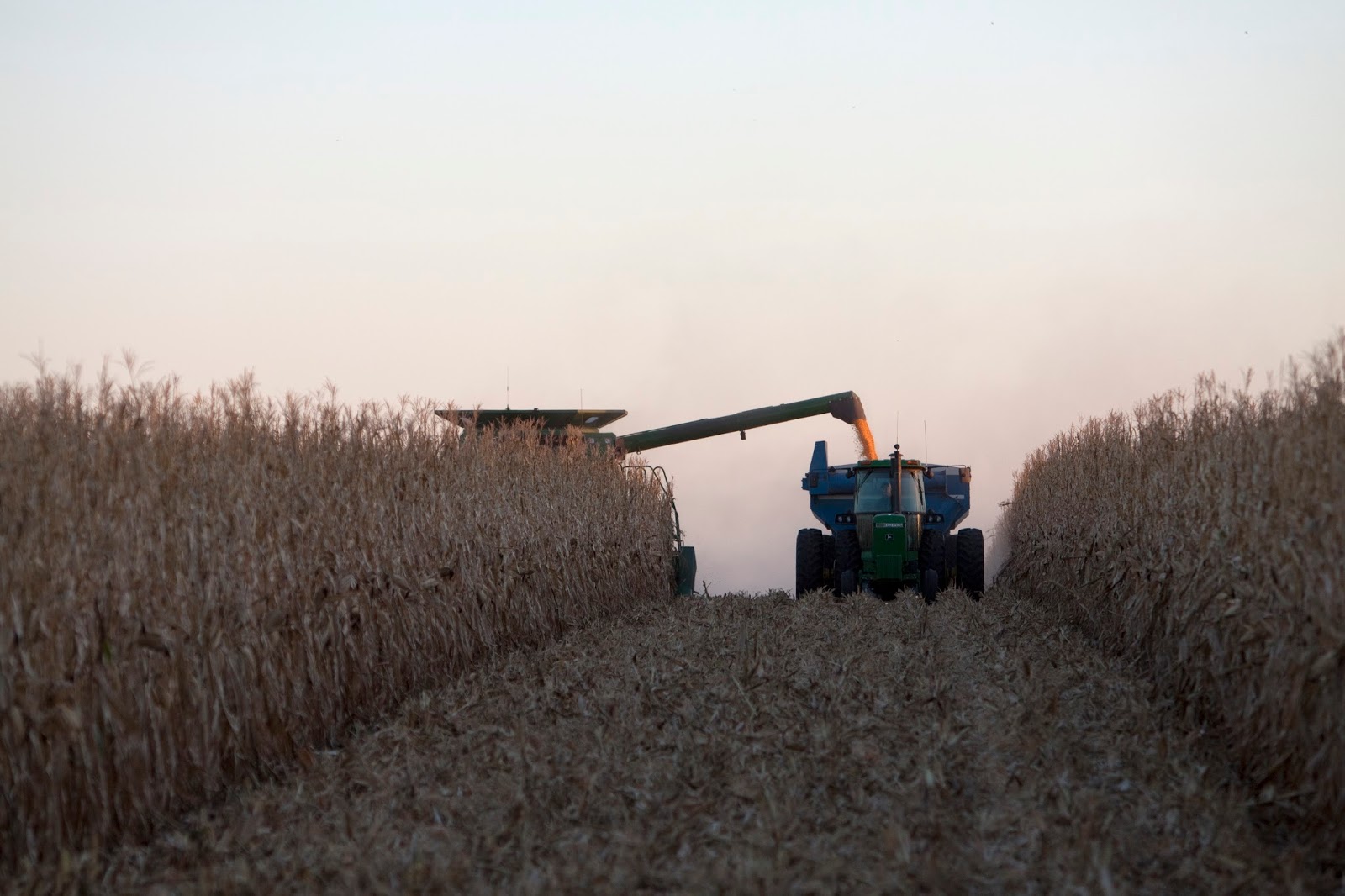
It’s that time of the year again, the leaves are turning, the roads are busy with farm equipment and farmers are racing the unpredictable weather to get their crop out of the field. The hectic harvest season is upon us and as farmers enter the fields and travel the roads, Nebraska Corn is urging them to use extra precaution and take a second for safety.

Agriculture remains one of the more dangerous occupations in North America, but exercising caution, getting rest and being safety-minded can go a long way toward making it safer for everyone involved.

“There are a lot of moving parts at harvest time and farmers are working hard to get the crops out of the fields,” said Dave Merrell, farmer from St. Edward, Nebraska and chairman of the Nebraska Corn Board. “Working long hours in the field or on the farm could cause a chance for error where an injury or fatality could be prevented by taking appropriate precautions or simply taking time.”

Merrell also cautioned motorists driving on rural roads during harvest. These roads see additional traffic during harvest, which increases the chances for accidents to occur between slower moving farm equipment and vehicles moving at highway speeds. Rural intersections will have heavier-than-normal travel and dusty conditions may limit visibility, as can sun glare in the morning and evening. Standing crops in the field may also block a clear view of oncoming traffic.

Nebraska Corn encourages farmers to pay special attention to the safety features of their equipment, and encourages everyone to keep an eye toward safety on the highways and byways this harvest and year round.

Some things to consider for farmers and farm workers while on the farm this fall:

  • Stay alert. Take breaks to help avoid fatigue — get out of the cab and walk around every few hours. Keep your cell phone charged so you can communicate as needed with family members and employees.
  • Use extra caution around PTO’s. Check that PTOs are well protected to avoid contact with clothing or people during operation. And never step over a rotating PTO—a few extra steps to walk around the tractor are worth the effort.

  • Shut down before working on a machine. If the combine becomes clogged, shut off the motor, not just the header, before attempting to unplug it by hand.
  • Be aware of your surroundings. Know where your co-workers and family members are at all times and always be aware of power lines that you can come in contact with while moving equipment and augers around grain bins. Visibility can be especially poor around large machinery and at night.
  • Grain Bin/Handling Safety. Grain bins deserve special attention and caution when grain is being loaded and removed. Never stand on grain that is being or has been moved. Safety measures should be put in place to avoid any risk of entrapment and suffocation.
  • Move Machinery Safely. Make sure your Slow Moving Vehicle emblems are in good condition and properly mounted. If you must move machinery on a roadway after dark, have all necessary working headlights and flashing front and rear warning lights. The better you can be seen the less likely you are to be hit by motorists.
  • Develop Safety Rules. Have a set of safety rules for everyone to follow – and enforce them. Protective eye and ear wear is important in many situations. It is also important to equip tractors and combines with a fire extinguisher, as dry crop residue is fuel for a fire. Finally, ensure that trained family members and employees are operating powerful equipment—if kids want to be involved, give them age appropriate jobs.


“While we all recognize the excitement and fast-pace of harvest, staying focused and resting regularly are two proactive steps in keeping things safe around the farm for everyone, including family members and employees helping to harvest the crop,” said Larry Mussack, farmer from Decatur, Nebraska and president of the Nebraska Corn Growers Association. “Harvest and fall field work is truly a thrill for Nebraska farmers, but please remember to be careful and take a second for safety.”

April 21, 2015

Tractor safety isn’t just for kids

Share:

Children-Tractor-Safety-Lesson---Kubota Kids are curious. And this is no exception when they start to see farmers out in the tractors, planting, moving equipment, and going  down the road.

Farm Safety for Just Kids (FS4JK) is an international non-profit serving millions of rural youth and their families each year. It was started by an Iowa farm wife after her 11-year-old son died in a gravity flow grain wagon in 1986, in the hopes of preventing another tragedy. For over 25 years, the organization has grown international with the same goals of promoting a safe environment through education.

FS4JK has educational resources for animal safety, ATV safety, chemical safety, grain safety, rural roadway safety and tractor safety. 

While these goals are focused towards kids, they are great reminders for all of us who are around equipment – especially tractors this time of year.  

Tractors hold potential hazards not only to the driver, but to those in close proximity. Theschild-climbing-into-tractore are just a few of the precautions promoted by FS4JK about taking care around tractors. Download all of the educational content here.

  • Extra riders on tractors should always be considered a risk. Understand the health hazards to extra riders, as well as for the tractor operator.
  • Take precautions such as cleaning steps, and wearing non-slip shoes to prevent falls from tractors.
  • When driving a tractor, be alert for the sake of those close by.
  • When you are close to a moving tractor, notify the tractor driver of your presence when nearby. The driver may not be able to see you.
  • Understand tractor features that impact safety.
  • When working with tractor implements, understand why implements can be hazardous to both the operator and any bystander.

The main objective of educating children, especially young ones, about tractor safety is to teach them to stay away from tractors. Tractors hold potential hazards not only to the driver, but to those in close proximity. As children grow and develop, they begin to understand abstract concepts. Rules for very young children are black and white, while rules for older children, who are beginning to understand more are based on comprehension and complexity of the hazard. This allows them to begin to connect the concept of hazardous mechanisms, resulting hazards, and possible injuries. If children understand these hazards, they are more likely to follow the rules that are intended to keep them safe. The lesson plans included in this educational packet have a suggested age for each activity. Many of the activities can be adapted to other age groups by simplifying or adding more details.

Happy planting and stay safe!!

maxresdefault