Showing posts with label food. Show all posts

July 15, 2016

Is Urban Farming All It’s Cracked Up To Be?

Share:
With the rural population dwindling, around 80 percent of American’s now live in urban centers. Many are raising their own food in community gardens or backyard patios, but a new movement is encouraging urban farming – and the research to back it up.

Most farmers turn to land-grand universities, such as University of Nebraska-Lincoln, for research, economics and practical advice on raising a specific crop or livestock. Today, the only land-grant university in the country with an exclusively urban focus is the University of the District of Columbia. Che' Axum, director of the 143-acre research farm in Beltsville, Md., spends most of the day farming, but he and his small team also spend a great deal of time applying experimental techniques and analyzing research. The goal of their farm is to research and test techniques in sustainable and organic agriculture, applying them to an urban agricultural setting.

Che' Axum stands in a hoop house at the University of the District of Columbia's Muirkirk Research Farm, a resource for urban farmers in the city. 
Just like Nebraska corn farmers who are Sustaining Innovation to grow more with less, one of the central questions of urban agriculture is how to grow more food in less space. Instead of vast fields testing dozens of varieties of wheat, Axum's research farm has raised beds, narrow hoop houses and even a shipping container. He gives growers advice on where to buy decent soil or how to compost their own, in case the land they plan to grow on has a seedy industrial past.

Axum says the urban farmers he is working with aren't looking to grow one crop for a commodity market, but enough crops to replace a trip to the grocery store or to fill a small farm box for customers. They need to know a little about a lot of varieties in order to make the most of small growing spaces. And, often, it's been a generation or two since anyone in their family has lived on a farm.
UDC grows crops hydroponically.
Growing crops is not the only form of urban farming popping up. The Dutch city of Rotterdam is planning to build a floating dairy on a barge. Forty cows would live on 1,200 square meters on the top floor. They would produce 1,000 liters of milk every day, which would be pasteurized and turned into yogurt on the bottom floor.
A concept of the Rotterdam floating dairy.

The goal with urban farming like this is to make cities like Rotterdam more agriculturally self-sufficient. While there are arguments on either side of agricultural self-sufficiency, no environment is perfect for raising ALL types of food. That’s why we have a global economy with important trade opportunities and partner with organizations like the U.S. Grains Council and U.S. Meat Export Federation.

Urban farmers and conventional (or do we say rural?) farmers seem pretty much alike. While urban farming might not be the most economical venture using land in a city to farm, both types of farmers are wanting to do a better job on every bit of land they have to raise food. They both have sustainability in mind with the practices they use and the idea of passing their farm onto the next generation. And they both want to have safe, affordable food for improving human health.

We’re all in this together – raising food for a growing world.

January 20, 2016

A Consumer Favorite: Corn Oil

Share:

There’s no doubt that corn is one of the world’s most a-maize-ing crops!  It has so many uses that benefit people all around the world.  Over the next few weeks, we will feature a new blog series called, “For the Love of Corn”, where we will look at the six different high-value corn product categories and how they are used.


This week, we will take a look at the high-value corn product category, Corn Oil. Corn oil is a consumer favorite and an extremely beneficial ingredient to the food industry.  By removing free fatty acids and phospholipids from crude corn oil, the oil refining process gives corn oil qualities consumers value most:
  •          Excellent frying quality
  •          Exceptional resistance to smoking or discoloration.

There’s no doubt that corn oil is highly regarded by consumers for its functionality, exceptional flavor, great prices, and health benefits. It is a concentrated source of energy, is very digestible, provides essential fatty acids and Vitamin E, and is a rich source of polyunsaturated fatty acids. To look into these further, below is a quick description of some key health benefits corn oil provides:

Cholesterol:
Corn oil is an effective component in lowering blood cholesterol levels, as it offers high levels of polyunsaturated fats instead of saturated fats. Polyunsaturated fats lower blood cholesterol levels, while saturated fats are approximately twice as powerful in raising cholesterol levels as polyunsaturated fats are in lowering them. In fact, the Food and Drug Administration has acknowledged the unsaturated fat benefits of corn oil in reducing the risk of heart disease.

Blood Pressure:
Numerous human studies show that diets enriched in polyunsaturated fatty acids can significantly lower elevated blood pressure in individuals with high blood pressure. Corn oil was used in many of these studies. Corn oil diets have shown blood pressure lowering of about 12% in men and 5% in women who had elevated blood pressure.

Essential Fatty Acids:
Corn oil is a rich source of linoleic acid, which is one of two essential acids necessary for growth and good skin and hair quality. Linoleic acid is labeled "essential" because it cannot be synthesized by the body and must be supplied in the diet.

Tocopherols:
Corn oil is also recognized as an excellent source of tocopherols. Tocopherols function as antioxidants and provide a good source of Vitamin E. The antioxidant activity of tocopherols are important in health terms; and also in terms of quality of the product as it helps retard development of rancidity.

Learn more about the health benefits of corn oil by clicking here.

Corn oil has made an impact in the food industry.  It has replaced a significant amount of saturated fats in numerous food products and is a top choice for trans-fat reduction. In addition to snack food applications, corn oil is also an effective component in reducing trans-fats in restaurant settings.

Want to learn more about corn oil and how it’s made?  Click here.

January 11, 2016

Transparency Builds Trust

Share:
It’s simple: If you increase transparency, you will increase trust.

A new report from The Center for Food Integrity’s (CFI) proved this in when it comes to consumer trust in food. In CFI's latest research, A Clear View of Transparency and How it Builds Consumer Trust, provides proof that transparency builds trust and identifies the most effective practices for building consumer trust.

“Transparency works,” said Charlie Arnot, CFI CEO in a news release. “We have statistical data to show that increasing transparency in farming, food production and processing will increase consumer trust.”

This year’s research is the culmination of three years of work on the concept of increasing food system transparency. Consumers have been asking for greater transparency and there have been varying attempts to define it. CFI’s research not only defines it, but now provides a clear path to achieve it and address the growing skepticism about food.

An online survey of 2,000 people explored which attributes are most important to consumers when it comes to trust-building transparency – policies, practices, performance or verification.

The 2015 research focused on areas that are important to consumers:

  • Impact of Food on Health 
  • Food Safety
  • Impact on the Environment
  • Human/Labor Rights
  • Treatment of Animals Raised for Food
  • Business Ethics in Food Production

The report highlights the 2015 consumer trust research and some best practices that the food system can use as a guide for increasing transparency. The study also reveals who the public holds most responsible for demonstrating transparency, specific areas where they expect transparency, and precisely where consumers want to access information that is most important to them.
Discover more about what CFI is doing and how this research can help farmers reach consumers at FoodIntegrity.org and BestFoodFacts.org. 

January 6, 2016

The Many Uses of Corn Starch

Share:

There’s no doubt that corn is one of the world’s most a-maize-ing crops!  It has so many uses that benefit people all around the world.  Over the next few weeks, we will feature a new blog series called, “For the Love of Corn”, where we will look at the six different high-value corn product categories and how they are used.


This week, we will take a look at the high-value corn product category, Corn Starch.

When you think of cornstarch, you probably think of the ingredient that comes out of the pantry only when you’re cooking— that helps thicken soups, stocks and sauces. But that’s not all it’s good for. Indeed, Corn Starch is one of nature's major renewable resources and has a wide array of practical uses outside of the kitchen. As a mainstay of our food and industrial economy, many industries rely heavily on the corn industry—and corn starch—because of its consistent quality and superior performance. From pharmaceuticals to paper, people are often surprised by the number of basic consumer supplies that we use every day that are made from or use corn starch. Below is a description of a few of the most popular uses and applications for corn starch.

Oil Refining & Mining
Corn starches, and dextrins (a roasted starch), are used in hundreds of adhesive applications, while some special types of starches are used in the search for oil as part of the "drilling mud," which cools down superheated oil drilling bits and is used to improve the efficiency of the ore separation processes. Corn-derived ascorbic acid will also be used in oil drilling fluids to protect against iron corrosion and prevent the formation of ferric oxide.

Super Market Staples:
Starch is literally found in thousands of supermarket staples, which are produced using both regular and specially modified starches. Many of today's instant and ready-to-eat foods are produced using starches which enable them to maintain the proper textural characteristics during freezing, thawing and heating.  

Household, Personal & Pharmaceuticals Items:
Starch can be found in a wide variety of household items such as batteries, matches, cleaners, and trash bags. Many personal and health care items have starch in their ingredients, including cosmetics, deodorant, hair-styling products, asprin, and cough drops. In many pharmaceuticals, starches are used to enhance drug delivery systems as binders, diluents, tableting agents and coating agents. They can also be ingredients for formulating intravenous injection solutions and clinical nutrition products.

Paper:
Starch is one of the most important ingredients in paper. It gives paper its smooth feel, strength, brightness, ink adhesion abilities and erasability improvements. It is also very important in the making of recycled paper because of its bonding strength along with more efficient and cleaner manufacturing.

Super Absorbent:
Corn starch can be manipulated in a variety of ways to produce products that benefit the environment. Corn starch, combined with polymers, creates a super absorbent used in disposable diapers, sanitary napkins, bandages, and baby powders, and can be used to remove water from fuels and to clean up pesticide spills. 

Industrial Chemicals and Plastics:
Today, one of the most promising new markets for corn starches is as raw material for the production of industrial chemicals and plastics—which today, are made from petroleum feedstocks. As petroleum supplies dwindle, the importance of an abundant source of basic industrial chemicals takes on new proportions. Corn industry scientists are at work on new systems for producing industrial necessities from the versatile corn plant.


Learn more about Corn Starches here.

October 26, 2015

Subway’s decision to give in to food-fear marketing

Share:
Last week, Subway restaurants announced that they would be sourcing meat that has never been given an antibiotic starting in 2016. The announcement brought with it a fiery social media battle of farmers and ranchers trying to post their opinions and comments on the Subway Facebook page, with Subway deleting comments and upsetting people even more.

The decision was frustrating for those of us who raise livestock for meat and know what we really do to raise healthy food. Fear marketing is more and more present in our retail food chains and this is evident with Subway’s decision. Did they do their research? Did they talk to farmers and ranchers? Enough people in agriculture took action and reached out to Subway about their policy that Subway came back with this revised statement:

"That said, we recognize that antibiotics are critical tools for keeping animals healthy and that they should be used responsibly to preserve their effectiveness in veterinary and human medicine. Our policy is that antibiotics can be used to treat, control and prevent disease, but not for growth promotion of farm animals. Accordingly, we are asking our suppliers to do the following:
  • Adopt, implement and comply with the U.S. Food and Drug Administration’s (“FDA’s”) guidance for industry 209 and 213, which requires that medically important antibiotics not be used for growth promotion. Visit the FDA site to learn more. Assure that all antibiotics use is overseen, pre-approved and authorized by a licensed veterinarian before they are administered to any animal.
  • Keep accurate and complete records to track use of all antibiotics.
  • Adhere at all times to all legal requirements governing antibiotic withdrawal times. This assures that antibiotics have been eliminated from the animals’ systems at the time of slaughter.
  • Actively encourage, support and participate in research efforts focused on improving animal health while reducing antibiotics use."
Subway's response shows a definite influcence by the agriculture community and it is exciting that our voices were hear. Yet, it seems that they are being influenced by people who do not have an understanding of why antibiotics are being used in animal agriculture. If they had talked to a farmer and rancher about raising meat before all of this came out in public, here is what they would have found out:

Livestock must be healthy and well-cared for in order to produce great, quality meat. And just one of the ways that farmers and rancher keep their animals healthy is by using antibiotics.

We don't just use antibiotics to use them. On farms and ranches, they have a herd health program where the livestock get regular medical care, including checkups, that starts with vaccinations to prevent disease (much like a well-child checkup for kids). But sometimes animals get sick, just like we do and it’s necessary to treat them. So we give antibiotics if an animal is injured or to fight a bacterial infection. This is the most common and prevalent use of antibiotics in livestock.

Under the care of our veterinarian, we closely follow the label and dosing instructions which are approved by the FDA.


The FDA regulates the approval and use of antibiotics in animal medicine. Their approval process is stringent and they use the same testing for antibiotics in animals as they do for humans. Any antibiotic given to a food animal has a specified withdrawal time which is the amount of time from the last shot until it is out of their system. An example could be that we notice signs of respiratory disease in one of our cattle, we work closely with our veterinarian and under the guidelines of the FDA to give that animal an antibiotic where we follow the label and dosing instructions. The maximum length is 28 days and we will never sell that animal to go into the food system until that 28 days is up – so the FDA assures us that is no antibiotic residue in our meat as well as the USDA randomly inspects meat to make sure it is safe.

We work with our veterinarian; it is a law that we follow this withdrawal time. When the withdrawl time is up – the antibiotics have left the animal’s system. This means that the animal is ANTIBIOTIC-FREE, which equals = ALL MEAT IS ANTIBIOTIC-FREE BY LAW!

And we take that very seriously, which means doing the right thing by closely monitoring the care we give our animals. We want to continue to earn the respect and trust we have with our meat buyers and meat eaters and we want healthy animals to provide healthy, safe and nutritious beef.

Farm and ranch families depend on healthy cattle for our livelihoods. We care for our livestock by giving them a good diet, good medical care and healthy living conditions. Our commitment to providing top-notch meat begins with top-notch animal care.

Unfortunately, Subway is not the first – nor the last – to give in to fear marketing and change the food they are providing based on the consumer’s opinion. Let's continue to band together and share with others how animals are treated and raised. Also, send them to CommonGround volunteers who can help assure consumers that they don't have to have fear in their food! Visit FindOurCommonGround.com.

October 18, 2015

There's no Sugarcoating it. Sugar is Sugar.

Share:
Recently, there was an article in the Lincoln Journal Star on USDA's research comparing honey, cane sugar and high fructose corn syrup. The findings of the study are very positive, however, the headline of this article was not so sweet.

While the headline read "Honey is just as bad as high-fructose corn sweetener", the story actually reported on USDA research that found honey, high fructose corn syrup (HFCS) and cane sugar to have essentially the same impact on human metabolism in terms of blood sugar, insulin, body weight, cholesterol and blood pressure. In fact, the researcher is quoted as saying, "A sweetener is a sweetener, no matter the source."  In other words, sugar is sugar is sugar—and the key to sugar consumption, regardless of the source, is moderation.

So, in effect, the headline could have easily been written to say that honey is as bad as cane sugar—or that honey was found to be as good as HFCS.  Unfortunately, the headline—which is what many readers use to form opinions without reading the story itself—reinforced the myth that HFCS is "bad sugar."

There is no question that public interest in food has grown dramatically.  At the same time, so has the level of misinformation and misunderstanding.  It doesn't help when an important story that can actually provide positive research-based information is carelessly mislabeled by a headline that leads the public further astray. So, if you ever have any questions about HFCS, please do not hesitate to reach out to the staff at the Nebraska Corn Board.  Additionally, below are some answers to some FAQ's about sugar.

Here’s the skinny on sugar…

What’s the difference between the sugar in fruit and the sugar in soda?
  • There is no difference. The sugars found in fruits and vegetables are the same as those found in sugar cane, sugar beets and high-fructose corn syrup: fructose and glucose. Fruits and vegetables bring the added benefit of fiber, vitamins and other nutrients that are not available in sugars alone.
How does the body metabolize excess sugar?
  • Consuming excess glucose or fructose will result in excess body fat, leading to elevated levels of blood sugar. These processes happen in the human body regardless of the sugar source
Does sugar cause diabetes?
  • Sugar itself is not a direct cause of diabetes. Diabetes is made worse when a person gains excess body fat through consumption of excess food of any type—starch, protein, fat, carbohydrates, etc.

For more information, visit: sweetsurprise.com

June 12, 2015

Dude, Where’s My Consumer?

Share:
In Rabobank’s new report, “Dude, Where’s My Consumer?”, many of America’s largest food and beverage companies are in trouble. Iconic brands are increasingly out of favor with U.S. consumers, where their mark is still set at reaching baby boomers. But how will they reach the up & coming consumers: millennials?

The report gives 5 ways that America’s big brands can reconnect with the U.S. consumer. (read more here…)

In today’s agriculture, people often think about farmers markets as the best place for farmers to connect with consumers. But for farmers growing commodity crops (like corn, soybeans, cattle….) that aren’t marketed at farmers markets, how can they connect with their consumers?

They need to do what their farmer friends are doing at farmers markets. One-on-one human connection. What, how?

In today's time of information overload, people need to connect face-to-face. This is why farmers markets are so successful and popular. But for corn farmers who do not market their products at farmers markets, how can they do this?

Social media plays a big role, but it’s not just about social media. This one-on-one, face-to-face communication can happen on Facebook, Twitter or Instagram but also by shaking hands with someone at church or your kids’ ballgames. There are several ways to have productive, civil conversation.

Farmers are already trusted. But by being positive, inclusive and real, methods of farming and uses for commodity agriculture will begin to build more trust.

A great idea to go along with face-to-face connections and social media that doesn’t take much time or effort are pictures. People love pictures. So by simply “showing” what they are doing, farmers will earn trust by being positive, inclusive and real. Visuals aren’t limited to social media. Invite influencers and media (that you trust) to your farm to take pictures and share what you do and why you do it.

Dude, are you my consumer? Let me show you what farming is all about….

May 22, 2015

El Nino weather impacting Nebraska crops and the world

Share:

In agriculture, we all know that Mother Nature is one of the key factors in determining a successful or unfortunate year. Thankfully in Nebraska this spring, we have received ample moisture, thanks to El Nino.

Recently, the National Climate Prediction Center has raised the probability of an El Niño in the Northern Hemisphere lasting through this summer to 90 percent, and added that there is an even greater than 80 percent probability it will last through all of 2015.

While this “rainy” season is among us here in the bread basket of the world, the El Nino is not positive for some around the world.

The probability is raising the chance of heavy rain in the southern United States as well as South America, but it is adding scorching heat in Asia that could devastate crops of thirsty food staples like rice.

A new paper recently published in journal Nature Communications confirms the link between the natural climate fluctuation known as the El Niño Southern Oscillation and food harvests of wheat, rice, corn and soybeans that provide nearly 60 per cent of all calories consumed by humans on the planet.

El Niño years were found to have a tendency for negative impacts on crop yields in 22 to 24 percent of growing regions, especially in Asia. At the same time, El Niño tended to have a positive impact on crop yields in 30 to 36 per cent of harvested regions, especially North America. The study estimates the global average negative impact of an El Niño on total crop harvests is between a 0.8 and 4 percent decrease for wheat, rice, corn and soybeans.

These numbers may not seem large to some, but five years of El Niño in the 1950s led to massive famine in China. In the late 1950s, food supplies dropped by 30 percent and immense starvation prevailed in China. It has been 18 years since the world was hit with a strong El Niño, so very few countries are equipped for its considerable impact. However, we have more available technology and information than we did 65 years ago. With China and virtually all of Asia now confirmed global traders, there should be plenty of wheat, rice, corn and soybeans in storage to initially prevent any type of famine. But we could see the price of food increase.

Recently, Reuters reported that a strong El Nino last appeared in 2009-2010 and resulted in significant spikes in sugar, cocoa and wheat prices. If a strong El Niño does develop the likely U.S. impacts include wetter conditions across the southern U.S., from California through Texas to Florida, which could bring relief to the drought-stricken areas.


May 12, 2015

Chipotle’s Bold Move to GMO Free…But Will it Last?

Share:

clip_image002Two weeks ago, Chipotle took its propaganda filled marketing campaign to a troubling new level when it announced that its entire menu will be GMO-free—meaning nothing served at its fast-food restaurant chains will contain ingredients derived from genetically modified plants or animals. According to their website, the company is “G-M-Over It” and has decided that serving GMO’s in their restaurants does not align with their vision of “food with integrity.”

Even though Chipotle’s GMO stance opposes the best scientific knowledge in the world, the company has taken a bold stance that GMO’s are unsafe and have long-term implications that consumers should be concerned about. But what scientific evidence supports these claims? According to a 2014 report by the World Resources Institute, GMO-derived foods have been widely consumed for years and “there is no evidence that GM crops have actually harmed human health.”

The bottom line…this GMO-free campaign has satisfied some of Chipotle’s most loyal and health-conscious guacamole fans, however, it has missed a huge opportunity to ethically educate American’s about where their food comes from.

So was Chipotle’s declaration to be “G-M-Over It” a good choice? Will this marketing hype last? Will consumers actually fall for their unethical propaganda? In a recent article on NPR, writer Dan Charles entertains “why we can’t take chipotle’s GMO announcement all that seriously” with five rational points that every consumer should be aware of. We highlighted a few below…

1. Soda

At the bottom of the page that announces Chipotle’s new policy, you’ll find the following statement: "Many of the beverages sold in our restaurants contain genetically modified ingredients, including those containing corn syrup, which is almost always made from GMO corn."

Looks like the fast-food giant is making quite the exception to its GMO-free policy when it comes to sugary drinks.

2. The "superweed" double standard

image

As an example of the ways that GMOs can damage the environment, Chipotle points to the problems caused by herbicide-tolerant GMO crops and how they encourage farmers to use a single herbicide, usually glyphosate, or Roundup. This, in turn, has led to the emergence of herbicide-resistant weeds, which Chipotle calls "superweeds." Chipotle's answer to this, per its new non-GMO policy, is to switch from soybean oil to sunflower oil.

The problem is, many sunflower varieties, while not genetically modified, also are herbicide-tolerant. They were bred to tolerate a class of herbicides called ALS inhibitors. And since farmers starting relying on those herbicides, many weeds have evolved resistance to them. In fact, many more weeds have become resistant to ALS inhibitors than to glyphosate.

Why should Chipotle bemoan the emergence of weeds that are resistant to glyphosate, yet not to other weedkillers?

3. Meat

Chipotle says it wasn't too difficult or expensive to remove GMO ingredients from its burritos. It simply had to find new suppliers for corn flour and cooking oil.

It would be much harder, and presumably more expensive, to use only meat from pigs or chickens that consumed a non-GMO diet. That's because the amount of corn or soybeans required to feed Chipotle's animals is vastly larger than what's needed for its tortillas or cooking oil. Finding a new supply of animal feed would raise costs, so Chipotle isn't doing it.

To view the full NPR article, click here.

May 6, 2015

Where's the Beef?

Share:
Joan new shot 1
By Joan Ruskamp, CommonGround Nebraska volunteer

Some of you might remember the slogan Wendy's used in 1984 with Clara Peller exclaiming "Where's the beef?" As a woman that loves to eat beef I am asking that question in regards to the new recommendations to the 2015 Dietary Guidelines .  The new recommendations are not recognizing that beef can play an important role in a healthy diet.

I have to admit I have not always appreciated the nutrient dense food that beef is.  When I was taking aerobic dance classes in the early 1980's I was eating salads and avoided eating meat.  I had the misperception that meat made people fat.   I struggled to be satisfied with the foods I was eating which meant I usually reached for sugar loaded snacks to get me by thus sabotaging any attempt at weight loss.  I gradually came to appreciate the nutrients in calories and how important that is when maintaining or trying to lose weight.BeefsBig10

Ironically, no pun intended, beef is quite loaded with nutrients important to good health.   If you are concerned about building muscles, maintaining brain function, having a strong immune system, utilizing oxygen more effectively, increasing your energy, protecting cells, supporting your nervous system, maintain strong bones and teeth and help in converting food to energy than you would benefit from keeping beef in your diet.
beef vitamin poster comparison
If you compare beef to other foods you will see how much you would have to eat to get the same amount of just one nutrient versus the big ten in beef.  A 3-4 ounce serving of beef is about the size of your iPhone and that will give you those top ten nutrients including HALF your daily recommended amount of protein needed.  A four ounce burger at around 170 calories paired with tomatoes, lettuce and cheese is a great alternative to a sugar cookie that has the same amount of calories and very little nutritional value.

As a mom on a farm that raises cattle I was fortunate that our children were able to enjoy beef as part of their diet.  Our children were active, healthy and have become successful in a variety of career paths.  I am also active in the care of our cattle on our farm and have come to appreciate the role beef plays in agriculture.   
jruskamp-cattleinpen

Where's the beef?  It's here and I hope it's on your plate tonight! And here is a great recipe to make it easy to love beef….BBQ style. As May is Beef Month, we have a lot to celebrate with beef production being so important to Nebraska, and it being healthy for your family and you!

{BBQ Beef Sandwiches}
Ingredients
beefsandwich
  • 3-5 lb beef eye of round roast
  • Mike’s Own Seasoning (made in West Point, Nebraska but found at numerous locations)
  • -- Or combine Lowry’s seasoning salt, Accent seasoning, Lowry’s garlic salt with parsley
  • BBQ Sauce
  • Buns
Directions
  1. Generously rub the seasoning onto the beef eye of round.
  2. Preheat your grill around 300 degrees. Do not put the beef on direct heat (read how to indirect grill here).
  3. Keep on the grill until the internal temperature is just to 140 degrees. This usually takes around 2-3 hours.
  4. Check often and turn the round if needed. Make sure beef is not overcooked. (Works great on a Traeger or wood pellet grill – but works on a gas/coal grill as well).
  5. Take off the grill as soon as it reaches 140 degrees. Let sit five minutes before slicing.
  6. Slice and serve immediately with your favorite BBQ sauce and on a bun or without.
Happy Beef Month!

April 30, 2015

The "Food Babe": Bullying her way out of food credibility

Share:
Raise your hand if you've heard of the "Food Babe".

For those that haven't, she's a mommy/food/nutrition blogger who feels it's her role in life to scare people about what food they are putting in their mouth. She aims to use fear tactics to sell her books, promote her diet plans and force companies to stop using federally inspected and approved products that help our food to be safer. But what she doesn't reveal is that she isn’t even a nutritionist. Nor is she a toxicologist or a medical doctor. Yet she doles out nutrition, toxicological, and medical advice with the confidence of someone trained in all three areas.

And people believe her because she "sounds" smart, she's got good looks and social media-manipulating skills.

Of course she is teaming up with other anti-modern farming supporters like Chipotle and Dr. Oz, and campaigning against GMOs in our food. And many companies have bowed to her pressure of "consumer demand" - which is really only one person. The fad-dieters loved her and all jumped on her bandwagon. But is her minute of fame over?

Now there are many - consumers included - who are back lashing against her saying that her promotions are not based in facts/science and are simply to scare people to make more money.

There have even been some anti-Food Babe'rs who have come up with their own satirical accounts of Food Babe like Chow Babe and SciBabe. They easily point out how the Food Babe is making money scaring the living daylights out of food consumers, while simultaneously bullying companies that use ingredients that are FDA approved safe for consumption.

The BEEF Daily blog recently came out with a list of 10 negative review of the "Food Babe" worth reading & sharing. Worth reading indeed.

While time and time again, we learn that emotions are what convince people about food and agricultural topics. Yet it is exciting that science is taking its role to prove the facts against someone who is manipulating emotions to extreme and nonfactual realities.

The real message that consumers - and that means all of us because we all love consuming food - is that we need to do the research on our own about what type of food we eat and feed our families.

And talk to a farmer. We know some good ones who can tell you the basis of how food is grown.

March 18, 2015

Celebrate your food, while ending food insecurity

Share:

Image result for national ag dayWhile we are thankful for our food everyday, today is the one day of the year where agriculture, farmers and ranchers are celebrated for producing what we all love...food!

Agriculture is essential to everyday life. This entire week is dedicated as National Ag Week, with today being Ag Day. As only 2% of our population in the U.S. produces food, some of us may not know a farmer or rancher. However we all can relate to food - which makes this a great day to celebrate sustaining future generations of farmers and eaters.

imageWhy is the future of farming so important?

Why is the future of our children so important?

Both of these issues are mutually important. We need future farmers to raise food and we need future children to be eaters and consume the food we raise. We know that our world population is increasing – which is an important challenge to farmers.

That’s why farmers are dedicated to raising more on less. Growing more food on less land, with less chemicals and more sustainability. That’s what Sustaining Innovation is all about.

However, we know that food insecurity is also a big issue and not everyone gets the food they need or can afford. In 2013, 45.3 million people were in poverty and 14.7 million were children under the age of 18 in poverty. About 20% of children in Nebraska and western Iowa are at-risk for hunger.

BackPack ProgramThat’s why important programs like the Food Bank of Lincoln are aiming to sustain food and eliminate hunger. They are helping with the future of our children by supporting the BackPack Program, which provides food-filled backpacks to students in need of food over the weekend, as well as other programs.

Let’s celebrate being an “eater” today by not only celebrating the individuals who dedicate their lives to feeding the world on Ag Day, but becoming aware of food insecurity issues in your area. Follow more at #agday2015.

February 2, 2015

Food trends & maps....where is our food grown?

Share:
Could you identify the food you eat just by where it's grown?

Today, there is a fun quiz on the Washington Post Web site. I just may give one answer away....

...which you should get anyway, right?

Click here to take your quiz.

This has me thinking about how our consumer friends would do on this quiz and where our 2015 food trends are going which influences consumers.

An intriguing trend on the Better Homes & Gardens blog was "grocery store changes".  Day-of delivery services offered by mega retailers have quieted grocery stores. But while online shoppers click their way through aisles, superstores are finding ways to lure them back in -- with dine-in restaurants, food demonstrations, and wine tastings. Grocery stores might just be the next hangout by the end of 2015. This is great news for CommonGround and other ag groups who like to talk to consumers in-store.

According to BBC Good Food's Top 2015 Trends, all kinds of burgers are going to be trending. Duck, lobster, pork belly, scallops and squid burgers are just a few to name that could compete with the ever-popular beef burger. But beef producers shouldn't be too worried because the value of ground beef is increasing. It's the economical, delicious and convenient choice for consumers, where we're seeing more demand for high-value and variety meats overseas.

What do you see as Food Trends for this year? And share with us how you did on your quiz!

January 15, 2015

Are GMO’s A-OK?

Share:

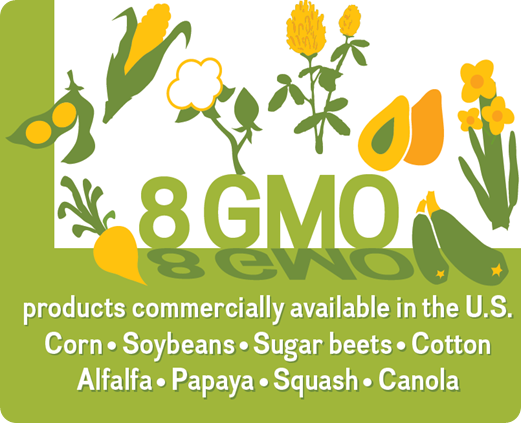
Food has become a hot topic in the media and around the dinner table. The production and politics of food are on the minds of policy makers, special interests groups and consumers in general. One of the most talked-about subjects is the advanced science used to produce new plants and organisms through the manipulation of genetic material. Today we will look at genetically modified organisms—GMOs—and provide answers to many of the questions you may have about them.

image

1.) What is a GMO?

When creating a GMO or genetically modified organism, researchers copy specific genetic information from one plant or organism and introduce it into another to improve or enhance a specific characteristic or trait, such as resistance to insects. Developing special traits in plants allows for more food to be grown in more places using fewer chemicals and fewer natural resources

2.) What’s the difference between GMOs and biotechnology?

While the two terms are frequently used interchangeably, biotechnology more closely refers to the process or technology used to create GMOs. You may also see the term “GM”, which of course means “genetically modified.” When you hear farmers talk about “biotech” hybrids or varieties, they are talking about the GM seeds they plant.

3.) What is a Bt crop?

These are crops genetically engineered to carry a gene from the soil bacterium Bacillus thuringiensis (Bt). This bacterium produces proteins toxic to certain pests—caterpillars, mosquitoes and corn rootworm–but do not affect humans and other mammals. The crops that contain the Bt gene can produce the toxin, thus shielding themselves from targeted pests— and reducing the need for pesticides.

4.) Is genetic modification a new thing?

Manipulating genes in plants is an approach that has been used for centuries to make bread, cheese, wine and beer. Today, nearly every food on grocery store shelves has been modified by human hands at the genetic level. The foods we eat are modified using various breeding methods. Breeding alters a plant’s genes so that it expresses new traits. That’s how we get those desirable family favorites such as, seedless watermelons and grapes, red grapefruit, peanuts, honey crisp apples and other foods. GMOs and biotechnology simply accelerate this process. “Everything about science is learning new ways to speed up evolution so that we can come up with crops faster than Mother Nature ordinarily would,” said Dr. Sally Mackenzie, Ralph and Alice Raikes Professor of Plant Science at the University of Nebraska–Lincoln. “Genetically modified is a part of our future. If we want to eat with climate change, we will need technologies or we simply won’t survive, and that’s just a reality.”

5.) Are GMOs safe for humans?

To date, more than 2,000 peer-reviewed studies have confirmed that GMOs are safe for human consumption. While there have been a handful of studies that state otherwise, these studies have been roundly debunked by scientists around the world. With over 25 years of independent research, there is no documented evidence of harm to human health or deaths from consumption of GM foods. (National Research Council, European Commission)

6.) Are there GMO-free foods?

Genetically modified wheat is not grown in the United States. Genetically modified corn, soybeans and other commodities are approved for production in the U.S. As a result, trace amounts of GM products are found in many processed foods in the form of corn, soybean or canola oils—even when those foods may be labeled “GMO-free.”

7.) Is it safe to eat meat and milk from animals that were fed GMO crops?

Absolutely. A 2012 review of 24 long-term or multigenerational studies found that genetically modified corn, soy, potato, and rice had no ill effects on the rats, cows, mice, quails, chickens, pigs and sheep that ate them. Growth, development, blood, tissue structure, urine chemistry and organ and body weights were normal.

8.) How does genetic modification affect nutrition?

There is no difference. Exhaustive testing and FDA review has confirmed that GMOs are nutritionally the same as their non-GM counterparts. They have the same levels of key nutrients such as amino acids, proteins, fiber, minerals and vitamins.

9.) Do GMOs cause allergies?

No. GMOs do not create new allergens that are not already present due to other unrelated factors. If a person is allergic to a non-GMO plant, they will be allergic to the GMO variety since the two are nutritionally the same.

10.) Do GMOs cause gluten intolerance?

There is absolutely no relationship because there is no GMO wheat on the market today. If such a product were to come on the market, it could not cause new allergies because standard GM testing and FDA review ensure that GMOs are not introducing new potential allergens
GMO products