Showing posts with label GMO. Show all posts

April 25, 2016

Facing the Facts about GMO

Share:
As farmers, we see the value and usefulness of biotechnology. Biotech is the farmer term for what food eaters know as GMOs.

The misfortune around biotechnology/genetically-modified organisms (GMOs) is that food eaters are unsure of what GMOs really are and farmers don’t always know how to talk about it. The seed companies are great at explaining the science, but food eaters really don’t want to hear it from them.

Growing more with less


For farmers, biotechnology is a useful tool in their toolbox of resources for growing more food sustainably. To them, that means using fewer pesticides and fertilizer, and fewer times across the field meaning less fuel. It also lets them grow crops that may be resistant to pesky pests that have damaged their crops in the past.

“As a farmer, I see biotechnology as huge investment into growing enough food for a growing world with fewer resources,” says Jay Reiners, a farmer near Juniata, Neb., who serves on the NCGA Trade Policy & Biotech Action Team and is a director on the NeCGA Board. “From drought resistance to disease resistance to insect resistance, we can grow more corn, soybeans or other food sources in a more sustainable way.”

As farmers, they see the usefulness of GMOs, but how can it be better explained to food eaters?

Jay Reiners, photo from Omaha.com
“I think the reason biotech is misunderstood is because as an industry we haven't explained what biotech is good enough from the beginning,” says Reiners. “We assumed that the public wouldn't have a problem with it because the government said it was safe. Now we are on the defense against false information.”

This challenge hasn’t resolved overnight, but farmers and farmer-driven movements are aiming to do a better job at directly conversing with food eaters through programs that get them in front of food eaters – not an easy task when you think about it. Some farmers have direct access to their customers at farmers markets. But commodity farmers who don’t directly market their grain through farmer’s market, don’t have the opportunity to have face-to-face conversations with their customers.

So programs like CommonGround, U.S. Farmers & Ranchers Alliance (USFRA) and more have been started from the ground up (meaning started by farmers) to help give farmers and ranchers alike an opportunity to be in front of the public.

Women to women


CommonGround is a movement of farm and ranch women who volunteer their time to share about where food comes from and how it is raised. It was started in 2009 (Nebraska was one of the pilot states!) and has now grown to 19 states and growing + over 180 volunteers! These women involved volunteer their time and the CommonGround program (funded by farmer checkoffs) helps setup opportunities for them to be in front of food eaters – like dietitian conferences, grocery-store conversations, media opportunities, food meetings, moms groups, etc.

They are moving the needle as real, credible women who are relatable to the women food purchasers, which by the way, women are the majority of people who buy food for and make health-wise decisions for their families. So it makes sense to have women farmers and ranchers, who also buy food for their families, sharing what it is that they do raising food and why they do it.

“With programs like CommonGround, we are able to help change public opinion one at a time in a personal way from a first-hand account where their food comes from,” says Reiners.

Farmers and ranchers are food eaters, too


USFRA is an organization involving more than 90 farmer and rancher-led organization and agricultural partners representing virtually all aspects of agriculture. They work together to engage in dialogue with consumers who have questions about how today’s food is grown and raised. USFRA is committed to continuous improvement and supporting U.S. farmers’ and ranchers’ efforts to increase confidence and trust in today’s agriculture. Similar to CommonGround, they want food eaters to see that farmers and ranchers are just like them – people who care about what we grow, raise and eat – and are relatable. One of their main programs is a Food Dialogues format that brings together food raiser, eaters and business together to share and solve issues we face today.

Another great resource for food eaters is GMOAnswers.com. It shares easy-to-understand messages about what GMOs are and why farmers use them. It allows for anybody to ask questions and they assure those questions are answered. They use peer-reviewed information and useful experts to answer the questions so they stay objective. Go check it out for yourself: GMOAnswers.com.

GMOs and biotechnology are not meant to be scary, secretive or subjective. They have been around for over 20 years and not one case of human illness has resulted. There are just a lot of unknowns, and we are farmers want to make sure food eaters understand why it is what we do and why we care. Let’s all come to the table to discuss GMOs and why they can be a sustainable part of our future!

Watch these videos about GMOs/Biotechnology from The Cob Squad!

VIDEO: Kernels of Truth–GMO Safety

August 5, 2015

The Life of a Seed

Share:
From The Cat in the Hat to Big Bird, we all know how educational characters can help teach us about complex topics in a fun, interesting way. We would like to introduce you to Jake the Seed – an animated GMO seed, who explains complex biotechnology information in a simple, friendly manner.


In the video above, Jake tells the story of a GMO seed, including:

  • A brief history of crop modification in agriculture
  • How GMOs are created and why they are used today
  • The variety of paths crops from GM seeds can take after harvest

More quetions about GMO's?  Visit GMOAnswers.com.

August 3, 2015

8 is great when it comes to GMO

Share:

Maybe you've wondered what foods are really GMO? Or thought, is this seedless watermelon GMO?

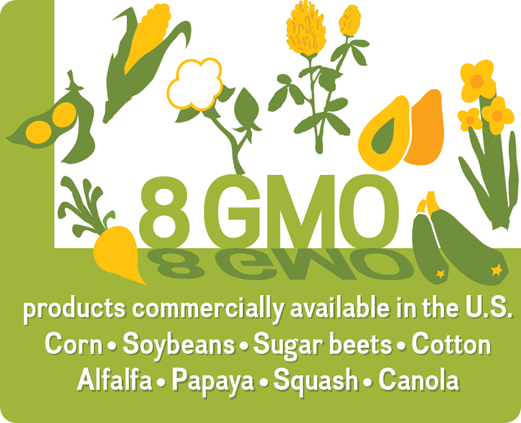
The fact is, there are only eight crops that are available in GM varieties in the U.S. They are Alfalfa, Canola, Corn (field and sweet), Cotton,  Rainbow Papaya, Soybeans, Sugar Beets and Summer Squash.
:

Field and sweet corn are both available as GM varieties. As Gary Truitt from Hoosier Ag Today explains in this article, more than 80 percent of the corn grown in the U.S. is GM corn. These varieties were created with insect resistance traits that help farmers more easily manage pests, like the corn borer or corn rootworm, and protect their harvest.

 GMOanswers.com has a commodity series on each commodity with GM varieties. The corn series shares where and when corn is grown in the U.S., uses for corn and more GM facts. This site is a great source of information when it comes to your questions on GM crops and foods!

May 12, 2015

Chipotle’s Bold Move to GMO Free…But Will it Last?

Share:

clip_image002Two weeks ago, Chipotle took its propaganda filled marketing campaign to a troubling new level when it announced that its entire menu will be GMO-free—meaning nothing served at its fast-food restaurant chains will contain ingredients derived from genetically modified plants or animals. According to their website, the company is “G-M-Over It” and has decided that serving GMO’s in their restaurants does not align with their vision of “food with integrity.”

Even though Chipotle’s GMO stance opposes the best scientific knowledge in the world, the company has taken a bold stance that GMO’s are unsafe and have long-term implications that consumers should be concerned about. But what scientific evidence supports these claims? According to a 2014 report by the World Resources Institute, GMO-derived foods have been widely consumed for years and “there is no evidence that GM crops have actually harmed human health.”

The bottom line…this GMO-free campaign has satisfied some of Chipotle’s most loyal and health-conscious guacamole fans, however, it has missed a huge opportunity to ethically educate American’s about where their food comes from.

So was Chipotle’s declaration to be “G-M-Over It” a good choice? Will this marketing hype last? Will consumers actually fall for their unethical propaganda? In a recent article on NPR, writer Dan Charles entertains “why we can’t take chipotle’s GMO announcement all that seriously” with five rational points that every consumer should be aware of. We highlighted a few below…

1. Soda

At the bottom of the page that announces Chipotle’s new policy, you’ll find the following statement: "Many of the beverages sold in our restaurants contain genetically modified ingredients, including those containing corn syrup, which is almost always made from GMO corn."

Looks like the fast-food giant is making quite the exception to its GMO-free policy when it comes to sugary drinks.

2. The "superweed" double standard

image

As an example of the ways that GMOs can damage the environment, Chipotle points to the problems caused by herbicide-tolerant GMO crops and how they encourage farmers to use a single herbicide, usually glyphosate, or Roundup. This, in turn, has led to the emergence of herbicide-resistant weeds, which Chipotle calls "superweeds." Chipotle's answer to this, per its new non-GMO policy, is to switch from soybean oil to sunflower oil.

The problem is, many sunflower varieties, while not genetically modified, also are herbicide-tolerant. They were bred to tolerate a class of herbicides called ALS inhibitors. And since farmers starting relying on those herbicides, many weeds have evolved resistance to them. In fact, many more weeds have become resistant to ALS inhibitors than to glyphosate.

Why should Chipotle bemoan the emergence of weeds that are resistant to glyphosate, yet not to other weedkillers?

3. Meat

Chipotle says it wasn't too difficult or expensive to remove GMO ingredients from its burritos. It simply had to find new suppliers for corn flour and cooking oil.

It would be much harder, and presumably more expensive, to use only meat from pigs or chickens that consumed a non-GMO diet. That's because the amount of corn or soybeans required to feed Chipotle's animals is vastly larger than what's needed for its tortillas or cooking oil. Finding a new supply of animal feed would raise costs, so Chipotle isn't doing it.

To view the full NPR article, click here.

April 30, 2015

The "Food Babe": Bullying her way out of food credibility

Share:
Raise your hand if you've heard of the "Food Babe".

For those that haven't, she's a mommy/food/nutrition blogger who feels it's her role in life to scare people about what food they are putting in their mouth. She aims to use fear tactics to sell her books, promote her diet plans and force companies to stop using federally inspected and approved products that help our food to be safer. But what she doesn't reveal is that she isn’t even a nutritionist. Nor is she a toxicologist or a medical doctor. Yet she doles out nutrition, toxicological, and medical advice with the confidence of someone trained in all three areas.

And people believe her because she "sounds" smart, she's got good looks and social media-manipulating skills.

Of course she is teaming up with other anti-modern farming supporters like Chipotle and Dr. Oz, and campaigning against GMOs in our food. And many companies have bowed to her pressure of "consumer demand" - which is really only one person. The fad-dieters loved her and all jumped on her bandwagon. But is her minute of fame over?

Now there are many - consumers included - who are back lashing against her saying that her promotions are not based in facts/science and are simply to scare people to make more money.

There have even been some anti-Food Babe'rs who have come up with their own satirical accounts of Food Babe like Chow Babe and SciBabe. They easily point out how the Food Babe is making money scaring the living daylights out of food consumers, while simultaneously bullying companies that use ingredients that are FDA approved safe for consumption.

The BEEF Daily blog recently came out with a list of 10 negative review of the "Food Babe" worth reading & sharing. Worth reading indeed.

While time and time again, we learn that emotions are what convince people about food and agricultural topics. Yet it is exciting that science is taking its role to prove the facts against someone who is manipulating emotions to extreme and nonfactual realities.

The real message that consumers - and that means all of us because we all love consuming food - is that we need to do the research on our own about what type of food we eat and feed our families.

And talk to a farmer. We know some good ones who can tell you the basis of how food is grown.

January 21, 2015

GM cattle could cure Ebola

Share:
Maybe the bad stigma of genetic modification will turn around if it will, in fact, save human lives?!

Well now there is that opportunity. On a farm outside Sioux Falls, South Dakota, a herd of cloned, genetically engineered cattle are busy incubating antibodies against the Ebola virus.

The hope that researchers have is that the cattle will produce gallons of blood plasma that could be used to treat people with the deadly virus, which has infected more than 21,000 people in West Africa and killed 8,500 of them.

In the NBC News article, president and CEO of SAb Biotherapeutics, the company that developed the cattle, Eddie Sullivan said that the catte produce very high levels of human antibody.

GM Cattle


The cattle have been genetically engineered with human DNA so that their bodies don't produce cattle antibodies but human antibodies. They're cloned to make a herd of genetically identical, part-human animals.

Then they are vaccinated against various deadly diseases such as Ebola. Their bodies produce antibodies in response to these vaccines, and the hope is these antibodies can be used to treat people with the diseases.

So why are they using cattle to fight Ebola?


Cattle make the project larger-scale. Each month, around 30 to 60 liters of plasma are collected per animal. That translates into something between 500 to 1,000 human doses per month per animal.
 
Read more here.

January 15, 2015

Are GMO’s A-OK?

Share:

Food has become a hot topic in the media and around the dinner table. The production and politics of food are on the minds of policy makers, special interests groups and consumers in general. One of the most talked-about subjects is the advanced science used to produce new plants and organisms through the manipulation of genetic material. Today we will look at genetically modified organisms—GMOs—and provide answers to many of the questions you may have about them.

image

1.) What is a GMO?

When creating a GMO or genetically modified organism, researchers copy specific genetic information from one plant or organism and introduce it into another to improve or enhance a specific characteristic or trait, such as resistance to insects. Developing special traits in plants allows for more food to be grown in more places using fewer chemicals and fewer natural resources

2.) What’s the difference between GMOs and biotechnology?

While the two terms are frequently used interchangeably, biotechnology more closely refers to the process or technology used to create GMOs. You may also see the term “GM”, which of course means “genetically modified.” When you hear farmers talk about “biotech” hybrids or varieties, they are talking about the GM seeds they plant.

3.) What is a Bt crop?

These are crops genetically engineered to carry a gene from the soil bacterium Bacillus thuringiensis (Bt). This bacterium produces proteins toxic to certain pests—caterpillars, mosquitoes and corn rootworm–but do not affect humans and other mammals. The crops that contain the Bt gene can produce the toxin, thus shielding themselves from targeted pests— and reducing the need for pesticides.

4.) Is genetic modification a new thing?

Manipulating genes in plants is an approach that has been used for centuries to make bread, cheese, wine and beer. Today, nearly every food on grocery store shelves has been modified by human hands at the genetic level. The foods we eat are modified using various breeding methods. Breeding alters a plant’s genes so that it expresses new traits. That’s how we get those desirable family favorites such as, seedless watermelons and grapes, red grapefruit, peanuts, honey crisp apples and other foods. GMOs and biotechnology simply accelerate this process. “Everything about science is learning new ways to speed up evolution so that we can come up with crops faster than Mother Nature ordinarily would,” said Dr. Sally Mackenzie, Ralph and Alice Raikes Professor of Plant Science at the University of Nebraska–Lincoln. “Genetically modified is a part of our future. If we want to eat with climate change, we will need technologies or we simply won’t survive, and that’s just a reality.”

5.) Are GMOs safe for humans?

To date, more than 2,000 peer-reviewed studies have confirmed that GMOs are safe for human consumption. While there have been a handful of studies that state otherwise, these studies have been roundly debunked by scientists around the world. With over 25 years of independent research, there is no documented evidence of harm to human health or deaths from consumption of GM foods. (National Research Council, European Commission)

6.) Are there GMO-free foods?

Genetically modified wheat is not grown in the United States. Genetically modified corn, soybeans and other commodities are approved for production in the U.S. As a result, trace amounts of GM products are found in many processed foods in the form of corn, soybean or canola oils—even when those foods may be labeled “GMO-free.”

7.) Is it safe to eat meat and milk from animals that were fed GMO crops?

Absolutely. A 2012 review of 24 long-term or multigenerational studies found that genetically modified corn, soy, potato, and rice had no ill effects on the rats, cows, mice, quails, chickens, pigs and sheep that ate them. Growth, development, blood, tissue structure, urine chemistry and organ and body weights were normal.

8.) How does genetic modification affect nutrition?

There is no difference. Exhaustive testing and FDA review has confirmed that GMOs are nutritionally the same as their non-GM counterparts. They have the same levels of key nutrients such as amino acids, proteins, fiber, minerals and vitamins.

9.) Do GMOs cause allergies?

No. GMOs do not create new allergens that are not already present due to other unrelated factors. If a person is allergic to a non-GMO plant, they will be allergic to the GMO variety since the two are nutritionally the same.

10.) Do GMOs cause gluten intolerance?

There is absolutely no relationship because there is no GMO wheat on the market today. If such a product were to come on the market, it could not cause new allergies because standard GM testing and FDA review ensure that GMOs are not introducing new potential allergens

GMO products

November 19, 2014

"New Potatoes" of a GM variety

Share:
The U.S. Department of Agriculture has approved commercial planting of a potato that is genetically modified to resist bruising and to produce less of a chemical that has caused cancer in animals.

The USDA this month gave the Boise, Idaho-based company, J.R. Simplot Co. permission to begin commercial planting of its new spud, called the "Innate" potato. The company altered the potato's DNA so it produces less acrylamide, which is suspected to be a human carcinogen. Potatoes naturally produce the chemical when they're cooked at high temperatures.

The potato is also engineered to resist bruising, which can cause black spots in the potatoes, making them less desirable to buyers.

Simplot is a major supplier of french fries, hash browns and other potato products for restaurant chains like McDonald's Corp. However, McDonald’s didn’t respond positively.

"McDonald's USA does not source GMO potatoes, nor do we have current plans to change our sourcing practices," the company said in a statement.

But Simplot didn't create this GM potato product for McDonald's - or any fast food restaurant for that matter. 

Simplot spokesman Doug Cole didn't address the company's plans to sell to the fast-food industry or the dehydrated potato industry, which both have urged growers against planting GMO potatoes. But Cole said the fresh potato market would embrace Innate.

The potato joins only eight other crops that have been USDA-approved for commercial production in the U.S.: corn (field and sweet), soybeans, cotton, canola, alfalfa, sugar beets, papaya and squash. This new option of growing GM potatoes shouldn’t be a scare to consumers. It is worth noting that no commercially available crops in the United States were created by nature alone. Humans, over our history, have altered all of our crops, often for taste or yield or disease resistance.

November 10, 2014

Voters see GMO labeling measures on ballots

Share:
Last Tuesday was election day and three states had GMO labeling issues on their ballots.

Voters in Colorado and Oregon cast their ballots regarding labeling of genetically modified foods. The measures failed in both states. In Colorado, more than 67 percent of voters rejected the ballot measure, while in Oregon, the ballot measure was defeated by a narrow margin of 50.5 percent to 49.5 percent. Most voters who cast a "no" vote cited concerns about higher food costs that labeling may create as their reason.

A measure in Maui County in Hawaii to impose a temporary ban on the cultivation of GMO crops, meanwhile, passed by a margin of 50 percent to 48 percent. The ban will remain in place until the county can fully assess the impact of GMOs on public health and the environment. Monsanto and Dow AgroSciences, who both operate in the county, said they will challenge the moratorium.

Consumers took to social media to voice their opinions about the election results . While the majority of online conversations regarding the GMO labeling measures were from consumers based in the U.S., consumers globally joined in the discussions, with posts coming from Indonesia, France, Australia, the Netherlands, and beyond. Read more on the those who tweeted using the hashtag:  #GMOLabel.

This would be a great discussion for the Nebraska Corn Kernels blog readers: what are you views on GMO labeling?

October 9, 2014

Harvested Biotech Crops Top 4 Billion Acres

Share:

4BAcresWhen the sixteen farmers representing agriculture around the globe gather in Des Moines next week for the Global Farmer Roundtable, they can celebrate a milestone. Since 1996 until now, over 4 billion acres of biotech crops will have been harvested.

That’s billion with a B.

Four billion acres is 1.5 times the size of Europe. It’s nearly as big as South America.

Ross Korves, economic and trade policy analyst with Truth About Trade and Technology: “The calculation starts with 1996 commercial production of biotech crops. Each February we benchmark back to the ISAAA (International Service for the Acquisition of Agri-Biotech Applications) December 31 number of acres planted for the year. Much of the world does not have a harvested number like the U.S., but we’re making an educated guess to paint a simple picture. The counters (for planted acres and harvested acres) run 365 days per year. They come alive in the spring and fall and peak out at 25-30 million acres per week in the northern hemisphere and 15-20 million in the southern hemisphere.”

What’s the bottom line lesson here?

Bill Horan, chairman of Truth About Trade and Technology: “The B word for billion acres of biotech crops without any reported issues in the food chain means just one thing. There are a lot of voices out there critical of biotechnology, spinning their precautionary tales. Four billion acres of biotech crops have filled a lot of stomachs, and biotech is one of the answers for meeting agriculture’s goal to feed 9 billion people by the year 2050. I think it’s time we lay all of these scary food myths to rest, like the passing of the boogeyman, once Halloween is over. Once we’re able to do that, we could focus on the work ahead of us.”

September 3, 2014

VIDEO: Kernels of Truth - GMO FAQ

Share:

GMOs bring up several questions – and rightly so because it is a complex issue with no one simple answer. We’ve tried to help answer those questions in our three previous Kernels of Truth videos: What are GMOs?, GMO Safety, and Beyond Bt.

The last video in our series covers other common GMO frequently asked questions.

What is the difference between “genetic engineering”, “genetic modification”, “biotechnology”, and “GMOs”? Why don’t we label GMO foods?

Aren’t the herbicides used on genetically engineered crops dangerous to humans?

Watch GMO FAQs now:

Get more of your GMO FAQs answered on our website.

Watch all of our videos on GMOs:

Kernels of Truth - What are GMOs?

Kernels of Truth - GMO Safety

Kernels of Truth – Beyond Bt

August 20, 2014

VIDEO: Kernels of Truth - Beyond Bt

Share:

In our previous two GMO videos, we talked about what GMOs are and why they are safe.

In this video we’re going to look at some uncommon, or at least lesser-known uses of biotechnology that can benefit everyone from Indiana to India.

Bt and Roundup Ready hybrids have allowed farmers to use fewer pesticides and herbicides, respectively. But this is not where the environmental benefits of modern biotechnology stop. Scientists in Indiana have inserted a gene into a poplar tree that allows it to clean up soil and groundwater pollution by breaking down and metabolizing the pollutants.

On the human health front, biotechnology also has significant potential to help fight disease in the developing world. Have you heard of “Golden Rice”? Learn how biotechnology can lead to preventing deaths in developing countries and more in the Kernels of Truth – Beyond Bt video.

Watch now!

Watch more videos on GMOs:

Kernels of Truth - What are GMOs?

Kernels of Truth - GMO Safety

August 7, 2014

VIDEO: Kernels of Truth–GMO Safety

Share:

Are GMOs really safe for humans and the environment?

The answer is not just yes, but in some cases, more so than non-GMOs. Let’s take a closer look.

There have been over 1,700 reputable studies on GMO safety by organizations like the American Medical Association, the World Health Organization, and the food regulatory bodies of numerous governments, including the United States and the European Union.

Every one of these studies has shown GMO foods to be just as safe as non-GMOs. The only time a study ever showed a difference in safety, it actually found the GMO to be safer. This is not surprising, considering they go through years of testing by the FDA, USDA, and EPA before being sold, in order to assure they’re absolutely safe for human consumption and our environment.

Watch our short video to learn more about GMO safety.

If you missed the first video, What are GMOs?, watch it now!

July 31, 2014

VIDEO: Kernels of Truth–What are GMOs?

Share:

There’s a little acronym floating around: G-M-O.

It stands for Genetically Modified Organism. A big name for a common practice in crop production.

What is is? There are several terms associated with it: GM, biotechnology, genetic engineering, hybrids, Bt.  These terms are used interchangeably with the practice of incorporating favorable traits into the DNA of plants like corn and soybeans.

In fact, you can get a quick glimpse into GMOs explained in easy terms in this Kernels of Truth – What are GMOs? video by Nebraska Corn intern, Matt Perlinger. Enjoy and please pass it on!

July 4, 2014

Corn Bake Recipe

Share:

lana kidsCommonGround volunteer and farm mom from Waco, Nebraska, Lana Hoffschneider, was recently featured on a Nebraska food blog, Stirlist.com with her Corn Bake recipe. She shared how she would feel if somebody called her farm a “factory farm”.

“I don’t want people to see us as monsters. It bothers me when people say that. What makes a farm a factory farm? Using large equipment? We use equipment to be more efficient, which reduces waste. Why in the world would we want to return back to what we did 100 years ago? We can’t produce enough food without the advantage of economy of size. It’s not bad to question where your food comes from, but you should base your food choices on fact, not fear.”

Why are people making food choices based on fear instead of fact?

“People fear what they don’t know or understand,” said Lana. She then described that because of activists turning to blogs and social media, it has caused terms like GMO (genetically modified organisms) or words like “hormones” and “antibiotics” to become buzzwords that stir up fear.  ”They are buzzwords that create fear of the unknown, but facts will dispel those fears if people are willing to look for the facts.” Perhaps you’ve heard about GMOs and have been led to think they are harmful? Did you know over 1700 studies have confirmed the safety of GMOs?

Lana also said that her confidence in grocery stores has greatly increased since she started volunteering for CommonGround Nebraska. She actually buys all of their food from the grocery store (except the meat that comes form their own cattle in the feedlot) because she’s confident that the grocery store provides safe, healthy, and nutritious food.

Enjoy Lana’s Corn Bake!

cornwide-1024x682

Lana’s Corn Bake

INGREDIENTS

  • 1 small white onion (diced)
  • 1 small red bell pepper (diced)
  • 1 small green pepper (diced)
  • 1 stick butter
  • 1 package jiffy corn muffin mix
  • 1 cup shredded cheddar cheese
  • 1 cup light sour cream
  • 4 oz light cream cheese
  • 2 cans no salt added corn (drained)
  • 3 eggs

INSTRUCTIONS

  1. Preheat oven to 350
  2. Melt 2 Tb butter over medium heat and then sauté onions and peppers. Cook and set aside to cool.
  3. In a mixing bowl combine leftover butter (6 TB), corn muffin mix, cheese, light sour cream, light cream cheese, the 2 cans of drained corn, and eggs. Add sautéed onions and peppers.
  4. Pour mixture into greased casserole dish, 9 x 13 pan.
  5. Bake 50-55 minutes.

June 26, 2014

Let’s Move! Science Backs GMOs

Share:

From the Corn Commentary blog

Whether one is a fan of the White House’s Let’s Move! initiative or not, it almost inarguably plays a large role in our nation’s discussions on food.  Let’s Move! Executive Director and White House Senior Advisor on Nutrition Policy Sam Kass made a major statement about the future of food during the National Council of Farmer Cooperatives conference backing the science behind GMOs and advocating for a cultural shift toward their acceptance.

Kass’s remarks, covered in Politico Pro, indicated his thoughts on how the impact of climate change and adaptive technologies will shift the currently fierce debate over GMO foods.

“I think this debate is naturally going to start to shift,” said Kass. “I think the science is pretty clear. Ultimately I think the science will win out.”

His comments echoed those often made by groups such as the U.S. Farmers and Ranchers Alliance and CommonGround in espousing the importance of consumer choice and access to factual information about the quality and safety of the abundant food options produced by U.S. farmers and ranchers.

“I think part of the problem with the debate as it stands is that it’s either one or the other,” said Kass. “Every side says my way is the best way. Diversity [in agriculture] is strength.”

May 7, 2014

Top 10 GMO questions

Share:

Howells-Dodge-Clarkson FFA (6)
A new national survey commissioned by GMO Answers and the Council for Biotechnology Information has identified the leading questions consumers have about genetically modified organisms (GMOs) and how food is grown.

The survey was conducted in order to identify, for the first time, the top 10 questions consumers have about GMOs and to open up the conversation on biotechnology's role in agriculture.

Over the next several weeks, scientists, farmers, doctors and other experts will answer one of the top 10 questions each week on the GMO Answers website and via Twitter. This blog will cover the top three questions.

image

Ipsos, a global market research company, conducted a national, random telephone survey of 1,006 American adults ages 18 and older. Participants were given a list of common questions about GMOs and were asked which ones they would be "most interested in having answered."

Cancerous?

Agriculture photo shoot in south west Nebraska in Perkins County. Photo by Craig Chandler / University CommunicationsDr. Kevin Folta, interim chair and associate professor at the University of Florida's horticultural sciences department, answered the first question: Do GMOs cause cancer?

"The short answer is no, there is absolutely zero reputable evidence that GMO foods cause cancer. Cancer is a name applied to a spectrum of diseases where cells proliferate abnormally. There is no way that the subtle and well-understood alterations of a plant's genes can cause cancer," Folta explained. "There is nothing about the Bt protein (used in insect resistance and also in organic pest control), the EPSPS enzyme (which confers herbicide resistance simply by substituting for the native enzyme in the plant) or the process itself that would induce the genetic changes in human cells that would lead to cancer. It is just not plausible.

"Some of the confusion comes from reports where the Bt protein or glyphosate (the herbicide used on some biotech crops) is applied to cell lines in a petri dish, and the cells show changes associated with stress and perhaps abnormal proliferation," Folta said. "However, cells in a dish do not behave like cells in the body. Through years of careful evaluation, there is no reliable evidence that GM (genetically modified) foods cause the same changes in a living organism."

Continue reading…

Allergenic?

diane green boys commonground nebraskaLisa Katic, a registered dietician, shared her perspective for the second question: Are GMOs causing an increase in allergies?

"No commercially available crops contain allergens that have been created by genetically engineering a seed/plant, and the rigorous testing process ensures that will never happen," she explained.

According to Katic, food allergies are mainly caused by eight major foods — milk, eggs, peanuts, tree nuts, soy, wheat, fish and shellfish — and account for about 90% of reported food allergies in the U.S.

"First, it is important to note that only one of these eight major allergens listed above is a potential product of biotechnology, and that is soy. Of the remaining seven allergens listed, none is commercially available in genetically modified varieties," Katic explained.

She noted that if a person is allergic to a non-GM plant, he or she will also be allergic to the plant's GMO counterpart, "but GMOs do not introduce any new allergens. In fact, researchers, academics and companies are working on new GMOs that have the potential to help people in this area — for example, peanuts with very low allergen levels that have the potential to eliminate life-threatening allergies to peanuts."

Continue reading…


No choice?

Imp1The third week showcased the question: Are big companies forcing farmers to grow GMOs? Indiana corn and soybean farmer Brian Scott addressed this question by talking about his own experience purchasing seed for his farm.

"None of the seed companies force farmers like me to buy any particular product. ... Salespeople might push the latest and greatest, but since every farm operates a little bit differently from the next one, seed choice is very important," Scott explained.

He added that seed companies that sell GM seeds also have many non-GMO varieties.

"I can buy any seed from any vendor I choose from one year to the next. Just because I bought Monsanto, Pioneer or Syngenta seeds one year doesn't mean I have to buy seed from any one of them the following year," he explained.

Scott noted that farmers do sign technology use agreements in relation to patented products but said nothing in the contracts sets a requirement for future purchases or even purchases of other products during the growing season.

To follow the dialogue on the other questions or to view more information on GMOs, visit GMOAnswers.com.

February 25, 2014

Attack of the Killer Tomatoes: A GMO story

Share:
Dr. David Holding, Assistant Professor Plant Molecular Genetics, Research in his laboratory focuses on understanding endosperm hardening during maturation and its relationship to protein quality in maize. 2010 photo for Center for Plant Science Innovation shoot. Photo by Craig Chandler / University CommunicationsBefore genetic modification, the alkaloid levels in that tomato on your BLT could have killed you. And instead of corn on the cob, you’d be eating a handful of birdseed.

Genetic management and selective breeding have been used for centuries (Gregor Mendel and Luther Burbank, anyone?). Today, we’re just doing it better.

As farmers and ranchers work to meet the daunting challenge of feeding an exploding global population, they continue to grow more with less – less water, less land, less fertilizer and pesticides, and less impact on the environment.

Currently, genetically modified (GM) crops—also referred to as “biotechnology”—are an important part of a farmer’s portfolio. But they are not an end-all solution.

“The research we do is not an either-or proposition; it’s a continuum,” said Dr. Sally A. Mackenzie, the Ralph and Alice Raikes Professor in the department of agronomy and horticulture in biological sciences at the University of Nebraska—Lincoln. “We’re not able to predict what biotechnology will give us. It’s a tool in an increasingly robust toolbox.”


Genetic modification

Dr. Mackenzie says that genetic modification simply refers to human intervention to create a different genetic combination to create a desired outcome.

“We’re using transgenes to create gene combinations that result in diversity and enhanced performance. The outcomes rely on the genes themselves and how they are expressed within the plants.” This same concept is being used in animal research and in human health research for cancer and other diseases
.
Researchers are focused on helping plants overcome stresses, challenges and inhibitors that keep them from achieving their full genetic potential. Epigenetics is one emerging technology that involves temporarily adding a transgene to a plant and then removing it—while leaving the effects of that transgene intact within the plant. This can lead to more vigorous plants, more biomass and more production.

“With epigenetics, what you eat is not transgenic, but transgene technologies were used to affect the performance of the plant,” Dr. Mackenzie said.

“There has not been a single documented case of a food allergy or human health situation due to crop biotechnology.”

Researchers are also looking at the microbes the plants live with, which dramatically impact the way a plant uses water and nitrogen, and interacts with pathogens. This approach doesn’t change the genetic complexion of the plant, but instead strives to better understand and manage the environment around the plant to optimize its performance.

“GM foods unsafe” is a scare tactic.

 Corn field and center pivot irrigation in south central Nebraska. July, 2010. Photo by Craig Chandler / University CommunicationsDr. Mackenzie says that assertions that GM foods are unsafe is a distortion of the truth— and in many cases, is a scare tactic used by special interest groups to gain financial support and media attention. “There has not been a single documented case of a food allergy or human health situation due to crop biotechnology,” Dr. Mackenzie added. “It has never been unsafe or unhealthful. When we see distortions of the truth, the first place we should look is at who is benefitting from this misinformation.”

When asked about concerns about insects and weeds becoming resistant to GM crops, she asserts that this concern cannot be placed at the doorstep of biotechnology.

“There is nothing about GM technology that causes weeds to become tolerant to herbicides, just as there is nothing inherent in our medical system that makes us more resistant to antibiotics,” she said. “Just as any doctor needs to be responsible in prescribing medications, farmers need to be careful stewards of their crops—regardless if they are growing GM or non-GM varieties.”

Dr. Mackenzie said that genetics have long been part of agriculture. For example, the original corn was much like birdseed—and the alkaloid levels in the original tomato would be fatal to humans. Ruby red grapefruit is sweeter because gamma radiation was used to mutate the genes to express themselves in that manner.

This is what feeds us.

“Carrots, wheat, corn—Mother Nature never meant for us to eat any of them. Plants resist being eaten,” Dr. Mackenzie said. “All the crops we eat are essentially manmade through conventional breeding. This is what feeds us. Today we’re more precise and we can better manage change thanks to advancements in knowledge and technology.”

“Transgene plants will be part of our future; they must be, “ Dr. Mackenzie said. “Our problems are so challenging, so daunting that we don’t have the luxury to depend on alternatives that are less sustainable or less productive.

“If we’re going to meet global food demand over the next 30 years, we need to pull out all the stops. This is our generation’s equivalent of the putting a man on the moon.”

View Dr. Mackenzie’s presentation as part of the UNL Heuermann Lecture Series.

October 10, 2013

The Many Benefits of GMO's

Share:
Consumers are more cautious than ever about what they choose to eat. Some people prefer to eat  foods that are generally labeled "USDA Organic", while others choose to eat Genetically Modified food. American's are fortunate to have a choice between which type of food they choose to consume, sadly along with these choices there are generally many misconceptions, many focused on GMO products. Today I will talk about some of the benefits of GMO's and hopefully work to clear up some misconceptions.

GMO's have been around for 10,000 years! That seems like a tall tale, however it is not. Every crop that is grown today has been selected based on human selection and breeding, so much in fact, that modern crops barely resemble their wild ancestors. The only difference between the present breeding and 10,000 years ago is that we have improved technology that can make this natural selection process much faster. Before technology came about selecting for superior crops was done by visual selection. This process was slow and took whole growing seasons to accomplish. Plant breeders would have to select the best crops at the end of a growing season and then selectively breed them to other plants and then wait to see what happens. Now thanks to biotechnology we can observe single DNA variations in a laboratory, select the genetically superior traits, and transfer those traits to other plants. Essentially we are still doing the same process as we have always done, we are just accomplishing results faster than ever before.


90% of all crops grown in the United States are GMO crops and this is understandable because of the many benefits that GMO crops present for farmers as well as the environment. The most well known benefit of GMO crops is that we are experiencing higher yields than ever before. More and more citizens are choosing to move to a more urban setting, this leaves a fewer number of people that are willing to produce food for everyone in the U.S. and many people around the world. Another problem that agriculture is overcoming with higher yields is the fact that there is fewer acres of land available to produce food on. The world population is continuing to grow so farmers must work to produce more food on fewer acres and the only way this is possible is with improved yields.

The second major benefit of GMO crops is that they require fewer fertilizers, pesticides, and herbicides. This means that for every American citizen fewer chemicals are being put into plants and the ground which means your food and water is safer than ever. For years agriculture was known as a major polluter, but thanks to GMO's we are able to "clean up our act" and provide a safer environment for everyone.

The last major improvement to modern agriculture that has come along, thanks to GMO crops, is what agriculture refers to as sustainability. Water conservation has evolved because of GMO crops. We can now grow more food and save more water doing it, thus providing a better environment for the generations to come. Along with water conservation has come the development of soil conservation. No-till farming is now a common practice, this type of farming helps to reduce soil erosion that occurs in fields.

Sadly all these benefits have not come without criticism from the consumers. Many people question if these crops are safe to eat and feel that they should be labeled. The law clearly states that food companies are required to label foods that are substantially different in composition from similar foods. GMO foods are amongst the most tested foods in all of history and after extensive research it has been proven that there is no nutritional difference between GMO and non-GMO foods. This means that legally, GMO's currently have no reason to be labeled as different. That is because they are not different they are only bred to grow more efficiently. Labeling of GMO products would only bring about more confusion for consumers.

Hopefully after reading this post people will realize that GMO technology is quite possibly one of the largest technological advancements the world has ever seen. Thanks to improved production the average American farmer now feeds 155 people. Without this, the average farmer would only feed somewhere around 10 people and as a result America would have to import large amounts of food thus leading to an even larger budget deficit. So next time you are taking a road trip across the Midwest remember to thank a farmer for providing you with a safe, reliable, and homegrown food source!    

August 6, 2013

Japanese media team sees Nebraska biotech corn firsthand

Share:

7-31-13 011A team of Japanese mainstream media, food industry media in combination with an opinion leader visited Nebraska last week for meetings and visits with corn farmers, industry organizations, and biotech seed companies to receive a firsthand information on how U.S. biotechnology help increasing U.S. corn production with the growing demand for feed, food, fuel and exports of U.S. Corn. The group is traveling through the United States with the U.S. Grains Council who the Nebraska Corn Board partners with on programs to promote and expand exports of corn and corn co-products.

The team met earlier in the week with the National Corn Growers Association and were eager to learn about how American farming works to help feed and fuel the world.

7-31-13 012One of the reasons for visiting Nebraska was to visit Monsanto’s Water Learning Center in Gothenburg. Another was for the team to observe the benefits of biotechnology to stable corn production by taking drought tolerant corn traits as an example – in a area that experienced drought conditions last year and continue into this growing season in areas.

The team also stopped at Nebraska Corn Board director, Curt Friesen’s farm near Henderson. Curt demonstrated his sub-surface irrigation system, as well as talking about his center-pivot and pipe forms of irrigation.

On Thursday morning, the team joined Nebraska Corn Board staff for breakfast where Brian Fuchs of the National Drought Mitigation Center updated the team on the current status of drought in the U.S. and Nebraska, as well as sharing historical figures of drought trends on corn crop producing areas.

7-31-13 020The journalists represented news media with a combined circulation of about 27 million, representing the Yomiuri Shimbun, Asahi Shimbun, Mainichi Shimbun, Nihon Keizai Shimbun, Sankei Shimbun and Japan Food Journal newspapers, as well as the Jiji Press news service. After leaving Nebraska, the team headed to Washington, D.C. for a series of meetings.