August 3, 2015

8 is great when it comes to GMO

Share:

Maybe you've wondered what foods are really GMO? Or thought, is this seedless watermelon GMO?

The fact is, there are only eight crops that are available in GM varieties in the U.S. They are Alfalfa, Canola, Corn (field and sweet), Cotton,  Rainbow Papaya, Soybeans, Sugar Beets and Summer Squash.
:

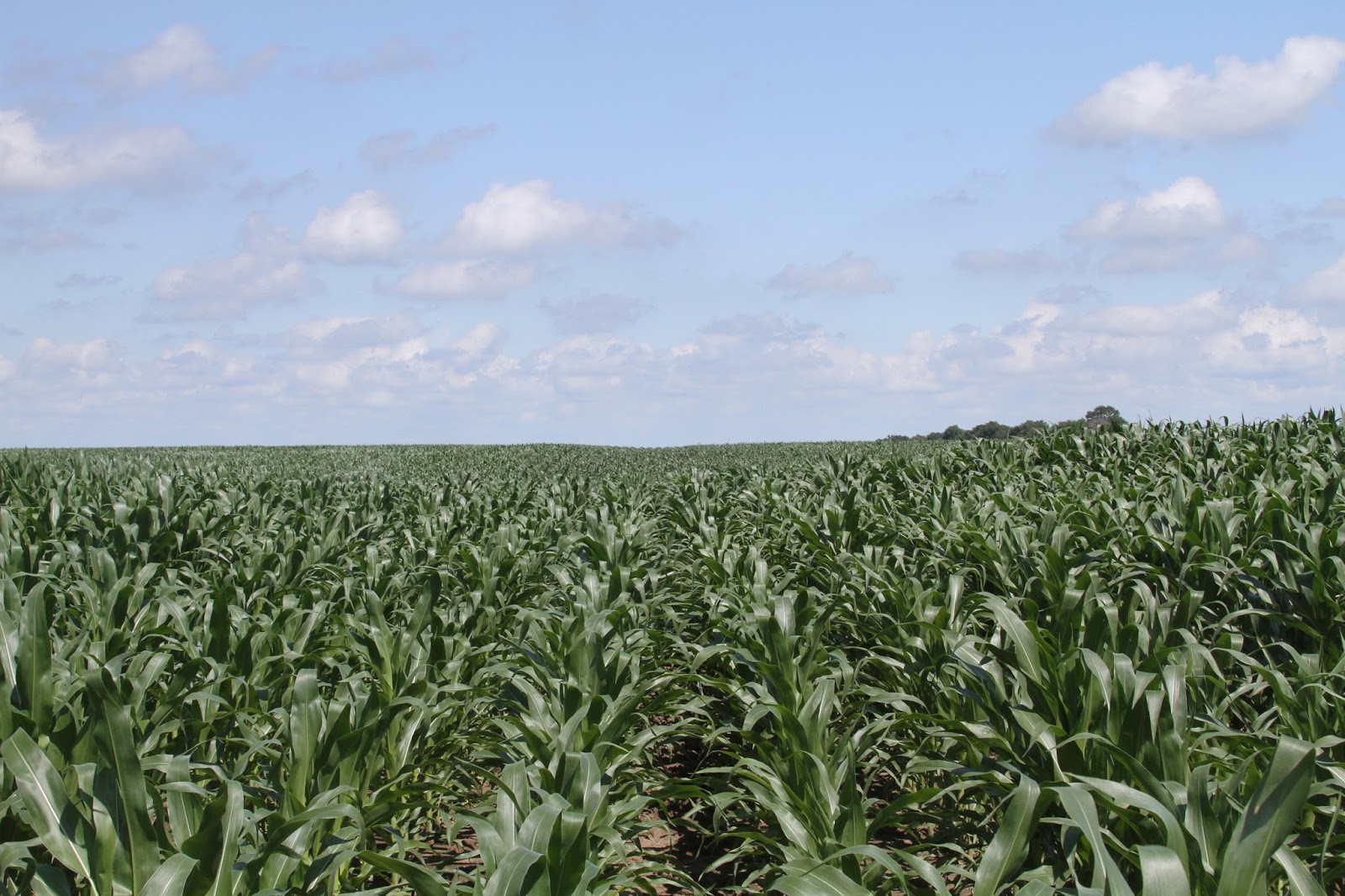
Field and sweet corn are both available as GM varieties. As Gary Truitt from Hoosier Ag Today explains in this article, more than 80 percent of the corn grown in the U.S. is GM corn. These varieties were created with insect resistance traits that help farmers more easily manage pests, like the corn borer or corn rootworm, and protect their harvest.

 GMOanswers.com has a commodity series on each commodity with GM varieties. The corn series shares where and when corn is grown in the U.S., uses for corn and more GM facts. This site is a great source of information when it comes to your questions on GM crops and foods!

August 1, 2015

I Like Working for Farmers

Share:
By Glen Ready, National Corn Growers Association Intern.
 When you like working for farmers, you
can end up doing some 
interesting things!

The title of this post says it all. This is a quote from one of the many wonderful staff here at NCGA, and neatly sums up why our industry is unique. In my time here in the district, I have had the opportunity to network with a great number of people from various agricultural organizations. Some of these people come from agriculture backgrounds but many found their way in to agriculture later in life. It’s interesting to hear from people who sort of “fell in” to agriculture. I had never thought of a “why” for people that ended up in agricultural policy without an agricultural background. Those of us that have said background can give our speech on what makes agriculture special to us in any number of ways. We grew up caring about these things, and the “why” question is pretty easy for us.

As I continued to meet people in the agriculture industry that had no background in agriculture I was continually surprised. Why would someone want to work in agriculture (or even think to work in agriculture) if they didn’t feel a connection or passion for what they were doing. It is far from the easiest job trying to explain to people that producers do care about the land, our animals, etc.  If they did have that passion, how did it come about? It made me think about what makes our industry great, and why George Washington would say that farming was the most noble employment of man (though as a farmer himself, maybe he was just tooting his own horn).

As I thought about this I realized it wasn’t so much the act of farming that is noble or inspiring. Indeed at times it is hardly glamorous at all what with the dirt, sweat, manure, and any manner of other things marring what is supposed to be a most noble profession. The people are what make agriculture so unique. The kindness, generosity, and willingness to help is near-universal in our industry. That isn’t to say none are curmudgeonly or stubborn beyond belief (my grandpa Arland certainly wasn’t a perfect example). Even many of those would give you the shirt off their back. For many without the background I’ve had, they come to the industry for a job, and they stay, and they care, because of the people.


This really isn’t all that different when I think about why so many of us with a farming background want to stay in the industry and help those farmers that have given so much to us. As was so neatly summarized by someone in the office that didn’t have an agricultural background, “I like working for farmers”. I realized that really, that’s why I’m sticking around too.

July 31, 2015

Nebraska Farm Family Featured in Exhibit at the Smithsonian’s National Museum of American History

Share:
The Chris Flaming family from Elsie, Nebraska is now featured in the “AmericanEnterprise” exhibit at the Smithsonian's National Museum of American History in Washington, DC as part of the national Corn Farmers Coalition. The Corn Farmer Coalition—or CFC—is a collaboration of several corn states including Nebraska that was formed to restore the image of corn farming, especially among policy makers in Washington, DC.

For the past few years, the CFC has placed attention-getting advertising campaigns in Washington, DC to provide positive, fact-based messaging about corn farming. These campaigns have included large advertisements featuring photographs of family corn farmers, such as the Flaming family from Nebraska, and highlighted key statistics about farmers' environmental stewardship, innovation and international leadership in corn production. These ads were placed in the DC subway systems as well as in publications and on websites read by policy makers and their staff.  

“Our family was fortunate to be prominently featured in several of the CFC ads over the last few years,” said Chris Flaming, a corn farmer from Elsie, Nebraska. “It’s obvious that the campaign has done its job. It has been seen by millions of people, has won many industry awards, and most importantly, people remember seeing it.”

The CFC concept has not only been a high-profile and well-received campaign in the DC area, but was also a perfect fit for the Smithsonian's National Museum of American History’s new “American Enterprise” exhibit, which prominently features agriculture. The general story of the exhibit examines how the United States moved from a small dependent nation to one of the world's most vibrant and trend-setting economies.  

To recognize the grand opening of the “American Enterprise” exhibit, and the CFC display featuring a photo of the Flaming Family, the Corn Farmers Coalition sponsored a Farmer-to-Table event at the Smithsonian. As a part of this event, Chris and Korene Flaming, along with many others farm couples from across the country, enjoyed dinner and conversation with media, policy makers and thought leaders from inside the Beltway. Guests represented a wide range of interests, including the chief agricultural trade negotiator for the U.S. and fellow Nebraskan, Darci Vetter, and a staffer from First Lady Michelle Obama's office.

“It was a great opportunity to help the guests put a face on agriculture and get first-hand answers to their questions,” said Korene Flaming, farm mom and teacher from Elise, Nebraska. “Some of their questions ranged from "How big is an acre?" to "Do you use GMOs—and are they safe?”  In the end, I think all of us were surprised that we shared many common goals. We all want safe food, improved wildlife habitat, lower greenhouse gas emissions and reduced inputs.”

Chris also added, “It's important the reporters and policy makers get to meet farmers personally. It helps put a face on agriculture—and helps them better understand our commitment to growing food safely, efficiently and responsibly.”


The CFC display featuring the Flaming Family within the “American Enterprise” exhibit will be displayed at the Smithsonian's National Museum of American History for 20 years.

July 30, 2015

Healthy Soils are the Basis for Healthy Food Production

Share:

2015 International Year of Soils

The most widely recognized function of soil is its support for food production. It is the foundation for agriculture and the medium in which nearly all food-producing plants grow. In fact, it is estimated that 95% of our food is directly or indirectly produced on our soils. Healthy soils supply the essential nutrients, water, oxygen and root support that our food-producing plants need to grow and flourish. Soils also serve as a buffer to protect delicate plant roots from drastic fluctuations in temperature. 


Soil health has been defined as the capacity of soil to function as a living system. Healthy soils maintain a diverse community of soil organisms that help to control plant disease, insect and weed pests, form beneficial symbiotic associations with plant roots, recycle essential plant nutrients, improve soil structure with positive effects for soil water and nutrient holding capacity, and ultimately improve crop production. A healthy soil also contributes to mitigating climate change by maintaining or increasing its carbon content.


Key Soil Facts:
  • 95% of our food is directly or indirectly produced on our soils.
  • A shortage of any one of the 15 nutrients required for plant growth can limit crop yield.
  • By 2050, agricultural production must increase by 60% globally--and by almost 100% in developing countries--in order to meet food demand alone.
  • It can take up to 1,000 years to form one centimeter of soil.
  • Sustainable soil management could produce up to 58% more food.

Food availability relies on soils: nutritious and good quality food and animal fodder can only be produced if our soils are healthy. A healthy living soil is therefore a crucial ally to food security and nutrition. In the past 50 years, advances in agricultural technology led to a quantum leap in food production and bolstered world food security. However, in many countries this intensive crop production has depleted the soil, jeopardizing our ability to maintain production in these areas in the future. With a global population that is projected to exceed 9 billion by 2050, compounded by competition for land and water resources and the impact of climate change, our current and future food security hinges on our ability to increase yields and food quality using the soils that are already under production today. Numerous and diverse farming approaches promote the sustainable management of soils with the goal of improving productivity, for instance: organic farming, conservation agriculture, and zero tillage farming.


Organic farming is agricultural production without the use of synthetic chemicals or genetically modified organisms, growth regulators, and livestock feed additives. It also emphasizes a holistic farm management approach, where rotations and animals play an integral role to the system. Soil fertility is the cornerstone of organic management. Because organic farmers do not use synthetic nutrients to restore degraded soil, they must concentrate on building and maintaining soil fertility primarily through their basic farming practices.

Conservation agriculture practices have significantly improved soil conditions, reduced land degradation and boosted yields in many parts of the world by following three principles: minimal soil disturbance, permanent soil cover and crop rotations. To be sustainable in the long term, the loss of organic matter in any agricultural system must never exceed the rate of soil formation. In most agro-ecosystems, that is not possible if the soil is mechanically disturbed. Therefore, one of the tenets of conservation agriculture is limiting the use of mechanical soil disturbance, or tilling, in the farming process.

Zero tillage is one of a set of techniques used in conservation agriculture Essentially, it maintains a permanent or semi-permanent organic soil cover (e.g. a growing crop or dead mulch) that protects the soil from sun, rain and wind and allows soil micro- organisms and fauna to take on the task of “tilling” and soil nutrient balancing - natural processes that are disturbed by mechanical tillage. 

July 29, 2015

Exploring the Ag Industry: From St. Louis to Washington DC and Back Again!

Share:

By Emily Scholting, National Corn Growers Association Intern. 


Hello again! I can’t believe it’s been about a month since my last internship blog. Time is flying by here in St. Louis. I’ve kept busy learning about the corn industry, meeting new people, acting like a tourist, and having a lot of fun!


So much has happened since I got here that I barely know where to begin. I’ve been working mostly on the same set of projects, but I’ve also gotten to participate in a number of other experiences within and outside the NCGA office. My major project for the summer has really started to take shape, as I have compiled quite a bit of information on agricultural coexistence and I am working with NCGA’s Director of Biotechnology and Economic Analysis to turn these facts into a usable resource. I have learned not only about the current and former debates concerning coexistence, but also about some of the practices growers can use to ensure successful coexistence on their farms. This is especially important for a state like Nebraska, where so many value-added crops are produced in the same area. I have also continued my research with plant phenotyping technology, particularly that which can be used in agricultural fields for remote sensing applications. I have been working with NCGA’s Director of Research and New Uses to put together a list of several technologies and devices that have been developed which could potentially advance the study of plant phenotyping for agriculture.


Outside of the NCGA office, I have had the opportunity to attend meetings with several participants from all over the agriculture industry. Last month, I accompanied some of the NCGA staff to a meeting with Turkish seed association representatives about the American seed and agriculture industries. I spent last week in Washington, D.C. at NCGA’s national Corn Congress with the rest of the staff. I had the chance to attend several meetings with industry leaders, staff, association leadership, and corn grower delegates from all over the United States. Presentations from several notable individuals, including EPA Administrator Gina McCarthy and U.S. Senator Heidi Heitkamp from North Dakota, offered valuable insight into some of the major issues facing agriculture today, as did the responses from growers to those presentations. While we were in D.C., a rally was held on Capitol Hill to protest proposed cuts to the RFS by the Environmental Protection Agency. These cuts in the Renewable Fuel Standard would represent great losses in demand for corn ethanol, and corn farmers showed up in force to raise their concerns. It was definitely an amazing experience to see so many farmers, leaders, and industry representatives standing up for their cause in our nation’s capital. I also spent some time catching up with members of the Nebraska Corn Board and NE Corn Growers Association, accompanying them to meet with Senator Deb Fischer on Capitol Hill. Though it was a busy week, I did get to explore a bit of the city with some of the NCGA staff, including a walk past the White House and a few evenings spent on the town.
  
 Because I can’t resist spending some of my downtime in St. Louis acting like a tourist, I have spent several weekends exploring all the amazing things this city has to offer. Through the kindness of my amazing host family and members of the NCGA staff, I have seen several parts of the St. Louis area that were previously foreign to me. The city of St. Louis is divided into several suburbs and neighborhoods that are each as unique as the people who live there. In my time here, I have played pinball in Maplewood, walked through the Loop, played darts at Blueberry Hill, and sampled some of the best Italian food I’ve ever had on the Hill. I’ve also gotten to see Forest Park, the Chinese Lantern Festival held at the Missouri Botanical Gardens, the St. Louis Zoo, the Old Courthouse, the Gateway Arch, Ballpark Village, and Busch Stadium. I recently went on a tour of the famed Anheuser-Busch brewery in the city, and got to see some of the world-famous Budweiser Clydesdales. There is still so much I’d love to do in my remaining time here. St. Louis is definitely a city with something going on all the time!


Finally, I can’t say enough about how gracious and awesome everyone in St. Louis has been so far. I am so thankful to have found such a great group of people in this city, from my host family to the NCGA staff to everyone else I’ve met along the way. They have been kind enough to allow me to learn from them and work with them, as well as show me around unfamiliar places. I couldn’t ask for a better group to share my summer with this year. I’m so looking forward to what the rest of the summer has in store. Until next time!


July 28, 2015

Scattered Rain Facilitates Crop Development

Share:
Photo Courtesy of Heartland FFA Chapter
For the week ending July 26, 2015, Nebraska experienced near normal temperatures throughout the State, according to the USDA's National Agricultural Statistics Service. Portions of the southeast received up to four inches of rain, while the rest of the State generally saw totals amounting to one inch or less. The combination of warm conditions with scattered rain facilitated crop development in most areas, although locations with minimal rainfall reported dry land stress.

There were 6.0 days suitable for fieldwork. Topsoil moisture supplies rated 6 percent very short, 24 short, 66 adequate, and 4 surplus. Subsoil moisture supplies rated 5 percent very short, 21 short, 71 adequate, and 3 surplus. Corn condition rated 1 percent very poor, 5 poor, 20 fair, 57 good, and 17 excellent. Corn silking was at 83 percent, near 82 for both last year and the five-year average. Dough was at 11 percent, behind 21 last year and 16 average.

Photo Courtesy of David City FFA Chapter
Data for this news release were provided at the county level by USDA Farm Service Agency and Nebraska Extension.

Access the National publication for Crop Progress and Condition tables HERE.

Access the High Plains Region Climate Center for Temperature and Precipitation Maps HERE.

July 24, 2015

Making rain to grow corn

Share:
July in Nebraska is typically irrigation season. Now for many farmers this summer, irrigation has looked a little different because of the plentiful rains. But there are still reasons to irrigate the crop.

Timing is everything in "making rain" for corn to grow. And UNL has done a lot of research on water-use efficiency with irrigation.

Learn a little bit from Nebraska corn farmer, Kyle Cantrell, about how irrigation works in this :30 second YouTube video


Here are some Nebraska irrigation facts from UNL's Ag Econ Department:

  • Irrigation is a vital component of Nebraska’s productive agricultural economy. 
  • Irrigation begins with the Ogallala Aquifer, one of the world’s largest aquifers. It covers about 174,000 square miles. 
  • Nebraska is the fourth largest user of groundwater in the nation behind California, Texas, and Arkansas.
  • Of approximately 55 million acres under irrigation nationally, about 15% are located in Nebraska.
  • About three out of eight cropland acres in Nebraska are under irrigation.
  • Nebraska is the #1 irrigated corn state!

July 23, 2015

Nebraska Corn Urges Farmers to Submit Comments on EPA Ethanol-Reduction Proposal

Share:
The Nebraska Corn Board and Nebraska Corn Growers Association are issuing an urgent call to action to Nebraska farmers to once again get vocal about recent action by the Environmental Protection Agency (EPA) that would reduce the nation's commitment to renewable fuels.

Nebraska Corn strongly encourages Nebraska farmers to submit comments to the EPA expressing their displeasure with the proposed renewable fuels reduction. 

A portal has been established on the Nebraska Corn Board website and the Nebraska CornGrowers Association website, under the icon “Don’t Mess with the RFS.”  This icon links directly to a comment submission form and suggested verbiage on the National Corn Growers Association’s website.

The comment period will close on Monday, July 27, 2015.   

In a statement, Nebraska Corn leaders expressed great disappointment and concern regarding the recent proposal from the EPA to slash the required amount of conventional biofuels in the nation's fuel supply for 2015 and 2016. EPA proposes to adjust the conventional biofuel requirement that is mandated in the Renewable Fuel Standard (RFS) passed by Congress, downward by nearly 2.6 billion gallons.

"Agriculture was once again placed in an unstable position by EPA when they released their long overdue RFS proposal," said Tim Scheer, farmer from St. Paul, Nebraska and Chairman of the Nebraska Corn Board. "It is absolutely imperative that farmers get engaged in the comment period if we have any prayer of getting EPA to increase the proposed figures to the original congressional statue of 15 billion gallons for 2015 and 2016. All the work and investment that Nebraska corn farmers have put into building the ethanol industry is at risk. We've already seen corn prices drift downward to the cost of production."


Nebraska Corn Growers Association President, Larry Mussack of Decatur, Nebraska added, "This proposal plays right into the hands of the oil industry, which has been pulling out all the stops to prevent loss of market share to renewable fuels such as ethanol. American farmers and consumers were promised the opportunity to utilize an American-made, cleaner, renewable alternative to oil. This proposal not only ignores that agreement, but diminishes the cost-saving options that American Ethanol provides in the marketplace for consumers.” 

July 22, 2015

Agriculture Around the World

Share:

By Greg Sullivan, USGC International Intern, Panama City, Panama.

Well, I have been in Panama for roughly two months now and I can say with absolute certainty that my experience thus far has yet to disappoint me. It has been a rush to say the least and that was only bolstered by a recent trip to Colombia for the Regional Buyers Conference.

The conference, sponsored and organized by the USGC, was a flagship program for the Panama office as our staff continues to create and drive demand for American coarse grains and co-products. This particular event focused primarily on Dried Distillers Grains with Solubles (DDGS) for which nearly 40% of the global market for DDGS was represented by the attendees. Speakers addressed topics related to the production and value of U.S. corn ethanol, corn gluten feed and meal, and DDGS as well as the logistical and supply chain advantages employed by U.S. companies in sourcing and delivering these products to consumers around the world. While the speech topics provided interesting insight into the current and future projects of the markets for the respective products, the real value of the conference for the participants was derived from the networking opportunities. One such opportunity, pictured above, was a participant reception that was held on the final night of the conference. While the future economic impacts of this conference will not be known for some time, having more than 110 participants on hand and interacting with one another is an excellent sign and strongly supports an optimistic outlook.


Outside of the employment role, Panamanian life has been pleasant. I have been fortunate enough to visit some of the more scenic areas of the country, one of which has been pictured below. This picture was taken off the northern coast of Panama on a remote island in the San Blas island chain. Getting to and from the island can be a bit tricky due to it only recently becoming a destination location. There is a 40 km stretch of semi-paved road through a mountainous jungle that is notorious for causing foreigners to suffer from motion sickness. Once you reach the port and after having paid your visiting tariffs and fees to the indigenous tribe that owns the islands, you have to take a 30-minute skiff ride to the island. And if that isn’t enough to whet your adventure whistle, you also have to deal with vehicle and passport inspections due to the proximity of the islands to Colombia and the potential for drug trafficking in the area. Patience and a strong stomach would suit you well, but in the end it is well worth the effort.


July 21, 2015

WIN FROGFEST TICKETS!

Share:
American Ethanol is giving away 1 pair of tickets to see Lee Bryce at FrogFest 2015 every weekday until Friday, August 7th!  All you have to do is tweet "why you love American Ethanol" using the hashtag #ILoveAmericanEthanol for a chance to win!

See the photo below or visit @AE_Nebraska to learn more about this contest!