December 2, 2010

Nebraska corn farmers back American Ethanol, NASCAR

Share:
Vroom! Just weeks after announcing it would take its environmental commitment to the next level by fueling its three racing series with E15 – a 15 percent corn ethanol blend – beginning in 2011, NASCAR announced today a major partnership with American Ethanol.

So who American Ethanol?

American Ethanol is a partnership of more than 100 organizations formed by ethanol producers and corn farmers through their national organizations Growth Energy, which took the lead in forming the group, and the National Corn Growers Association. On the corn side, several state corn organizations are involved, including the Nebraska Corn Board and Nebraska Corn Growers Association.

In fact, Jon Holzfaster representing the board and Randy Uhrmacher representing NeCGA were in Las Vegas for today’s big announcement.

Since not everyone could make it to Vegas for the announcement, Growth Energy sponsored watch parties in several cities across the country – including Lincoln. (It was also broadcast live at www.AmericanEthanolRacing.com.)

T-shirts like this were given away
at the watch party in Lincoln.
“Since NASCAR is one of the most effective marketing and advertising organizations in the world, partnering with it will raise the visibility of ethanol and allow us to communicate to new and larger audiences in exciting ways,” Kelly Brunkhorst, director of research for the Nebraska Corn Board, said at the Lincoln event and in a press release from the board and NeCGA.

As part of the deal, America Ethanol will be highlighted on every vehicle in every NASCAR race, be prominent on NASCAR’s Green Flag, sponsor a new award for every race, be featured on-site during race day events and more.

“NASCAR did not make the switch to E15 lightly,” Brandon Hunnicutt, president of the Nebraska Corn Growers Association, said at the event in Lincoln. “It put ethanol and E15 through its rigorous testing process. Racing teams and engine builders ran it through additional tests, and many have reported they are getting a little more horsepower with Green E15, while emissions are 20 percent less per gallon of fuel.”

Brunkhorst noted that NASCAR’s commitment to being an environmental leader is similar to the commitment made by corn farmers.

“Today’s corn farms, 95 percent of which are family owned, are the most innovative and productive in the world,” Brunkhorst said. “They are using less energy, less fertilizer and tilling less while growing more. It’s an incredibly positive story, and one we are proud to share.”

In a news release from NCGA, Brian France, chairman and CEO of NASCAR, pointed out that NASCAR is in its third generation of family ownership and that ethanol is produced from the harvest of family-owned farms across the country.

“I can’t wait to see that green flag drop in February as the NASCAR season kicks off in Daytona,” Hunnicutt said at the Lincoln watch party. “What an exciting time it will be for America’s family corn farmers and the corn ethanol industry.”

Travel outside of Tokyo shows corn producers' checkoff dollars at work

Share:
Sharing the message of the 2010 U.S. corn crop’s quality was the focus that the 2010 Corn Mission delegation carried to the buyers and users of U.S. corn in Japan.

.
On Wednesday, the delegation traveled on a bullet train north to Sendai – about a 250 mile trip. We then took a one-hour bus ride to Ishinomaki City – a lot of travel, but well worth it for the awesome experience!

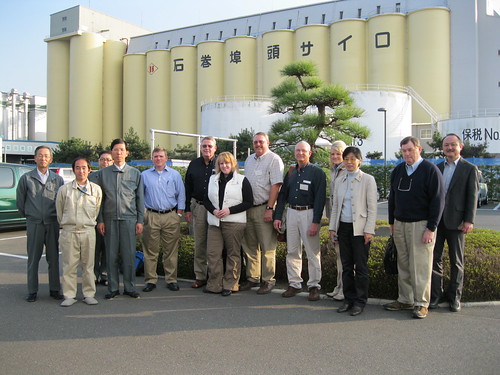
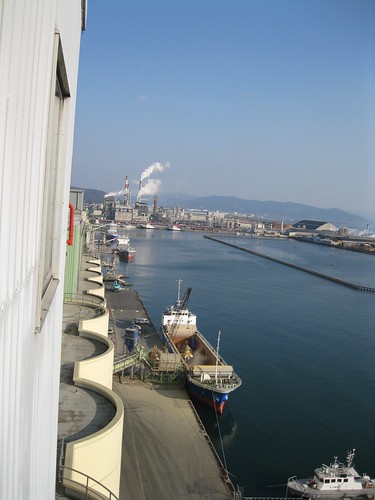
We visited with staff and operators of the Ishinomaki Futo Silo Company and Kitanihon Kumiai Feed Company. The silo portion of the business is on the port where grain is stored after being unloaded from the large carrier vessels. The largest vessel they can pull into this port is a Handymax (around 40 MT in which it takes about 50 hours to unload).

This facility has been expanded five times to be able to store more imported grain (98% of the corn they import is from the U.S.). They are also currently constructing four new silos specifically for dried distillers grains (DDGS). These new silos will have a special “scraper” inside to help prevent caking.

The feed company makes compound feed rations for beef and dairy cattle, as well as poultry and swine. The biosecurity measures they take in the feed mill to keep everything clean and separate was impressive! New technology is regularly being implemented in all facets of agriculture in Japan. Both segment of the company were glad to hear the report on 2010’s corn crop being of excellent quality and reported back to us that they have been receiving 2010’s crop since October.

The delegation outside of the Ishinomaki City feed mill

The following day, the delegation was able to meet with the Feed Supply & Demand Planning Office of the Ministry of Agriculture, Forestry and Fisheries (MAFF) of Japan. Hearing the perspective from these government officials was important as key policy is coming in the near future that could affect imports of U.S. corn to Japan.

MAFF was also glad to hear the good report of the 2010 corn crop, but had several questions on the future of meeting demand in a growing world with increased usage of corn for ethanol and China’s role in buying more U.S. corn. Kenny McNamar, farmer from Gorin, Missouri and president for the Missouri Corn Growers Association, was able to assure them that U.S. corn farmers are going to be able to meet demands of all markets.

“Not only are we exporting more corn, we have tremendous demand from our domestic livestock industry to grow more corn,” said McNamar. “Near my farm in Missouri, I have seen more acres go into corn that have not been growing corn in many years.”

After a lunch meeting with Zen-noh, the primary agricultural cooperative in Japan, the delegation packed up and traveled to Taipei, Taiwan. Updates from Taiwan to come!

The group especially wants to thank Tetsuo “Tommy” Hamamoto and Hiroko Sakashita, director and associate director of USGC Japan, respectively, for their time and contacts in setting up the meetings with these organizations. Thanks to checkoff dollars from Nebraska corn producers, we literally have boots on the ground all around the world 24/7 in directors like Tommy and Hiroko. They answer technical feeding questions, industrial use questions, quality aspects, biotech, and transportation, along with the questions on trade policy. But, it is their personal contacts with our customers that make them so valuable.
IMG_0178
Don't forget to check out more pictures of the mission on Flickr.

November 30, 2010

Corn quality main focus for Japanese corn buyers

Share:
The U.S. Grains Council (USGC) Corn Mission 2010 delegation made it safely to their first destination of Tokyo, Japan, and today met with U.S. Embassy Officials and several trade organizations and importers of U.S. corn and dried distillers grains (DDGS).

The two officials from the U.S. Embassy, Office of Agricultural Affairs were Geoffrey Wiggin, Agricultural Minister-Counselor and Jeff Nawn, Senior Agricultural Attache’. Wiggin and Nawn both commented that there has been positive open dialog between U.S. and Japanese regulators to have science as the basis of approvals in terms of biotech commodities, and have a food safety commission to do scientific reviews on policies for food safety. Both expressed the concern for feeding the world as population is expected to reach 9 billion by 2050.

Meetings with importers of U.S. corn and DDGS were important to share the message of an improved 2010 corn crop. The delegation met with the Japan Feed Trade Association (JFTA), Japan Feed Manufacturers Association (JFMA), Japan Starch and Sweeteners Industry Association (JSSIA), Japan Corn Grits Association (JCGA), and Japan Snack and Cereal Foods Association (JSCFA), where the delegation provided updates on U.S. corn production, supply and demand and impact of ethanol production and demand from emerging markets.

The major concern for all of the associations was the low quality of 2009 U.S. corn, in terms of vomitoxin, BCFM, moisture and protein content. The delegation confirmed any doubts about the 2010 crop to these organizations and assured that quality is much improved.

“Our 2009 crop was one of the worst years, in terms of quality to export, that farmers in the Corn Belt have ever seen, but we really believe we are back to producing better corn than ever and the future looks promising.” said Kent Kleinschmidt, of the Illinois Corn Marketing Board. “As U.S. corn producers were able to the get 2010 crop out in a timely manner and work the ground, we have an even more positive outlook for 2011’s corn crop.”

Check out USGC's Flickr page for more pictures or follow members of the 2010 Corn Mission on Facebook and Twitter.

November 29, 2010

Thanksgiving race - by Curt Tomasevicz

Share:
This past week while most Americans were celebrating Thanksgiving Day by stuffing themselves full of turkey, stuffing, mashed potatoes, green bean casserole and of course juicy sweet corn, I was preparing for our first race of the season.

On Thursday night, I raced in the two-man World Cup race in Whistler, Canada; the same sight as the 2010 Olympic Games. As we prepared for the race in Whistler this past week, a number of great memories came to my mind from the Olympics held last February.

It seems like everything happened so fast during the Olympics last February, I sometimes have trouble remembering everything. It was a very fast two weeks of my life filled with a number of very special moments. But there is one moment that I remember that I will never forget. It happened just before the very last heat of the 4-man Olympic race. The Olympic race was four heats. The times from all four trips down the bobsled track are added together to determine the winner. After three heats, we had a pretty substantial lead. I know that forty-two hundredths of a second doesn’t sound like much, but in bobsled terms, that is a huge lead. The order of the fourth heat is determined by the rank from the first three heats. The order is last place to first place. So my teammates and I were going to be the last sled down the hill that afternoon.

Warming up to push a bobsled is not an easy thing to do. Most of the time, our warm-up area is comparable to a parking lot at the top of the bobsled track. It can be cold and snowy and it can be crowded at times while 25 teams of four men do strides and warm-up exercises. But slowly the warm-up area clears out as, one by one, the teams head into the start-house to put on their ice-spikes and helmets for the race. Before we knew it, the chaos and hectic atmosphere of the Olympics was put aside for just a couple minutes as the top team in the world was the only team left in the warm-up area.

The four of us were doing our last couple strides and sprints to ensure we were ready to push when we found ourselves all standing together with no one else around. None of us said anything (there was nothing that needed to be said). There was no media, no noise or distractions. We simply looked at each other and we each had a little smirk on our faces. We knew that we just need to do our job together one more time successfully and we’d have an Olympic Gold Medal.

That was, perhaps, my favorite Olympic memory.

That brief moment of serenity came to mind again as I stood in the exact same spot on Thanksgiving Day. I thought back on the uncountable things that I have to be thankful for. My life has truly been full of blessings, before and since the Olympics. So even though I didn’t get to eat pumpkin pie with my family on Thanksgiving Day, I was sure to take some time to recall all the fortunate blessings in my life.

Note: While Curt Tomasevicz did not say so in his post, his four-man bobsled team took first place at the World Cup race over Thanksgiving weekend. For more, click here. Every few weeks through the international bobsled season you'll find an update from Curt here at Nebraska Corn Kernels.

November 26, 2010

Corn Mission to Asian Nations to Promote U.S. Corn, DDGS

Share:
As a staff member of the Nebraska Corn Board, I have been asked to travel with the U.S. Grains Council on their 2010 Corn Mission to Asia. This year's U.S. Grains Council Corn Mission will explore the Council's success in developing diverse corn markets, from established achievements in Japan and Taiwan to China's emergence as a leading market for distiller's dried grains with solubles and a new buyer of U.S. corn. The USGC has an office in each of the countries we’ll be visiting and we will have meetings with their staff and U.S. Embassy officials.

We will be first traveling to Japan, the largest importer of U.S. corn. Once there, we’ll be meeting with the Japan Feed Manufacturers Association, the Japan Feed Trade Association, the Japan Starch & Sweeteners Association and the Japan Corn Grits Association. We will also be taking a bullet train to visit a Japanese feed mill and possibly see some cattle production in Ishinomaki City.

Then, we’ll hop on a plane to Taipei, Taiwan. Once there, we’ll be meeting with the American Institute in Taiwan, a lunch discussion with traders, buyers and users of U.S. corn, meeting with the Taiwan Feed Industry Association and the Good Flag Biotechnology Corporation. We’ll get to meet with a bioplastics corporation that imports NatureWorks bioplastics made in Blair, Nebr., as well as visiting a sow farm.

Then, we’ll travel to Shanghai, China. We will meet with more trade organizations that import U.S. corn and distillers grains as well as visiting a sea port where corn and DDGS are shipped in, and hopefully see a U.S. corn shipment. Also, we’ll be visiting the Guangzhou Dairy Institute Demo Farm.

Traveling on the mission will be Larry Klever from the Iowa Corn Promotion Board, Kent Kleinschmidt from the Illinois Corn Marketing Board, Kenny McNamar and Becky Frankenbach from the Missouri Corn Merchandising Council, John Whaley from the Indiana Corn Marketing Council and myself, Kelsey Pope, representing the Nebraska Corn Board.

As a communicator on the trip, I will be regularly blogging for the Nebraska Corn Kernels blog under the tag, Corn Mission 2010, starting November 28th through December 10th. You can also follow the trip through the U.S. Grains Council’s communications at:
USGC Blog: http://www.thegrainboard.com/
USGC Flickr: www.flickr.com/usgc
USGC Twitter: www.twitter.com/usgc
USGC Facebook: http://www.facebook.com/pages/US-Grains-Council/60248643587

November 25, 2010

Podcast: Thanking farmers and ranchers who provides so much for so many for so little

Share:
In this podcast, Mat Habrock of the Nebraska Corn Growers Association notes that Thanksgiving is an opportunity to appreciate all we have been given and to thank all the farmers and ranchers whose bounty provides so much for so many for so little.

"The value of our Thanksgiving dinner in and of itself is something to be thankful for," he said, in reference to the affordability of the food, especially when compared to other countries. "Thanks to the continuous gains made by American farmers, we are blessed with the most affordable, nutritious and safe food supply in the world," Habrock said.

Yet even with farmers and the agriculture sector providing so much, there are people who struggle to put food on the table. "While we all do what we can, I can’t imagine where we would be if some people had their way and forced unnecessary changes through the system that would increase food prices 25 to 50 percent," he said. "While I recognize it is easy to be critical of the food system when you have a full belly, we should be thankful for what we have and how far we’ve come."


In conclusion, Habrock said while you enjoy the leftovers from this year’s Thanksgiving feast, reveling in the traditions surrounding friends, family and food, "be sure to keep in mind a word of thanks for the farmers and ranchers out there who work for the benefit of us all."


Nebraska Corn Kernel podcasts are also available on iTunes! Click here to subscribe.

November 22, 2010

Reactions from the HSUS Town-Hall Meeting

Share:
By Regina Janousek, Nebraska Corn Board Intern

Sunday night, Lincoln was the host to Wayne Pacelle, President and CEO of the Humane Society of the United States, for a town hall meeting. Wayne was sponsored by a Nebraska cattle rancher, Kevin Fulton. I attended the meeting to be a spectator and to listen to what Pacelle had to say on behalf of HSUS.

I was a bit nervous going to the meeting, not knowing the reaction that HSUS would receive from the agriculture community. To attend the meeting, a person had to RSVP on the HSUS site, and received a confirmation email. Upon arriving to the hotel, there was security outside of the meeting hall, where attendees names were checked with the guest list and names were taken down of those that were in attendance.

The meeting began with a few introductions, and Kevin Fulton made a few comments, which he read directly from a sheet of paper. Wayne Pacelle talked about all the wonderful things that HSUS has done to help pets and animals in times of need.

Numerous university students and faculty anxiously waited for what the meeting would bring; producers and agriculture industry leaders were also in attendance.

In order for attendees to ask questions, they were supposed to be written down on a note card which were handed in to the new Nebraska Director for HSUS, where she would ask the questions aloud to Wayne. I have friends that turned in questions which were not read or asked of Wayne.

As the questioning started, Wayne was under the hot seat. First to comment was a second-year veterinary student, Jake Geis, who instantly questioned HSUS and the American Veterinary Medical Association’s disagreement on issues. Wayne was quick to say that the AVMA was in the back pocket of the industry, and that their interest was mostly put on the future of the industry and not the care of the animals.

A few more university students got up to talk and ask questions, but again, Wayne eluded actually answering any of their questions. HSUS stated that they have not announced a ballot initiative and have no intentions to. But they do want to push for better standards on gestation crates, veal crates, and chicken battery cages, as well as puppy mills. HSUS said right now they are not concerned about the livestock industry, but going after more extreme forms of confinement.

When questioned about the economic impacts that bans and restrictions would have on young farmers, Wayne simply said that he didn’t have control over the economy. But then he goes as far as to comment on how the agricultural community can’t afford not to change and fill consumer demand for cage free eggs etc. Yet one has to wonder, where does the consumer gain this perception of “factory farms” ??

After numerous questions from UNL students and producers, Wayne announced that they only had time for a few more questions, even though there were many questions left unanswered. The meeting adjourned around 7:15 p.m. even though the announcement for the meeting stated that the meeting would be allowed to go until 8:00 p.m. I have to wonder if the questions were starting to get to Wayne for him to abruptly end the meeting 45 minutes before scheduled.

November 18, 2010

Don't be fooled by HSUS – it's all about the money

Share:
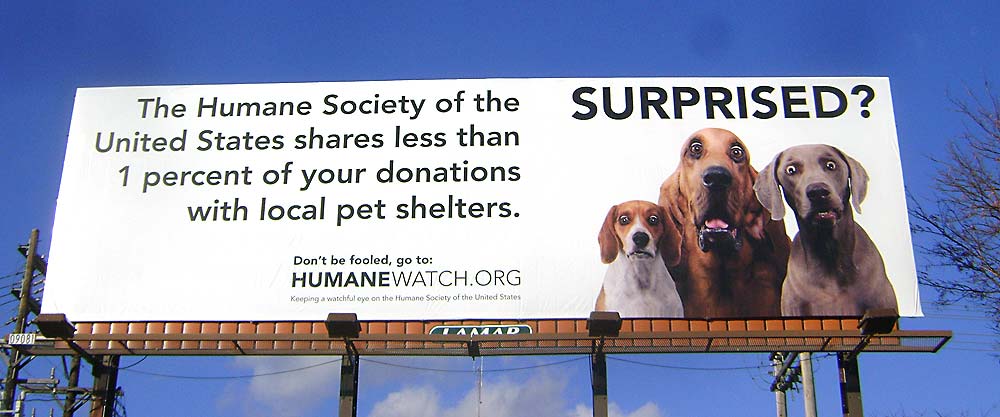
The billboard pictured above can be found at the corner of 10th and “L” Streets in downtown Lincoln thanks to the group HumaneWatch.org. (For a breakdown on the math showing how little money HSUS spends on animal care, click here.)

The billboard appears just in time for the arrival of the Humane Society of the United State's chief suit Wayne Pacelle. He's scheduled to chat about the organization's animal protection rights work this coming Sunday in Lincoln at the downtown Holiday Inn.

HSUS does NOT support your local animal shelter or local humane society. It just wants you to think that in the hopes that you'll fork over your hard earned money to an animal rights organization that has a bigger payroll than the White House. 

Of course when you spend more than $20 million a year to raise $100 million to support a $100 million budget while sitting on $160+ million in assets and nearly $25 million in cash, I guess you can do whatever you believe you can get away with. Even continue to promote a false image of your activities or run a "university" to promote animal protection rights studies.

Anyway, from the HumaneWatch blog post that includes a shot of the billboard above:
Of note, a local cattle rancher will appear in Lincoln to introduce Pacelle. Why, you ask? Good question. The rancher in question is a small all-organic, grass-fed beef producer who apparently believes Pacelle’s HSUS will leave him alone (and give him a competitive edge) while it pursues a veganized America.

He’s wrong, of course. 

Winston Churchill once famously said that “an appeaser is one who feeds a crocodile, hoping it will eat him last.” Sound familiar?

Let’s be very clear about something: Pacelle is a vegan who will never actually endorse (much less eat) a steak, even if the animal it came from was produced and finished on a prairie with daily pedicures, and a staff of servants feeding it organic hay in between belly-rubs.

So why is Pacelle a credible guy? What gives him a position of authority from which to lecture Nebraskans about how to produce the food that most of us eat? Another good question.

Mostly, it’s HSUS’s money.

November 17, 2010

Nebraska farm families recognized for participating in 'Sustaining Innovation'

Share:
Two Nebraska farm families were recognized at the Nebraska Corn Board meeting and dinner in Kearney on Tuesday night.

The Bergen family from Henderson, (top; joined by Nebraska Corn Board chairman Alan Tiemann on the left) and the Kimball family from Callaway, were present to receive recognition and a family picture for participating in the Corn Board's Sustaining Innovation campaign.

The two families’ roles in the campaign were to be “real-Nebraska farm family models” and be photographed on their farms. They then became the face of the campaign and helped share the many positive messages about farming and farmers today.

Other Nebraska farm families not present but who helped out with the campaign were the Beattie family from Sumner, the Flaming family and Robertson family from Elsie, the Cantrell family from Merna and the Long family from Grant.

The Sustaining Innovation campaign shows that through responsible stewardship, improved management practices and new genetics, Nebraska corn farmers are growing more corn with less – less fertilizer, less chemicals, less water, less land and less of an impact on the environment.

We’ve portrayed these family farmers on moving billboards on delivery trucks in Lincoln and on grain trailers across the state. They’ve also been on display at Aksarben’s River City Rodeo & Stock Show.


These Nebraska farm families are helping share agriculture’s story. You might be surprised to learn that:
  • 95% of all corn farmers in America are family owned. (USDA)
  • America’s corn farmers are by far the most productive in the world, growing 20% more corn per acre than any other nation. (USDA)
  • Corn farmers cut erosion 44% in two decades thanks to new tillage methods. (USDA) 
  • Thanks to new, innovative fertilization methods, today’s American corn farmers are producing 70% more corn per ounce of fertilizer. (USDA) 
  • The energy used to grow a bushel of corn has fallen 37% over the past 30 years. (USDA) 
  • Family farmers grow 90% of America’s corn crop. (USDA) 
  • Corn was a bright spot in America’s economy last year – we exported $9 billion worth of corn! (USDA) 
  • American farmers grow five times more corn than they did in the 1930s – on 20% less land! (USDA) 
  • Farmers are using GPS-based precision technology to reduce overlaps in the field and to precisely place fertilizer and pesticides exactly where they need to be – and in exactly the right amounts. 
  • Monitoring soil moisture levels and measuring the amount of water corn plants lose each day is helping Nebraska corn farmers significantly reduce irrigation and water demand. 
  • While irrigation is used more widely in Nebraska, less than 14% of the total U.S. corn crop is supplemented with water via irrigation. The rest relies solely on rainfall. (USDA)
  • Only 1% of the corn grown in the U.S. is sweet corn for humans. The rest is field corn used for livestock feed and ethanol.
There is no question: Corn farmers can do what America and the world is asking of them: Grow more corn for feed, food, fiber and fuel – and do it in a way that protects the environment and provides economic benefits all along the value chain.

Thank you again to the Bergen and Kimball families, as well as the other families who could not be at the dinner.

November 15, 2010

The changing seasons - by Curt Tomasevicz

Share:
Note: This is the first blog post written by Olympic gold medalist Curt Tomasevicz. Every few weeks through the international bobsled season you'll find an update from Curt here at Nebraska Corn Kernels.

The 2010-11 World Cup bobsled season is just around the corner. Our first race is back on the 2010 Olympic track in Whistler, British Columbia on November 26. Being on the bobsled team for the last seven years has forced me to adjust to an “autumn-less” year. Let me explain.

During the bobsled off-season (April through September), many of us choose to train in the warmer weather. It is not possible to keep ice on any of the bobsled tracks, so our training consists of weight room training and sprint work. I spend my off-seasons training in Colorado Springs where temperatures in the Julys, Augusts and Septembers can reach the mid-90s. Once the beginning of October comes, all the athletes gather together in Lake Placid, N.Y., or Calgary, Alberta, to begin our pre-season camps and training. That forces us to endure a drastic weather change. Obviously, the cold weather is necessary for bobsledding in order to help keep ice on the bobsled track. So I’ve grown accustomed to a fast summer-to-winter transition.

In Nebraska, there are definitive seasons through the year. Winter, spring, summer and autumn all have distinct characteristics. Some Nebraska farmers would say that the seasons in Nebraska are winter, planting season, irrigation season and harvest season!

I know that most people would say that their favorite season is summer, but as I grew up in central Nebraska, harvest season became a part of my life. Every year I remember the landscape slowly opening up, field by field, as the seven foot corn plants became one foot stalks. The hot August and September weather slowly turned to a cool fall before going to a cold November and December.

It was something I took for granted and now, as a bobsledder, winter comes extremely early every year. I’m around snow every year by at least the second week in October. I know, I know, it’s the sport I chose. But that doesn’t mean that I have to enjoy cold weather! I miss harvest season and the slow summer to winter transition.

I know the weather in Nebraska seems to be unpredictable and uncooperative. But while Nebraska farmers were finishing harvesting their corn and everyone was enjoying temperatures in the seventies during the first week of November, I was in Lake Placid, N.Y., enduring my fourth snow storm of the year!