Showing posts with label media. Show all posts

June 12, 2015

American Lung Association of the Upper Midwest Promotes the Benefits of American Ethanol Across Nebraska

Share:
Angela Tin, Vice President of Environmental Health of the American Lung Association of the Upper Midwest, recently visited multiple media outlets across Nebraska to share the positive story of American Ethanol and its favorable impact on our health and environment.

While in Nebraska, some of Tin’s stops included: KMTV Morning Blend, KRVN Radio, KLIN Radio, KFOR Radio, NTV News, KOLN/KGIN News and the Lincoln Journal Star. During her media sweep, Tin shared information about the dangerous carcinogens that are added to fuel in increase octane. These cancer-causing carcinogens – benzene, toluene, and xylene (BTX) from our fuel threaten our health as they enter our lungs and bloodstream. Fortunately, American Ethanol is a cleaner fuel alternative that Nebraskan’s can take advantage of.

“Nebraska’s air is more dangerous than it looks and what's leaving the tailpipes is harmful to lung health," said Tin. "That's the bad news. The good news is that we have a choice:  American Ethanol."

American Ethanol is a non-toxic, clean burning source of octane.  American Ethanol provides optimal engine performance without spewing toxic particulate matter out of the tailpipe. 

Compared with oil, American Ethanol-blended fuel burns cleaner and improves air quality. When drivers use American Ethanol, they’re reducing the causes of asthma, heart disease, and brain and lung cancer not only for themselves but also their children and grandchildren. American Ethanol eliminates toxic, cancer-causing emissions in vehicle exhaust—reducing air pollution and greenhouse gas emission while, improving human health.


"American Ethanol should be the Clean Air Choice for our fuel if we're serious about improving air quality and reducing the costly impacts of engine exhaust on human health,” added Tin.

March 12, 2015

Nebraska Corn Board Presents Awards of Recognition and Achievement

Share:
The Nebraska Corn Board presented its annual awards to five exceptional individuals during its Cooperator and Awards Dinner in Lincoln this week.
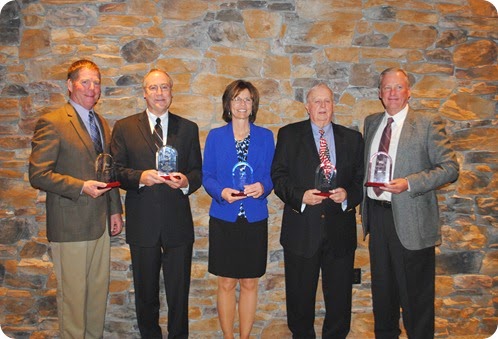
DSC_0214 Pictured (L-R): Mark Jagels- Ag Achievement, Mike LaPorte- Media Appreciation, Joan Ruskamp- Livestock Industry Appreciation, Bill Pullen accepting on behalf of Bill's Volume Sales- Agribusiness Achievement, and Duane Kristensen- Ethanol Industry Appreciation.

For twenty-four years, the Nebraska Corn Board has acknowledged incomparable representatives in the livestock and ethanol industries, as well as awarding an individual in the media. The Ag Achievement award is the pinnacle of awards given to an individual who has helped develop Nebraska’s corn industry and agriculture over time. Additionally, the Nebraska Corn Board presented a new award this year in the agribusiness category.

The Livestock Industry Appreciation Award was given to Joan Ruskamp, farmer, blogger, community leader, and CommonGround volunteer from Dodge, Nebraska. Ruskamp was selected for this award based upon her outstanding commitment to Nebraska agriculture and continued enthusiasm to share her story with her urban counter-parts.

DSC_0186“I know that volunteering for CommonGround is a big commitment and we really appreciate her willingness to do this and do it so well,” said Debbie Borg, farmer from Allen, Nebraska and director on the Nebraska Corn Board. “Joan has the wonderful ability to share her story with consumers and help them not only understand, but appreciate the value of the livestock industry in Nebraska.  She was very deserving of this award.”
  
The Ethanol Industry Appreciation Award recognizes a producer or person in the industry who has worked hard to develop ethanol markets and expand demand for ethanol in the state while appreciating the value of the corn checkoff and its involvement in ethanol market development. The recipient of this year’s award was Duane Kristensen, with Chief Ethanol Fuels, Inc.  Kristensen was selected for his leadership in Nebraska as well as his involvement and engagement in ethanol advocacy groups on a statewide, national, and global basis.
DSC_0197
“Duane’s dedication to the ethanol industry and continued efforts to expand the demand of ethanol globally has been influential for the industry,” said Dennis Gengenbach, farmer from Smithfield, Nebraska and secretary-treasurer on the Nebraska Corn Board.  “Duane’s leadership has been powerful around the world.  He’s traveled to over twenty countries promoting Nebraska and the role of ethanol in agriculture.”

The Media Appreciation Award was presented to Mike LaPorte, with KRVN Rural Radio, for his efforts in routinely sharing agriculture’s story and his knowledge and understanding of agriculture’s important role to our state’s economy.  LaPorte has been with KRVN for 25 years and has been a Farm Director for the last 19 years. 

DSC_0190“Mike’s background in agriculture gives him a unique perspective on his reporting and has helped him develop a great format for telling our story,” said David Merrell, farmer from St. Edward, Nebraska and vice chairman of the Nebraska Corn Board. “He is one of the first media sources that the Nebraska Corn Board reaches out to. We know that Mike will truthfully and openly reveal the facts of not only the corn industry, but all of Nebraska’s agriculture.”

The recipient of this year’s Ag Achievement award was Mark Jagels, farmer from Davenport, Nebraska and past chairman of the Nebraska Corn Board and U.S. Meat Export Federation. Jagels was chosen for his outstanding dedication to agriculture and admirable goals in expanding exports and moving the state forward in its agricultural ambitions.

DSC_0211Mark’s leadership and commitment to Nebraska agriculture is evident through his service on a local, state, national, and international level,” said Alan Tiemann, farmer from Seward, Nebraska and past chairman of the Nebraska Corn Board. He has played an instrumental role in representing agriculture on the international level by helping expand the opportunities for both corn and livestock.

As the newest award category, the Agribusiness Appreciation Award, identifies a Nebraska agribusiness that recognizes and appreciates the mission of the Nebraska corn checkoff program, shows proven leadership in explaining the benefits of the checkoff and its investments and supports Nebraska agriculture. The recipient of this inaugural award went to Bill’s Volume Sales. Accepting the award on behalf of Bill’s Volume Sales was Bill Pullen, founder and former owner.
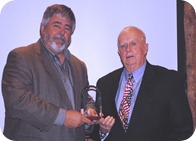
DSC_0203“Bill’s Volume Sales is a highly respected company in the agriculture industry and a long-time supporter of the Nebraska corn checkoff,” said Jon Holzfaster, farmer from Paxton, Nebraska and director on the Nebraska Corn Board.  “Bill’s Volume has gone above and beyond to help their customers and keep our Nebraska corn farmers in business. We appreciate the company’s continued support and dedication to Nebraska agriculture.”

February 22, 2013

CommonGround Nebraska hits the airways

Share:
This month, CommonGround took to the airwaves in Nebraska, participating in a series of interviews with radio and print outlets in the northeastern part of the state. The media tour, which covered areas close to Omaha, featured Dawn Kucera and Joan Ruskamp addressing topics from high fructose corn syrup to the animal care practices used by local ranchers.

“We think that it is important that the people who are buying food have a chance to ask questions of those of us who are raising it,” said Kucera. “Our state’s volunteers represent a broad variety of farmers and ranchers including pork and beef producers, organic farmers and conventional vegetable producers as well as corn and soybean farmers. Our goal in including so many types of producers is to answer all of the questions consumers might have and help dissolve some of the fears that comes from confusion.”

While meeting with the media, Kucera and Ruskamp found that consumers have a wide variety of questions about how their food is grown. The women, both beef ranchers, welcomed the inquiries and responded in an honest, open manner. “As a cattle rancher who runs a feedlot, I saw the news stories and heard the public questioning if we, as an industry, cared about animal welfare, about our own animals,” said Ruskamp. “I know how much work and emotion that I put into caring for our cattle. I saw how the people around me treated their animals, and I thought about how these stories did not represent the reality as I saw it. So, I began volunteering with CommonGround three years ago, when the program first began. I want to talk with consumers and address their concerns so that they can feel confident about the work we do on our nation’s farms.”

Although the volunteers addressed a variety of topics, listeners took away one message that could help them answer all of the current and future questions about food and farming – please, ask us. By offering themselves and their fellow CommonGround volunteers as resources for an ongoing dialogue, the women provide a place for consumers with questions to go for answers from credible experts, the people who grow and raise our food, instead of a list of unverified results like those found when using Google.

To listen to the full interview with Kucera and Ruskamp that originally aired on Freemont radio Station HUB, click here.

Have another question about your food? Find CommonGround online:
Nebraska blog: www.CommonGroundNebraska.com
National Website: www.FindOurCommonGround.com
YouTube: www.YouTube.com/CommonGroundNE
Twitter: www.Twitter.com/CommonGroundNE
Facebook: www.Facebook.com/CommonGroundNebraska
Pinterest: www.Pinterest.com/CommonGroundNeb/

April 18, 2012

Childress: E15 ethanol is a viable alternative to regular gas

Share:

Richard Childress
"Today’s ethanol industry probably doesn’t look anything like most people imagine," Richard Childress, president and chief executive officer of Richard Childress Racing, wrote in the Kansas City Star.

In the piece, Childress explains that today’s ethanol producers are able to reduce emissions compared to gasoline by nearly 60 percent – and that producing ethanol adds jobs here in the United States.

"In NASCAR, we are using Sunoco Green E15, a blend of 15 percent ethanol and 85 percent gasoline," he said. "Last year, the U.S. Environmental Protection Agency approved E15 for all vehicles built in the last decade, which is more than 80 percent of the cars and trucks on the roads today. I like to think that if E15 is good enough for my racing team, it’s certainly good enough for everyday street cars."

He noted that NASCAR has surpassed 2 million miles of driving on E15 "without a hitch in what can only be described as a seamless transition. Plus, we’ve also seen enhanced performance. In fact, many of the teams have reported an increase in horsepower. In my mind, this proves that E15 is a viable alternative to regular gasoline."

For the full piece, click here.

February 10, 2012

America's agricultural success: A well-kept secret?

Share:
PBS's Judy Woodruff filed a report this week on the PBS Newshour blog "The Rundown" following some time she spent with Agriculture Secretary Tom Vilsack.

The title of this post comes from her report – a report that explores some successes demonstrated lately from the agriculture sector.

"Amid all the worry about how long it will take the economic recovery to kick into high gear, there's a little-noticed sector that's doing very well, thank you: American agriculture." is how Woodruff begins her piece, which goes on to explore farm incomes, exports and the 2011 record U.S. trade surplus in agricultural products.

Here's a snippet from the piece, but be sure to check it out:
The question is WHY is agriculture doing so well? Vilsack, whose grandfather owned a farm, says back in 1975, the most productive farmers planted an average of 12,000 seeds per acre. Today, thanks to science, it's closer to 30,000.

After information technology, agriculture is the second most productive sector of the economy. Farm unemployment is dropping at a faster rate than the rest of the job specialties because of this, and because of what Vilsack calls "an extraordinary investment in infrastructure."

He describes an extensive supply chain including storage, transport, and equipment manufacturing. Farmers are buying lots of new machinery, like large tractors with sophisticated GPS systems, leading to new hiring on the part of companies like John Deere, which recently added 250 people at a plant in Ankeny, Iowa, that manufactures cotton pickers.

November 3, 2011

Strong ag economy brings jobs, opportunity to rural Nebraska

Share:
In an article in the Omaha World Herald last Sunday, reporter Henry J. Cordes explored the economic strength of the rural economy today. He talked about the demand for grain and how market fundamentals may have shifted.

Included was a reference to ethanol and distillers grains, the feed ingredient ethanol plants produce, giving livestock producers in the state a nice advantage. 

Cordes visited Central City for the story, pulling together some good information on how everything comes together to benefit rural communities: corn, ethanol, distillers grains and livestock.

He reported that over the course of the recession, Central City actually added jobs every year – overall employment this year is up 2.6 percent – about 50 jobs – from three years ago. (He also pointed out that half of Nebraska's rural counties added jobs over that time.)

From the article:
On main street, one Central City family put up a new Dairy Queen building a year ago and has been so busy they haven't had time to tear down the old one. A new computer repair shop opened up, adding four jobs to town, there's a new bank building, and the Subway sandwich shop has a new building going up. Two small new housing subdivisions have been built in town the last few years, something not often seen in small towns.

Kent Grosshans is the manager of Grosshans Inc., a fifth-generation, family-owned implement dealership in Central City that traces its roots to 1877. But in all those years, the business has seen few times like this.

Grosshans said sales have been about double what they were four years ago, and he's added three new workers in the last year. He'd hire another technician and salesman right now if he could find them.

Click here to read the full story, which takes a much broader look at the rural economy than the few highlights here.

In 2007, the Nebraska Corn Board's Cornstalk newsletter focused on the economic opportunities created by ethanol – from new markets to corn, to jobs to livestock producers taking advantage of distillers grains.

The newsletter centered on one town, Central City, which was an example of how ethanol plants were positively impacting communities all across the state and rural America. It highlighted rural development at its best.

You can download the newsletter here (.pdf).

October 27, 2011

OWH: Corn. Ethanol. Livestock. A prosperous farming combination

Share:
An editorial in the Omaha World Herald earlier this week did a great job of pointing out the incredible synergy between corn, ethanol and livestock production.

The basis for the editorial was a report from the Nebraska Business Forecast Council that said farm income in the state may reach a record this year and remain strong.

The World Herald's editorial goes on to talk about the ethanol industry and the role it plays in the state, particularly the production of distillers grains by ethanol plants and the opportunity that provides for cattle producers and the state as a whole:

In 2007, an article in the Sunday World-Herald suggested a possible shift in cattle feeding from Texas to the Midlands. That now may be coming to pass, and the availability of distillers grains for cattle feed could be a factor.
Nebraska already ranks second in cash receipts for cattle and calves and is moving up fast on top-ranked Texas. According to U.S. Department of Agriculture statistics for 2010, third-place Kansas had $6.5 billion in receipts. Second-place Nebraska had $7.2 billion, while Texas took in $7.7 billion.

The benefits to ethanol plants from selling byproducts are clear, but there are other advantages that spread throughout Nebraska. Farming communities and their ag-related businesses prosper when corn is high and ethanol plants are busy and profitable. So do other businesses in small-town Nebraska.
And that means jobs in many sectors of the economy – jobs that breathe life into rural communities.

As the editorial concludes:
Nebraska doesn't lead the nation in either ethanol, cattle or corn. But the way the three work together can mean greater national prominence and more prosperity for the entire state.

September 24, 2011

Ethanol worth billions to Nebraska economy

Share:
The headline of this post comes from a Kearney Hub article by Lori Potter.

In it, she covers a Sept. 16 presentation to the Nebraska Ethanol Board by Ken Lemke, an economist with the Nebraska Public Power District.

According to the article, Lemke noted that Nebraska’s ethanol industry has $5.56 billion of direct benefits to the state economy and nearly $5.9 billion worth of total impacts.

His report also showed that the 25 ethanol plants in Nebraska provide 1,322 direct manufacturing jobs, with a total of 7,703 on-site and indirect jobs.

“It’s a huge wealth generator just in wages,” Lemke said.

Potter reported that Lemke said ethanol production had direct effects on household income of nearly $85.8 million and total impacts of nearly $251 million. That boosts annual retail sales by around $105.4 million.

Direct tax revenues were $19.6 million and the total with indirect additions was $32.2 million a year.

For more, be sure to check out the full article.

July 27, 2011

Getting the Facts Right

Share:

If you are one of the millions who reads TIME magazine, you have probably read the article called “Want to Make More than a Banker? Become a Farmer!” The article was published in the first part of July and features farmers from Central Nebraska. At first I thought it was great to see agriculture being spot lighted in such a popular national magazine, especially Nebraska agriculture. However after reading it, I was left feeling puzzled and frustrated. While there was accurate information in the article, I thought that the journalist left out some important information that reflects Nebraska’s agriculture industry: that the majority of farms are family owned. Nowhere in the article did I see the two words, “family farm” together. Still, I can’t say the entire article was bad either because there was some accurate information mentioned in it, such as farming being more efficient with new technology and the value of the farm increasing.

However, I do want to mention a few things that I feel the article is wrong about. The first thing is that the article says a person should become a farmer because food prices are high. To me, this portrays the farmer as the one benefiting from high food prices when that is not the case at all. The farmer only receives a small fraction of a dollar from the food that is put on grocery shelves. The reason why food prices are so high is because of the energy that is being used to ship the food to its final destination. The only thing that farmers are currently benefiting from is high grain prices, which is caused by many other factors that farmers cannot control. Yet, farming is capital intensive and the cost of production is increasing, making tight profit margins for many farmers.

The second thing I want to point out that the article mentioned was that the agriculture industry has “lax” regulations. As far as I know, this industry has some of the strictest regulations in the U.S. Although there may not be much for child labor laws, many of the children working in agriculture come from a family farm operation. Over the past several years, regulations have increased putting more of a burden on the family farm operation. If regulations were “lax”, farmers and ranchers wouldn’t have to report monthly, or even sometimes daily, to local regulators. It seems like every day there is a new regulation floating out there that will have some type of impact on farmers. But the regulations are in place for a reason and are good in providing a safe food supply.

Finally, the article never mentioned how farming can at times be stressful and involve a lot of hard work. Farming is definitely not an 8-5 job with the weekends off. It is a 24/7 job that doesn’t always allow families to take vacations or even get off the farm much. Farming is a commitment, and sometimes the farm comes before other things. Like someone once said, “Farming is not just a job; it is a way of life”. If farming was easy, everyone would be doing it. However, that’s not the case and the ones that are still in the farming business are doing it because they have a passion for it. If farmers didn’t have a passion for agriculture, they probably wouldn’t be in the business of growing food for a growing population. Luckily, the farmers that are still working the fields and raising the livestock still have that passion, which allows us to eat three times a day – or more!.

As I mentioned earlier, the entire TIME magazine article wasn’t completely wrong, but I felt there were certain parts that needed to be cleared up. It seems like there is already plenty of false information floating around out there about agriculture, and it seems like it is time to start getting the facts right. I hope this won’t be the last time we see agriculture featured in TIME magazine, but I do hope that the next time it is featured, ALL of the facts are right and the American farmer is portrayed correctly.

May 31, 2011

Saudi prince wants cheaper oil so you stay hooked and forget about ethanol

Share:
In case you missed it over the weekend, Saudi Prince Al-Waleed bin Talal said on CNN Sunday that he wants oil prices to drop – not because he's worried what $100 oil is doing to the our economy but because he's worried the United States and Europe might push more quickly toward alternatives.

"We don't want the West to go and find alternatives, because, clearly, the higher the price of oil goes, the more they have incentives to go and find alternatives," he said on CNN, which noted Talal is listed by Forbes as the 26th richest man in the world. He's the grandson of the founding king of modern Saudi Arabia.

Talal said he'd like the oil price to be somewhere between $70 and $80 a barrel rather than the current price of more than $100 a barrel. Gee, what a swell guy....let's work keep oil prices "low" so Americans keep sending us checks while spending billions on their military to keep oil shipping lanes open for us.

Perhaps Talal read a report from BP that said the United States’ dependence on foreign oil peaked in 2005 and increased fuel efficiency and the increased use of biofuels like ethanol will further drive down that dependence and the use of oil overall through 2030. BP's report said the import share of oil and gas to the U.S. will fall to levels not seen since the 1980s, do in part to ethanol, which BP noted displaces oil imports. (Here's a more recent Reuters piece that cites the Energy Information Administration noting similar points.)

Biofuels like ethanol are already displacing foreign oil and reducing the amount of expensive oil in most gas tanks across the country – and obviously it's gotten the attention of Big Oil. One recent study said if ethanol production came to a halt, the estimated gasoline price increase would be of "historic proportions," ranging from 41 to 92 percent. At today's prices you'd be looking at $5.60-$7.60 per gallon gas without ethanol.

Should we follow Talal's wishes and just stay hooked on oil? Or should we continue to push to diversify our fuel supply with alternatives like ethanol and biodiesel? Should we have policies that favor Big Oil, Talal and his cronies? Or policies that favor growing renewables and support our own economy?

May 23, 2011

'Pumped' for new ethanol choices

Share:
Story from News 2, North Platte, Nebraska - Watch the video by clicking here.

Nebraska's corn farmers are pumped about the new ethanol choice in southwest Nebraska.

In Ogallala, the first gas station to offer four different blends of ethanol based gasoline offered fuel at a fraction of the cost to its customers today.

For Mike Leitz filling his gas tank for $24.47 was a welcome relief.

He makes a special trip to this gas station in Ogallala from his home in Brule.

He says there are many closer and more convenient stations for him but this is one of the few stations where he can get E-85, an 85 percent blend of gasoline.

“Then that way if the price of E-85 is cheap enough where I can fill up a tank then I will go for it,” said Mike Leitz, Brule.

As petroleum prices surge toward $4 a gallon, the federal government says it's going to provide grants and loans to station owners who install E-85 pumps.

“Ethanol is by nature and in many cases twenty cents below the price of regular fuel. In these days of higher priced petroleum fuel ethanol is that much more of a cost savings to consumers,” said Jon Holzfaster, NE Corn Board.

Those in the industry think government incentives will help ensure more flex fuel pumps are installed across the nation in the coming years.

“You can burn a blend all the way up to E-85 and that would be depended upon what you choose to use depending on your type of driving and the type of vehicle you drive,” said Holzfaster.

That's good news for drivers like Mike.

“You burn a little bit more with E-85 but overall it is a savings,” he said.

May 20, 2011

Nebraska Corn Growers welcome funding mechanism for Water Resources Cash Fund

Share:
Governor Dave Heineman has signed LB229, a move welcomed by the Nebraska Corn Growers Association. The bill creates a funding mechanism for the Water Resources Cash Fund.

“Developing a balanced funding mechanism for the Water Resources Cash Fund was one of the Nebraska Corn Growers Association’s priorities heading into the current legislative session,” said NeCGA president Carl Sousek, a farmer from Prague, in a news release. “We are thankful to Senators Chris Langemeier, Deb Fischer, Tom Carlson and Ken Schilz for providing leadership on this important issue, and appreciate Governor Heineman signing the measure.”

The Nebraska Corn Growers said its membership believes the Water Resources Cash Fund is an obligation of the entire state because water issues impact all of Nebraska. As such, contributions to the fund should be broader than just agriculture or rural communities and instead include all stakeholders.

“We were committed to working with all stakeholder groups to develop an equitable funding mechanism and believe LB229 is a well-balanced approach,” he said.

LB229 allows for the Nebraska Department of Natural Resources to apply to the Environmental Trust Fund for a $3.3 million grant each year for three years for the Water Resources Cash Fund. Each annual grant would then be matched by the state’s general fund. If benchmarks are met, the DNR can apply for a second three-year grant funding cycle.

“The signed bill will allow the Water Resources Cash Fund to support water-focused projects in fully appropriated basins while also keeping the Environmental Trust Fund’s grant process in place,” Sousek said.

The Nebraska Corn Growers also support LR218, which will create a task force to review and make recommendations for a longer-term, sustainable funding mechanism for the Water Resources Cash Fund.

“We will take an active role in the task force, and we are pleased to work with other stakeholders to address this issue as a state-wide investment,” Sousek said. “The Nebraska Corn Growers Association and corn farmers are appreciative of the progress made in addressing water issues and look forward to further discussions that will, long-term, benefit everyone.”

May 19, 2011

Another chamber votes to oppose organizations like HSUS

Share:
The Kearney Chamber of Commerce approved a resolution this week that supports current livestock production practices, animal husbandry and regulations for humane treatment of food production animals. In essence, the chamber voted to oppose organizations like the Humane Society of the United States (HSUS) that threaten ballot initiatives if their own set of animal care standards are not adopted.

The chamber also pledged to support "the livestock and agriculture industry and oppose any current or future actions by organizations that would work to eliminate livestock for food production, harming our economy and way of life," as reported in the Kearney Hub.

This is the second chamber of commerce in Nebraska to approve that sort of language, as the Hastings Chamber of Commerce adopted a similar resolution in April.

At that time, Tom Hastings, president of the Hastings Chamber of Commerce, told Brownfield, "With talking and finding out some of the things that this organization [HSUS] had done in other states, we just felt that we needed to be proactive in taking a stance against some of the actions and some of the things that they have been trying to do. Especially because agriculture is the number-one industry in the state of Nebraska." (For a report from KHAS-TV, click here.)

Jan Rodehorst, executive director of the Kearney Chamber, told the Hub that chamber members have talked about a statement of support for the past few months and that discussions relating to the issue occurred at meetings with other chambers. Nebraska Gov. Dave Heineman has also been vocal on the issue.

“The Humane Society of the United States is anti-agriculture and they’re out to destroy animal agriculture – and if they want to come to Nebraska, we’re going to fight them and we’re going to beat them,” Heineman told Brownfield in December. “Agriculture is the number one industry in this state. It’s what makes our economy so strong. I’m going to stand tall and this is a fight we won’t shy away from.” He did a similar interview with KRVN.


For a collection of previous posts on HSUS, click here.

March 30, 2011

Farmers can dismiss confusion of One Call Act

Share:
Back in November 2010, an issue arose when a Northern Natural Gas crew stopped at a Platte County field and asked a co-op employee taking soil samples if they had called Digger's Hotline. They responded that they had not, which brought on a request by several Nebraska utilities to make soil sampling a practice under the One-Call Act, which requires a call to the Digger's Hotline.

Nebraska Attorney General Jon Bruning made a statement in late March regarding agricultural soil sampling and the state's One-Call Digger's Hotline, which was good news for producers and third-party soil samplers.

"To be clear—farmers, their employees and any third-parties they contract with to do routine soil sampling for agricultural purposes do not need to call the Diggers Hotline prior to taking a soil sample,” said Bruning. “This is an agricultural state and soil sampling is business as usual. I won't second guess the commonsense of Nebraska farmers."

It's important for farmers to know that they are exempt from being required to call the Diggers Hotline, but they should still be careful when taking soil samples. To read more, check out this Nebraska Farmer article.

March 18, 2011

Finding the solutions to feed, fuel the world

Share:
By Don Hutchens, editorial in Feedstuffs, March 7, 2011

In a recent viewpoint (Feedstuffs, Jan. 31), Dennis Avery said: “The U.S. in fact, could ease the current global food price spike with one administrative action: limiting the amount of domestic corn that gets turned into ethanol.” For someone who seems to be so worldly and knowledgeable, Mr. Avery is naive and simplistic to think that the world food solution could be so easy.

He also goes on to say, “America’s huge corn crop is diverted from food and feed into an ultra-costly auto fuel that gives consumers poorer mileage even as it drives up their food costs.” Obviously Mr. Avery has not purchased any $3.49 gasoline of late. I have been enjoying filling my flex fuel Chevy Avalanche with E85 (85 percent ethanol) for $2.69 (I lose 2 miles to the gallon uses the E-85). Along with the cost savings, I relish the fact the 13 billion gallons of ethanol produced in 2010 displaced the gasoline refined from 445 million barrels of crude oil. This reduction in oil imports saved the U.S. economy $34 billion dollars.

Of course the oil industry does not live on bread alone considering the tax breaks, oil depletion allowances, incentives, etc., that come to, on average, about $20 billion worth of subsidies.

Between the Grocery Manufacturers Association and the oil lobby, corn ethanol has been a steady and consistent target.

However, events of the last few weeks in the Middle East should also serve as a wake-up call to those who seem to find joy in bashing corn and ethanol. It’s not the fundamentals in the markets that sent crude soaring to $100 per barrel – but just the thought of a disruption. Now that will impact food prices and just about everything else just as it did in 2007-08.

It’s also important to remember that the U.S. ethanol industry utilizes just 3 percent of the global grain supply – and returns millions of tons of distillers grains in the process, the prices of which are reported in the back of every edition of Feedstuffs and, according to my estimation, provide a very good feeding value.

Back to world hunger and food prices. Yes there may be in an increase in food prices for many different reasons over the next year. Everything from weather to population growth (206,000 more people per day), market speculators and political conflicts around the world just to name a few.

U.S. farmers and livestock producers strive to answer that challenge by producing more on fewer acres, using less water, reducing erosion and using less energy – some of the very high-yield farming Mr. Avery himself promotes frequently. However, farmers aren’t the only ones being more efficient. The cattle and hog industries are doing the same, and even ethanol producers are using less energy and less water while producing more ethanol from the same number of bushels.

Avery attributed food riots and a 50 percent increase in food prices in 2008 to…yes, you guessed, it corn/ethanol.

There is an arm long list of publications that took a serious look at this issue and clearly refute those claims and instead lay a majority of the credit where it belongs: high energy (oil) costs.

Let’s step back and take a look at what more profits in agriculture and a challenge to produce more, brings to the table. I bet it brings more meat, more grain, more fiber and even more renewable energy.

March 9, 2011

CommonGround connects Nebraska farm women, consumers in Lincoln

Share:
CommonGroundA couple of weeks ago, you read about CommonGround, a new program in Nebraska that is showcasing the common values and expectations between the farmers who grow the food and the consumers who purchase products at the grocery store.

CommonGround was launched in Nebraska on Saturday, February 26, at the Northern Lights HyVee grocery store in Lincoln, where the three volunteer spokeswomen, Shana Beattie from Sumner, Dawn Caldwell from Edgar, and Kristen Eggerling from Martell, shared their stories with shoppers and answered questions about today’s farming and food.

They had many great questions and comments, including, “Where do you farm?”, “Tell me about your family.”, “I’m concerned about chemicals in my food.”, “What do you think about drinking raw milk?”, “I want to support local farmers.”, and more.

Answering questions about food

All three also had the opportunity to share their story with radio listeners as KZEN 100.3 FM had a live radio remote at the store.

Kristen Eggerling, farm mom and rancher from Martell


To learn more about the CommonGround program, go to http://www.findourcommonground.com/ or follow CommonGround on Facebook or Twitter. Find more pictures on our online Flickr album here.

Dawn Caldwell, farmer from Edger

February 25, 2011

Nebraska agriculture featured on NPR's All Things Considered

Share:
National Public Radio's All Things Considered program spent some time last week in Nebraska visiting farmers, an ag economist, bankers and others to discuss the farm economy, grain prices and technology – even including a moment talking about Twitter.

The story "What Recession? It's Boom Time For Nebraska Farms" ran today - follow the link for an abbreviated written report and full audio, or click the embedded play button below. It's a good report by Robert Siegel and crew.

Brandon Hunnicutt and his wife, Lisa
Included in the report is Brandon Hunnicutt, a family corn, soybean and popcorn farmer from Giltner – aka @cornfedfarmer on Twitter. The report notes Hunnicutt's family, which includes five children and his wife, Lisa, and the farm they operate with his father, brother and cousin. It describes how they have invested in technology and facilities to help them be successful.

Yet All Things Considered dived into the grain prices and related ag economy as a whole, with economist Ernie Goss of Creighton University; Kelly Holthus, president of Cornerstone Bank in York, farmer Clint Jensen,who serves on the local advisory committee to the Department of Agriculture's Farm Service Agency, and others.

In essence, the report notes that the ag economy is in better shape overall because of good demand for grain and a number of other factors that result in higher prices overall. Those higher grain prices and the economic activity they create then trickle through to many other businesses.

While Siegel didn't talk about Nebraska's economy in general, without the strong ag base we have, the state would be in a considerably more difficult position today. Agriculture drives our economy and there are tremendous benefits to helping keep Nebraska agriculture going strong.

Harvest Public Media and Nebraska Public Radio's Clay Masters () spent some time with Siegel and the other NPR folks on the trip. He wrote a blog about a portion of that here.


February 16, 2011

A-FAN to appear on RFD-TV 'LIVE'

Share:
You will be seeing some familiar faces on the television network, RFD-TV, this Thursday.

RFD-TV and A-FAN (Alliance for the Future of Agriculture in Nebraska) are teaming up to do a special 90-minute RFD-TV “LIVE” prime-time broadcast tomorrow, Thursday, February 17 beginning at 9:30 p.m. Eastern.

"We’re pleased to be teaming up with RFD-TV and to be able to tell our story of what we’re doing in Nebraska to promote agriculture," said Willow Holoubek, spokesperson for A-FAN. "We’re in a real battle in rural America. There’s a lot of misinformation in the media about how food is produced. We want to show every consumer that Nebraska farmers and ranchers safely and responsibly provide food for our tables. We’re proud of Nebraska’s strong agricultural traditions and way of life, and we’re working hard to keep our family farms successful, while remaining environmentally responsible."

Patrick Gottsch, RFD-TV founder and president added, "What this organization has done in Nebraska should be done in every state. I hope every farmer and rancher in America tunes in Thursday night to hear the story of A-FAN. RFD-TV is ready to help any state that wants to do the same thing. I encourage viewers to call in that night and ask questions."

A panel of Nebraska farmers and ranchers will take part in his special broadcast, hosted by RFD-TV news director Mark Oppold. This panel will include:

Dawn Caldwell, A-FAN communications committee chairwoman and Common Ground spokeswoman:

Bart and Shana Beattie, family farmers and Common Ground spokeswoman from Sumner:

Anne Burkholder, feed lot owner and manager in Cozad:
Short videos will highlight Nebraska farm families and their dedication to food production and their way of life. You can see these videos on A-FAN's YouTube page.  

December 23, 2010

Strong ethanol industry an important step

Share:
The headline of this post is the headline in a San Francisco Chronicle article by Bill Jones, the former California secretary of state and chairman and co-founder of Pacific Ethanol.

In the article, Jones provides several good points on ethanol — points that some have forgotten (or ignored) in the orchestrated campaign by the anti-ethanol gang over the last couple of months. An important reminder is highlighted at the bottom and something we need to keep in mind as oil continues to inch upward. Will we see $100 oil in the next couple of months? Where will gas prices be then?

A few paragraphs of Jones' article are below. For the rest, click here.
Separating fact from fiction in the ethanol debate is not easy. "Food versus fuel" is a nice catch phrase, but worldwide, biofuel production accounts for less than 1 percent of total agricultural acreage. Corn ethanol refineries use only cornstarch, preserving the high quality protein for animal feed markets. In short, we can have both food and fuel.

And if you look at the price trends for grains like corn and wheat over time, you will notice that they follow the price of oil. Any Wall Street veteran will tell you why. Higher oil prices increase the costs of producing grain and drive hedge fund speculation into agricultural commodity markets. Oil prices go up, grain prices follow. It's that simple.

The California experience with ethanol is a good one. Ten years ago, California did not have an ethanol industry. Today there are five ethanol plants pumping out low-carbon fuel, injecting millions of dollars into local economies, supporting thousands of direct and indirect jobs and extending gasoline supplies with homegrown, renewable fuel. When oil prices doubled in less than eight months in 2008, Merrill Lynch reminded consumers that without ethanol, fuel prices would have been 15 percent higher. That's 50 cents a gallon today, with oil at $90 a barrel and climbing.

November 30, 2010

Corn quality main focus for Japanese corn buyers

Share:
The U.S. Grains Council (USGC) Corn Mission 2010 delegation made it safely to their first destination of Tokyo, Japan, and today met with U.S. Embassy Officials and several trade organizations and importers of U.S. corn and dried distillers grains (DDGS).

The two officials from the U.S. Embassy, Office of Agricultural Affairs were Geoffrey Wiggin, Agricultural Minister-Counselor and Jeff Nawn, Senior Agricultural Attache’. Wiggin and Nawn both commented that there has been positive open dialog between U.S. and Japanese regulators to have science as the basis of approvals in terms of biotech commodities, and have a food safety commission to do scientific reviews on policies for food safety. Both expressed the concern for feeding the world as population is expected to reach 9 billion by 2050.

Meetings with importers of U.S. corn and DDGS were important to share the message of an improved 2010 corn crop. The delegation met with the Japan Feed Trade Association (JFTA), Japan Feed Manufacturers Association (JFMA), Japan Starch and Sweeteners Industry Association (JSSIA), Japan Corn Grits Association (JCGA), and Japan Snack and Cereal Foods Association (JSCFA), where the delegation provided updates on U.S. corn production, supply and demand and impact of ethanol production and demand from emerging markets.

The major concern for all of the associations was the low quality of 2009 U.S. corn, in terms of vomitoxin, BCFM, moisture and protein content. The delegation confirmed any doubts about the 2010 crop to these organizations and assured that quality is much improved.

“Our 2009 crop was one of the worst years, in terms of quality to export, that farmers in the Corn Belt have ever seen, but we really believe we are back to producing better corn than ever and the future looks promising.” said Kent Kleinschmidt, of the Illinois Corn Marketing Board. “As U.S. corn producers were able to the get 2010 crop out in a timely manner and work the ground, we have an even more positive outlook for 2011’s corn crop.”

Check out USGC's Flickr page for more pictures or follow members of the 2010 Corn Mission on Facebook and Twitter.