Showing posts with label feeding the world. Show all posts

November 14, 2016

Removing our blinders to a global agricultural intensity

Share:
It’s so easy to look inward and focus on the issues we have going on in our lives: our work or business, family, responsibilities, volunteering – not to mention the economy and political environment in our country. We have demands drawing our attention in as many ways as cat to a laser pointer.

But let’s look at the bigger picture. Are our issues really that illustrious in the grand scheme of life when you look at everything going on around the globe?

It’s easy to look at the issues that face our agricultural economy domestically. But thinking bigger – globally – really brings a perspective that there is more to our industry and gives us a glimmer of hope. So many countries are experiencing food insecurity and we have the ability to provide food security.

With USDA’s recent crop production report showing a nearly 10 percent increase in corn production from last year, we are looking to have a record corn crop, if realized. This is huge for farmers – and a challenge albeit – but it means they are doing all they can, putting heart and soul and resources and technology into growing more food. It means abundant supplies and an even greater need for more markets on a global intensity.

So many people and organizations are expanding and empowering agriculture on a global level. The World Economic Forum has gathered and organized the Global Agenda Council to bring individuals and corporations together to address challenges like food security, sustainable consumption, and health and wellness.

Banks are offering special financing programs to help create jobs and boost agribusinesses across the globe.

The Gates Foundation is helping farming families all over the world produce more food and increase their income, while preserving the land for future generations.

The list goes on and on.

The middle classes of the world’s countries with the largest populations – India, China, Indonesia - are increasing. And as more their population rises to middle class, they can afford more protein. Just this fall, China removed a ban on shipments of some U.S. beef products, opening up the trade for the first time since 2003 as the country sees a surge in imports of the meat. This is excellent for our growing beef supply, but also our large corn supply. The more cattle we can feed here, the more beef we can export to places like China, Japan and South Korea. Beef exports had tremendous year-over-year growth in Japan (up 49 percent year-over-year) and South Korea (up 75 percent), according to the U.S. Meat Export Federation.

As U.S. farmers and ranchers, we have a challenge to meet the needs of our growing population. Thinking globally does not end with opening markets for U.S. agricultural products. It means collaborating with agribusinesses and food companies all over the world. Helping developing nations. Teaching new technology to farmers young and old. These opportunities are optimistic. Let’s remove our blinders, focus our attention outward, and think globally.

March 7, 2016

Preparing for corn planting around the world

Share:
This time of year, farmers are preparing and planning for planting their upcoming corn crop. They are carefully considering the weather, the soil moisture, the prices and the markets. Farmers around the world are doing the same thing.

Here is a video tour of preparing and planting around the world - obviously from different times of the year as the southern and northern hemispheres have different growing seasons. Notice the difference in landscape, machinery and technology!


Corn planting in Cambodia (Southeast Asia, click here for map):


Preparing for corn planting in Croatia (Eastern Europe, click here for map):


No-till planting in heavy residue in Brazil (South America, click here for map): 


Corn planting in the U.S.:


May 22, 2015

El Nino weather impacting Nebraska crops and the world

Share:

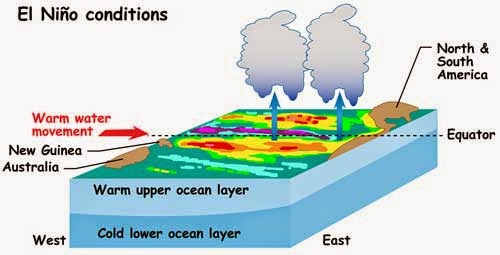
In agriculture, we all know that Mother Nature is one of the key factors in determining a successful or unfortunate year. Thankfully in Nebraska this spring, we have received ample moisture, thanks to El Nino.

Recently, the National Climate Prediction Center has raised the probability of an El Niño in the Northern Hemisphere lasting through this summer to 90 percent, and added that there is an even greater than 80 percent probability it will last through all of 2015.

While this “rainy” season is among us here in the bread basket of the world, the El Nino is not positive for some around the world.

The probability is raising the chance of heavy rain in the southern United States as well as South America, but it is adding scorching heat in Asia that could devastate crops of thirsty food staples like rice.

A new paper recently published in journal Nature Communications confirms the link between the natural climate fluctuation known as the El Niño Southern Oscillation and food harvests of wheat, rice, corn and soybeans that provide nearly 60 per cent of all calories consumed by humans on the planet.

El Niño years were found to have a tendency for negative impacts on crop yields in 22 to 24 percent of growing regions, especially in Asia. At the same time, El Niño tended to have a positive impact on crop yields in 30 to 36 per cent of harvested regions, especially North America. The study estimates the global average negative impact of an El Niño on total crop harvests is between a 0.8 and 4 percent decrease for wheat, rice, corn and soybeans.

These numbers may not seem large to some, but five years of El Niño in the 1950s led to massive famine in China. In the late 1950s, food supplies dropped by 30 percent and immense starvation prevailed in China. It has been 18 years since the world was hit with a strong El Niño, so very few countries are equipped for its considerable impact. However, we have more available technology and information than we did 65 years ago. With China and virtually all of Asia now confirmed global traders, there should be plenty of wheat, rice, corn and soybeans in storage to initially prevent any type of famine. But we could see the price of food increase.

Recently, Reuters reported that a strong El Nino last appeared in 2009-2010 and resulted in significant spikes in sugar, cocoa and wheat prices. If a strong El Niño does develop the likely U.S. impacts include wetter conditions across the southern U.S., from California through Texas to Florida, which could bring relief to the drought-stricken areas.


February 10, 2014

Bridging the gap in feed vs. food debate

Share:

In the video posted here, the Council for Agricultural Science and Technology (CAST) uses information from its Issue Paper, Animal Feed vs. Human Food: Challenges and Opportunities in Sustaining Animal Agriculture Toward 2050, to educate consumers disconnected from the food they eat.

Dr. Larry Berger, Department of Animal Science at the University of Nebraska-Lincoln, and professors from other universities, shares about meeting the need of feeding the growing population, and battles misconceptions presuming animal agriculture competes for human food supplies.

Dr. Jude Capper also talks about land that is suitable for food production. Obviously, we can grown corn well here in the “Cornhusker” State and Montana can raise cattle well because of the grassland. Not all land is suitable for any type of agriculture, therefore we can’t grow more food crops on land that it is not suitable for.

Dr. Berger says, "During the last century, many consumers lost touch with food production; they need facts to make wise choices."

Take time to watch this video and share with influencers you know in your community.