April 13, 2015

Nebraska Corn Representatives Tell Ethanol's Story on Capitol Hill

Share:

"Biofuels Beltway March” Allows Grassroots Supporters to Share Personal Stories of Ethanol's Impact

Capitol Power by People

Ethanol advocates from across the nation came together in Washington, DC in late March as part of a "Biofuels Beltway March" to share their ethanol stories and communicate the widespread grassroots support for American Ethanol and the Renewable Fuel Standard (RFS). The conversations with policymakers were part of the annual march sponsored by the American Coalition for Ethanol (ACE), which took place March 24-25, 2015.

Nearly 70 corn farmers, ethanol plant managers, retailers and other ethanol supporters took part in the Biofuels Beltway March. Members of the group met with Congressional Representatives and Senators from 44 states including Nebraska, Georgia, Minnesota, South Carolina and Texas.

Nebraska's corn industry was represented by Jon Holzfaster, a farmer from Paxton, Nebraska and director on the Nebraska Corn Board, and Kim Clark, director of biofuels development for the Nebraska Corn Board.

"The best lobbyists for American Ethanol are not lobbyists at all," Holzfaster said. "It's the farmers, retailers and rural community leaders who have seen ethanol's dramatic and positive impact on their communities, their economies and their future. The focus of this initiative was to share those personal stories, put a face on the industry and show policymakers—without a doubt—that the RFS is working for our nation."

"We used this opportunity to share that American Ethanol fuel blends such as E15, E30 and E85 provide greater consumer choice at the pump, create jobs across the country, improve our environment and promote cleaner, healthier air for all of us to breathe," said Clark.

While in Washington, DC, participants from Nebraska attended the Nebraska Breakfast, a 70-year-old tradition that allows constituents to engage with the Nebraska delegation and get updates on legislation and issues. Senator Hugh Butler began the Nebraska Breakfast tradition in 1943. It is held every Wednesday when both the House and Senate are in session.

April 7, 2015

American Ethanol Appears at Nebraska State FFA Convention

Share:

American Ethanol is proud to announce its partnership with the Nebraska Corn Board, Nebraska Ethanol Board and ethanol producer Green Plains Inc. to promote homegrown American Ethanol at this week’s Nebraska State FFA Convention held April 8-10, 2015.

“We are thrilled to team up with American Ethanol to bring awareness for Nebraska-grown biofuels to FFA students all across Nebraska,” said Kim Clark of the Nebraska Corn Board. “The ethanol industry in Nebraska has created thousands of high-paying jobs in the state and we are excited to share the opportunities for those interested in a future in value-added agriculture.”

In addition to the interactive Biofuels Mobile Education Center provided by the Nebraska Corn Board, the American Ethanol No. 3 Chevrolet SS driven by NASCAR Sprint Cup Driver Austin Dillon for Richard Childress Racing will be on display for FFA attendees. This car, along with every other vehicle in NASCAR’s three race series, have collectively raced more than 7 million miles on renewable Sunoco Green E15.

“I am proud to run with American Ethanol on the No. 3 Chevy SS," said Dillon. "American Ethanol is green, renewable and a high performance fuel. It emulates exactly what we believe in at Richard Childress Racing.”

image

In 2011, NASCAR partnered with American Ethanol and has since been committed to using cleaner burning fuel. Since the transition to E15, drivers have noticed increased horsepower and performance, further validating E15 as a super fuel. Every race car in NASCAR also bears the American Ethanol fuel port logo and each weekend, American Ethanol powers race winners to Victory Lane.

Nebraska is the second largest ethanol producing state in the country with a combined annual production capacity of 2 billion gallons of ethanol and 6 million tons of high-quality livestock feed. The state is home to 24 ethanol plants.

“The ethanol industry has been vital to the ag economy in the state,” said Todd Sneller of the Nebraska Ethanol Board. “Not only has the industry brought in major tax dollars for the state, it also has helped bring a cleaner burning fuel to Nebraska drivers, which helps support our economy and reduces our dangerous dependence on fossil fuels and foreign oil, all while providing consumers a choice and savings at the pump. Ethanol is a win – win and we are proud to support sustainable fuels that will help power our growing energy needs for generations to come.”

April 1, 2015

Spring 2015 prospective planting

Share:

Corn planted acreage down 2 percent from 2014 in U.S., Nebraska corn acres unchanged

14306201023_9dc8b55f6a_z Yesterday the National Agricultural Statistics Service (NASS) of the USDA released its spring Prospective Plantings report. This annual report is conducted after NASS surveys approximately 82,000 of the nation’s farmers during the first two weeks of March to determine their plans for the upcoming growing season.

What is on the horizon for U.S. and Nebraska farmers in 2015 as they finalize plans for planting this spring? Across the country, corn planted area for all purposes in 2015 is estimated at 89.2 million acres, down 2 percent from last year. If realized, this will be the third consecutive year of an acreage decline and would be the lowest planted acreage in the United States since 2010.

Nebraska corn growers intend to plant 9.3 million acres this year, unchanged from last year. 14306201083_9d361f5ccc_z

Soybean planting projections fell 6 percent from last year, as growers expect to only plant 5.1 million acres. An expected 2.7 million acres is expected to be planted to hay which is up 5 percent from last year. Winter wheat planted last fall is estimated at 1.6 million acres, a 3 percent increase from last year.

In other crops, nationally,soybean planted area for 2015 is estimated at a record high 84.6 million acres, up 1 percent from last year.  All wheat planted area for 2015 is estimated at 55.4 million acres, down 3 percent from 2014. All cotton planted area for 2015 is estimated at 9.55 million acres, 13 percent below last year.

The Nebraska Corn Board will again be partnering with local FFA chapters from across the state on its Crop Progress program where chapters send in pictures of the growing season from planting to harvest. Be on the lookout soon for crop progress reports and new pictures! Follow on NebraskaCorn.org and NCB’s Flickr page for updated photos.

March 31, 2015

American Ethanol Tops 7 Million Miles in NASCAR

Share:

email blastWhen it comes to NASCAR, counting miles and breaking records is a thrilling milestone that every driver and passionate fan looks forward to. Earlier this month, NASCAR fans cheered as American Ethanol surpassed a momentous milestone at the Phoenix International Raceway. In just four short years, American Ethanol topped 7 million miles of racing—the equivalent of almost 30 trips from the Earth to the moon, 281 laps around the Earth or 15,000 trips between Omaha and Scottsbluff, Nebraska! 

NASCAR began running E15 in 2011. The fuel change was in conjunction with their NASCAR Green Platform, which has become one of the most comprehensive recycling, tree planting and renewable energy programs in professional sports. E15 is a 15% American-grown, American-made ethanol blend that has fit very well with the NASCAR Green platform. As a 100% renewable fuel, American Ethanol has proven to be not only environmentally positive by lowering emissions, but it has actually boosted the performance and increased horsepower of the race cars. NASCAR uses E15 exclusively in all race cars in its top three racing series – Sprint Cup, Nationwide & Camping World Truck.

“E15 in NASCAR has helped both consumers and professional drivers appreciate the power and performance of American Ethanol blends.” said Kelly Brunkhorst, executive director of the Nebraska Corn Board. “We’re doing everything in our power to sustain and build the ethanol industry and our support of NASCAR over the last four years has been a crucial component.” 

American Ethanol is a partnership of the National Corn Growers Association (NCGA) and Growth Energy.  As an affiliate member of NCGA, the Nebraska Corn Board and the 23,000 Nebraska farmers we represent have helped support this partnership. NASCAR

When the American Ethanol—NASCAR Green partnership began four years ago, the goal of the corn industry was to educate consumers about agriculture, promote ethanol and build awareness of the American Ethanol brand. Today, just four short years around the track, the partnership has surpassed the momentous milestone of 7 million miles and far exceeded original expectations. With an audience of more than 75 million fans, including a broad range of ages and demographics, NASCAR has one of the nation’s largest and most loyal fan bases in professional sports. This historic partnership has not only created the opportunity for corn farmers to tell the story of ethanol to the nation’s largest sport-fan base, but it also demonstrated to all the loyal race fans that ethanol is a reliable, high performance fuel. 

“The NASCAR Green campaign has proven to be a great way to grow consumer awareness and trust for the American Ethanol brand,” said Jon Holzfaster, a farmer from Paxton, Nebraska and director on the Nebraska Corn Board and National Corn Growers Association. “Beyond the success that E15 has won through our partnership with NASCAR, there is an even brighter future for American Ethanol across the United States. Consumers will begin to see more and more of the American Ethanol brand outside of NASCAR.”

Drivers across our nation have a long and successful history with American Ethanol blended fuel and frankly, consumers like the cost savings that ethanol provides. Automotive technology has changed and so have the needs of the public. Cars manufactured since 2001 are approved to run on E15 and the demand is continually building. As part of a national branding effort, the American Ethanol brand will begin to make its way to pumps across the United States. As the availability of E15 and higher blends of ethanol begin to grow, so will the visibility of the American Ethanol brand.

image

March 27, 2015

{Videos} As farmers prepare for planting…

Share:

Planting is all on the minds of corn farmers right now. We will learn more from USDA’s Prospective Plantings report next Tuesday about how much corn is forecasted to be planted, but for now to keep this Friday light, we wanted to share a couple of fun videos to watch about how farmers prepare for planting.

Now, watch how corn used to be planted using a horse and plow. Pretty cool! But it makes us thankful for technology to be able to do twice as much with our tractors today in much less time.

March 25, 2015

2015 Innovative Youth Corn Challenge

Share:

The deadline to enter in the 2015 Nebraska Innovative Youth Corn Challenge is fast approaching.clip_image002

This contest, open to 4-H members (age 10 and older as of Jan. 1) or FFA members (in school), guides participants through all aspects of corn production, as well as agricultural careers related to corn production.

As a team, youth will be challenged to implement a production practice different than normal to determine if it increases yield. Economics and sustainability of the practice also will be considered. Yields, cropping history, and production information will be collected in the Corn Yield Challenge management summary.

Cash prizes and plaques will be given to the first, second, and third place teams. First place will receive $1,000, second place will receive $500, and third place will receive $250.  Sustainability, crop scouting, and "extra mile" awards also will be given, each worth $200.    

To participate, youth must complete and return an entry form by April 1, 2015 to the Fillmore County Extension Office. You can enter online by clicking here.  You can also download an entry form by clicking here and mail to the Fillmore County Extension Office, 972 G  Street, Geneva, 68361-2005.  

The Innovative Youth Corn Challenge is co-sponsored by Nebraska Extension and the Nebraska Corn Board.  For more information, contact Extension Educators Brandy VanDeWalle at brandy.vandewalle@unl.edu, Aaron Nygren at anygren2@unl.edu or Amy Timmerman at atimmerman2@unl.edu.

March 23, 2015

March Madness from the UN on glyphosates

Share:
glyphosate-crops_custom-428a3594d783d20539d1da64cade4e31b4b920bb-s1100-c15 While the sports world is wrapped up in the madness of March basketball playoffs, another madness is starting in the UN and it is not positive to farmers.

Late last Friday afternoon, a designation related to Round-Up used on crops was released. The International Agency for Research on Cancer (IARC), a component of the UN’s World Health Organization that evaluates the likelihood that various chemicals cause cancer, indicated that the agency has now listed glyphosate as a 2A potential carcinogen. You can read the full report here.

For the first time since 1991, the focus of this IARC review was on pesticides. (One important piece of what IARC does is determine which substances in our environment have the potential for causing cancer. IARC does not conduct any original research; it only reviews studies and research already published to determine carcinogen status. ) At this meeting, five pesticides were evaluated and three of them were classified as “probably carcinogenic.”

Probably is not a very scientifically-sound word.

But neither the U.S. EPA nor the European Chemical Agency (ECHA) had previously classified the three active ingredients as being carcinogenic.  Why the discrepancy? No new research had been done, so why did they pull these out?

Henry Miller said in his article in Forbes, “The disparity appears to arise from the fact that IARC bases its conclusion on potential hazard rather than the actual risk of harm. What does that mean to you and me? Well, we regularly participate in hazardous activities that have the potential to harm us–we use knives, drive cars, fly on airplanes and cross busy streets. However, the risk–the probability that we will actually be harmed– associated with each of these activities is low.”

The same applies to the IARC’s analysis of glyphosate. The data (and a selected set of data, at that) were reviewed to determine whether glyphosate is capable of causing cancer. As with common chemicals like sugar, salt and water, and foods like nutmeg and licorice, glyphosate at very high doses is capable of causing harm to humans.

Key words: very high doses.
If you ingest enough of any substance, including water, it has the potential to kill you. When it comes to glyphosate this is even more relevant, because IARC’s conclusions only apply to exposure high enough to meet industrial uses.

As one of the scientists behind IARC’s classification stated:
“I don’t think home use is the issue,” said Kate Guyton of IARC. “It’s agricultural use that will have the biggest impact. For the moment, it’s just something for people to be conscious of.”
In other words, the people that need to be wary of exposure are the applicators, the people actually applying the herbicide. But applicators have their own set of standards and regulations that they have to meet to become certified to handle these products, so they are well aware of how to safely handle Round-Up.

Even the European Crop Protection Association ( ECPA)  refute this issue in their statement:
The IARC conclusions published in Lancet Oncology contradict the world’s most robust and stringent regulatory systems – namely the European Union and the United States – in which crop protection products have undergone extensive reviews based on multi-year testing and in which active ingredients such as glyphosate and malathion been found not to present a carcinogenic risk to humans.
So really, there has been a lot of fuss in the news (and scare to our consumers) about nothing that should worry them.  In fact, the EPA has concluded:
The U.S. EPA classified glyphosate as Group E, evidence of non-carcinogenicity in humans. The U.S. EPA does not consider glyphosate to be a human carcinogen based on studies of laboratory animals that did not produce compelling evidence of carcinogenicity.
Make sure to read about this issue from a farmer herself: Glyphosate as a carcinogen, explained by The Farmer’s Daughter.


March 19, 2015

The Nebraska Corn Checkoff

Share:
“You have to be willing to support the industry of your chosen profession,” said Jon Holzfaster, corn farmer from Paxton and director on the Nebraska Corn Board. 

Nebraska has over 23,000 corn farmers, who collectively fund the corn checkoff. When they sell a bushel of corn, ½ cent of each bushel is sent to the corn checkoff program, which is overseen by the Nebraska Corn Board. The Nebraska Corn Board is an organization made up of nine full-time corn farmers that serve on the board of directors. There is also a six person staff in Lincoln whose job is to work on behalf of corn farmers full-time. Now, you may ask what happens to the ½ cent per bushel that combines with all other Nebraska corn farmers’ ½ cent per bushel when it goes to the checkoff fund?

The answer can be grouped into four different categories: market development, research, promotion, and education. For instance, the corn checkoff helps fund the U.S. Grains Council (USGC), which is an organization that works internationally to grow markets for U.S. corn and United State MeatExport Federation (USMEF) to grow red meat markets internationally. Corn checkoff dollars fund the University of Nebraska-Lincoln to conduct corn research and report back to the NCB. Ethanol and distillers grain research has helped increase the value of corn, thus helping fulfill part of the NCB’s mission of enhancing corn farmers’ sustainability and profitability.

Nebraska Corn promotes the corn industry in many ways including ag tours for teachers, support for FFA, ethanol promotions and education and through marketing our Nebraska corn. Lastly, education is the key to keep the public engaged and informed. Over the past several years, education has become increasingly important, and Nebraska corn has taken the lead in a number of consumer and influencer education programs both in-state and in collaboration with other states and national cooperators.

We hope this video about the corn checkoff program helps you understand more about how the Nebraska Corn Board is working on behalf of Nebraska’s 23,000 corn farmers. In the words of NCB executive director, Kelly Brunkhorst, “Collectively we can do something we can’t do individually.” 

March 18, 2015

Celebrate your food, while ending food insecurity

Share:

Image result for national ag dayWhile we are thankful for our food everyday, today is the one day of the year where agriculture, farmers and ranchers are celebrated for producing what we all love...food!

Agriculture is essential to everyday life. This entire week is dedicated as National Ag Week, with today being Ag Day. As only 2% of our population in the U.S. produces food, some of us may not know a farmer or rancher. However we all can relate to food - which makes this a great day to celebrate sustaining future generations of farmers and eaters.

imageWhy is the future of farming so important?

Why is the future of our children so important?

Both of these issues are mutually important. We need future farmers to raise food and we need future children to be eaters and consume the food we raise. We know that our world population is increasing – which is an important challenge to farmers.

That’s why farmers are dedicated to raising more on less. Growing more food on less land, with less chemicals and more sustainability. That’s what Sustaining Innovation is all about.

However, we know that food insecurity is also a big issue and not everyone gets the food they need or can afford. In 2013, 45.3 million people were in poverty and 14.7 million were children under the age of 18 in poverty. About 20% of children in Nebraska and western Iowa are at-risk for hunger.

BackPack ProgramThat’s why important programs like the Food Bank of Lincoln are aiming to sustain food and eliminate hunger. They are helping with the future of our children by supporting the BackPack Program, which provides food-filled backpacks to students in need of food over the weekend, as well as other programs.

Let’s celebrate being an “eater” today by not only celebrating the individuals who dedicate their lives to feeding the world on Ag Day, but becoming aware of food insecurity issues in your area. Follow more at #agday2015.

March 12, 2015

Nebraska Corn Board Presents Awards of Recognition and Achievement

Share:
The Nebraska Corn Board presented its annual awards to five exceptional individuals during its Cooperator and Awards Dinner in Lincoln this week.
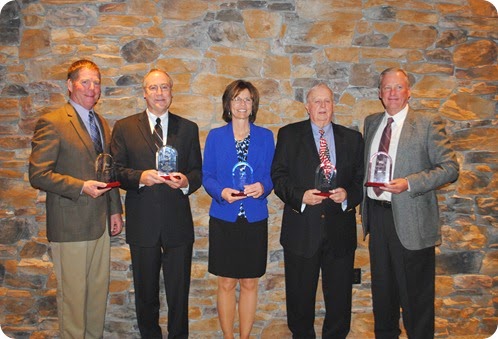
DSC_0214 Pictured (L-R): Mark Jagels- Ag Achievement, Mike LaPorte- Media Appreciation, Joan Ruskamp- Livestock Industry Appreciation, Bill Pullen accepting on behalf of Bill's Volume Sales- Agribusiness Achievement, and Duane Kristensen- Ethanol Industry Appreciation.

For twenty-four years, the Nebraska Corn Board has acknowledged incomparable representatives in the livestock and ethanol industries, as well as awarding an individual in the media. The Ag Achievement award is the pinnacle of awards given to an individual who has helped develop Nebraska’s corn industry and agriculture over time. Additionally, the Nebraska Corn Board presented a new award this year in the agribusiness category.

The Livestock Industry Appreciation Award was given to Joan Ruskamp, farmer, blogger, community leader, and CommonGround volunteer from Dodge, Nebraska. Ruskamp was selected for this award based upon her outstanding commitment to Nebraska agriculture and continued enthusiasm to share her story with her urban counter-parts.

DSC_0186“I know that volunteering for CommonGround is a big commitment and we really appreciate her willingness to do this and do it so well,” said Debbie Borg, farmer from Allen, Nebraska and director on the Nebraska Corn Board. “Joan has the wonderful ability to share her story with consumers and help them not only understand, but appreciate the value of the livestock industry in Nebraska.  She was very deserving of this award.”
  
The Ethanol Industry Appreciation Award recognizes a producer or person in the industry who has worked hard to develop ethanol markets and expand demand for ethanol in the state while appreciating the value of the corn checkoff and its involvement in ethanol market development. The recipient of this year’s award was Duane Kristensen, with Chief Ethanol Fuels, Inc.  Kristensen was selected for his leadership in Nebraska as well as his involvement and engagement in ethanol advocacy groups on a statewide, national, and global basis.
DSC_0197
“Duane’s dedication to the ethanol industry and continued efforts to expand the demand of ethanol globally has been influential for the industry,” said Dennis Gengenbach, farmer from Smithfield, Nebraska and secretary-treasurer on the Nebraska Corn Board.  “Duane’s leadership has been powerful around the world.  He’s traveled to over twenty countries promoting Nebraska and the role of ethanol in agriculture.”

The Media Appreciation Award was presented to Mike LaPorte, with KRVN Rural Radio, for his efforts in routinely sharing agriculture’s story and his knowledge and understanding of agriculture’s important role to our state’s economy.  LaPorte has been with KRVN for 25 years and has been a Farm Director for the last 19 years. 

DSC_0190“Mike’s background in agriculture gives him a unique perspective on his reporting and has helped him develop a great format for telling our story,” said David Merrell, farmer from St. Edward, Nebraska and vice chairman of the Nebraska Corn Board. “He is one of the first media sources that the Nebraska Corn Board reaches out to. We know that Mike will truthfully and openly reveal the facts of not only the corn industry, but all of Nebraska’s agriculture.”

The recipient of this year’s Ag Achievement award was Mark Jagels, farmer from Davenport, Nebraska and past chairman of the Nebraska Corn Board and U.S. Meat Export Federation. Jagels was chosen for his outstanding dedication to agriculture and admirable goals in expanding exports and moving the state forward in its agricultural ambitions.

DSC_0211Mark’s leadership and commitment to Nebraska agriculture is evident through his service on a local, state, national, and international level,” said Alan Tiemann, farmer from Seward, Nebraska and past chairman of the Nebraska Corn Board. He has played an instrumental role in representing agriculture on the international level by helping expand the opportunities for both corn and livestock.

As the newest award category, the Agribusiness Appreciation Award, identifies a Nebraska agribusiness that recognizes and appreciates the mission of the Nebraska corn checkoff program, shows proven leadership in explaining the benefits of the checkoff and its investments and supports Nebraska agriculture. The recipient of this inaugural award went to Bill’s Volume Sales. Accepting the award on behalf of Bill’s Volume Sales was Bill Pullen, founder and former owner.
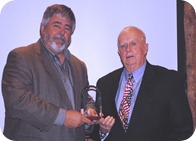
DSC_0203“Bill’s Volume Sales is a highly respected company in the agriculture industry and a long-time supporter of the Nebraska corn checkoff,” said Jon Holzfaster, farmer from Paxton, Nebraska and director on the Nebraska Corn Board.  “Bill’s Volume has gone above and beyond to help their customers and keep our Nebraska corn farmers in business. We appreciate the company’s continued support and dedication to Nebraska agriculture.”